Showing posts with label Gidget. Show all posts

Friday, October 9, 2020

Surfing Year 1960

Aloha and Welcome to this chapter in the LEGENDARY SURFERS collection, highlighting some of the events and stories of surfing in the year 1960.

Appreciation goes out to Matt Warshaw for his work documenting early surf magazines and Mike Doyle and Greg Noll, for their autobiographies that spice this chapter up.


Contents


Early Surfing Publications 

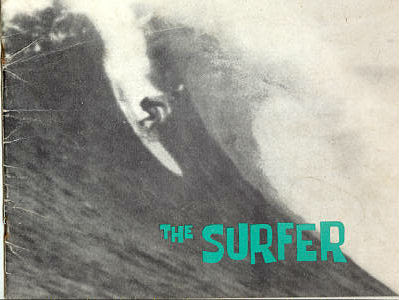
THE SURFER Magazine, Spring 1960 

Surfer's Annual and Reef Magazine 

Mike Doyle 

Curren's Template 

Paddling, Surfing & Lifeguard Competitions 

Greg Noll on the Mainland 

Ricky James' Thumb 

Da Bull at Redondo, Winter 1960 

Malibu 

July 7, 1960 

September 19, 1960 

October 3, 1960 

Mike Doyle and Big Wednesday 

Winter 1960-61 on the North Shore 

Waimea 

Mickey Dora on the North Shore 

Ricky Grigg 

Robin Grigg & Mike Doyle 


For the world of surfing, the previous year 1959 was a disaster in the sense that the movie Gidget resulted in the quick over-population of Southern California's best point break: Malibu -- and increased numbers of kooks in the lineup at other surfing beaches, as well. Looked at in the long run, Gidget and the other "beach movies" that followed caused surfing to become popular to non-surfers before the sport and the lifestyle were even clearly understood. The new breed of poser surfers found themselves wanting to be kahunas on the beach and live the lifestyle they'd only seen through Hollywood eyes.

The year 1960, real surfers got media relief from John Severson. While Bud Browne, Greg Noll, Bruce Brown, John Rohloff as well as John Severson were making surf films for surfers, the big significant media event for surfers in 1960 was the publication of the first surf magazine...


Early Surfing Publications


The first text and photos printed with the surfer in mind were books. Ron Drummond was the first one to publish a book on bodysurfing, in 1931, entitled The Art of Wave Riding. A few years or so later, in 1935, Tom Blake published his landmark book Hawaiian Surfboard, the first book on surfing. This later volume is still in print, under the title Hawaiian Surfriders, 1935.1

The first newsletter published for surfers was Ye Weekly Super Illustrated Spintail, the publication of the Palos Verdes Surf Club. A bulletin for club members, it was edited by Doc Ball, who provided his own photographs. Ye Weekly Super Illustrated Spintail had a press run between the years 1936-40.2

"Whipping up in mid-channel, the giant crackers surely reached the awesome height of 20' at times," wrote Ball in the August 8, 1937 edition. Writing about the big south swell to hit Flood Control, at Long Beach, and the club's surfari there, Ball continued: "Wild man (LeRoy) Grannis, when attempting to look where he was coming from, got caught in the hook and was snatched from under himself in a whirling mass of soup. Fire-Hose Feister, while doubling up with fits of laughter at the sight of Grannis, (also) got gobbled up in short order."3

Doc Ball pasted up about 200 of these typewritten editions between 1936 and 1940. One-to-three pages each, Ye Weekly Super Illustrated Spintail was notable for its surf shots. Following World War II, Doc Ball went on to publish the first fully illustrated book on surfing, California Surfriders. This book contained many of the shots he had taken in the pre-war years and is a classic.4

"Next to surf riding," Ball encaptioned one picture of a bunch of the Palos Verdes club members pawing at an edition of Ye Weekly Super Illustrated Spintail, "they like pictures of same which, all told, is the reason for this book."5 The initial press run of California Surfriders was 510 in 1946, directly following the war.6

Fifteen years later, the first surf magazine came out in 1960, the product of surfer John Severson...


THE SURFER Magazine, Spring 1960


John Severson said he first thought of producing a surf magazine in 1949, when he was 15 years-old and a surfer since 13. The lack of potential buyers, in terms of numbers, caused him to initially decide against it.7

Severson's creative edge turned, instead, toward film, in 1957, while he was in the Army and stationed on O`ahu. That year, following the lead of first Bud Browne and then Greg Noll, Severson made a 16mm film called Surf. Fred Van Dyke took it on the road and showed it on the budding high school auditorium circuit in California. After finishing his stint in the Army, the following year, Severson made his second film, Surf Safari, and took it on the road, himself.8

"One thing was immediately apparent," he wrote, echoing Doc Ball's observation of years before. "Surfers would devour any image of wave or surfer." The posters promoting his movies would vanish quickly from the telephone poles they were stapled to. Surf shops had waiting lists for the extra posters Severson started dropping off after his showings. These surf posters were 8 X 10 glossies that sold at the showings for a buck a piece.9

"In '59," wrote Matt Warshaw in an article on surfing magazines, published in The Surfer's Journal in 1996, "the magazine idea resurfaced. There were a few thousand potential readers now, maybe lots more." Severson came up with the idea of an "annual" to help promote his thrid film, Surf Fever. Calling the black and white booklet with a two-color cover The Surfer, Severson reasoned that if sales went well, he would make another one, the following year, to go along with that year's cinematic offering.10

"The first edition needed to be ready to distribute by Easter of '60," continued Warshaw, "when Severson would begin touring Surf Fever. He took a few new photographs for The Surfer, but mostly relied on blow-up prints from his film stock. He grouped certain photos together ('Toes on the Nose,' 'Rincon,' 'Waimea Bay -- the Heavies'), wrote captions, made spelling decisions ('kuk' instead of 'kook') and sold 12 advertisements (two full-page at $400 each and 10 partial pages). He had-lettered the cover logotype and spent months playing with layout and design. He remembers crouching on the living room floor of his two-bedroom Dana Point apartment in December of '59, surrounded by the 36 pages of artboards that would eventually become the first issue of The Surfer; high on creative energy one moment, then nearly frozen by the publishing version of stage fright."11

"The 26-year-old had invested heavily on himself. Each page of The Surfer was given life by Severson's money, ego and aesthetic. He photographed and developed the cover shot of Jose Angel at Sunset, for example, then shamelessly tilted up the left-hand corner during the design process, effectively doubling the size of the wave. (The Pat Curren shot on page 16 of the first issue was runner-up for the cover.) He shot virtually all the other pictures and added twelve of his own drawings...

"The Surfer was clearly self-serving. It was also technically crude... the quality of images in general fell short of Doc Ball's standard in California Surfriders.

"But The Surfer was so friendly and generous, so perfectly in tune with its subject matter and so thoroughly stoked that the flaws nearly disappear... it remains unique."12

"The first one really was different from all the others," Severson noted, "and actually came out pretty much just how I'd hoped.

"It was simple. I liked all the white space and all the artwork. It was trying to be an art piece, really. But total surfing."13

The first issue of The Surfer -- later changed to simply Surfer -- contained many images that continue to be republished to present day. Like, the shot Bud Browne took of Mickey Muñoz doing the "quasimoto" and the one Severson shot of Kemp Aaberg at Rincon (his favorite) with Warren Miller's 1,000mm lens.14 Perhaps the photo that would gain the greatest notoriety was the one Severson put on the inside back cover. It shows a surfer paddling out alone at Hammond's Reef with offshore winds causing the right hander to feather brilliantly.

"I got that picture early in the process," Severson remembered. "What a shot! Here was a guy going out all by himself to these perfect waves, and I remember... I remember..." Severson drifted off in his recollection, genuinely moved. "Oh, wow. Yeah, I mean, that photo really was the one. So I put it aside and came back later when I had some time to really work on it."15

John Severson closed the first issue of The Surfer with this Hammonds shot, writing below it: "In this crowded world, the surfer can still seek and find the perfect day, the perfect wave, and be alone with the surf and his thoughts."16 That refrain has been adopted by succeeding generations of surf-stoked wave riders.

Leonard Lueras, in Surfing, The Ultimate Pleasure, wrote that "because it filled a yawning need as the first ideas forum published by and for surfers, The Surfer was well received."17

"When I created SURFER Magazine in 1960," wrote Severson in 1995, "I thought I was filling a photo need. But more likely, there was a huge information vacuum, and I was merely the first entrepreneur sucked into the tube..."18

Severson started the mag with $3,000, 36 pages and a pressrun of 10,000 copies sold for a dollar each. "In early spring," wrote Warshaw, "Severson and his brother drove to L.A., loaded the magazines into John's VW van, turned around and began hand-distributing to surf shops and bookstores. Severson took stock a few months later. Five thousand sold. Five thousand for the archives. No loss, but virtually no profit. A few months passed as Severson worked on his fourth film, Big Wednesday, and considered his next publishing move. He finally decided against a second photo annual in favor of a quarterly."19

"A decade later," noted Lueras, "Surfer was a slick monthly with a paid circulation of nearly 100,000. In 1970 The Los Angeles Times called Surfer magazine 'the only magazine of national consequence published in Orange County."20


Surfer's Annual and Reef Magazine


Hard on Severson's heels were two other publications that came out in 1960 but which were short-lived.

One was Greg Noll's Surfer's Annual, a 46 page photo collection that featured 16 year-old cartoonist Rick Griffin.21 Griffin would be hired by Severson the following year and go on to create the cartoon surf character "Murphy." Later, Griffin would be a leader in the development of psychedelic poster art. His best known material is probably the cover work he did for The Grateful Dead in the 1970s.

In August, September and October 1960, Reef magazine attempted to become surfing's first monthly. Edited by Pat Anderson and David Goldman, Reef magazines sold at the affordable rate of 35-cents.22


Mike Doyle


When Mike Doyle's first trip to the North Shore ended, he returned to Southern California in the Spring of 1960 to take up lifeguarding at Manhattan Beach. Before he did so, though, he surfed Swami's a bunch with Rusty Miller.23

"I'd surfed with Rusty at Swami's several times," wrote Doyle, "but the first time I ever saw him out of the water was at a party in Palos Verdes. He'd been wearing a tweed coat and slacks, and was smoking a pipe with his arms crossed, looking very much like a professor of history, which was what he wanted to become at the time. He had a freckly complexion, kind of a bent nose, and reddish-brown hair. I remember thinking, This guy's really got his act together, going to college, dressing like a professor. He made me feel like a goofball.

"Rusty lived with his parents on the bluff in Encinitas, just a half mile or so from Swami's. It was kind of strange going to Rusty's house. His father was extremely overweight, and every time I saw him he was sitting in a chair in the living room smoking cigarettes. Rusty's mother had a deep, raspy voice, and she chain-smoked, too. The ceiling in their house was stained brown from all the cigarette smoke, so it was easy to imagine what the insides of their lungs looked like."24


Curren's Template


"Rusty and I surfed at Cardiff Reef that morning," continued Doyle, "and I explained to him the problems I'd had with my surfboards in Hawaii that winter and how badly I needed one of Pat Curren's designs.

"Rusty said, 'You know, Curren just opened a surf shop here in Encinitas. You oughta stop by and see him.'

"I tried to explain how terrified I was of Curren.

"'I know what you mean,' Rusty said. 'He scares me, too. But I still think you oughta go see him.'

"That afternoon I stopped by Curren's shop on D Street. I parked around the corner and sat in my car for a few minutes, working up my courage. When I finally got out and walked around the corner, I saw a sign on the shop window: Be back sometime.

"I peeked in the window, and in the dim light I could see a row of Curren's big guns standing against the back wall, like dark tiki gods. I stood there trying to memorize their shapes, trying to capture that one magical line. But I knew it couldn't be done.

"I started walking away -- then stopped. Right there on the sidewalk, drawn in grease pencil, was a full-scale drawing of Curren's template. It was about 9' 6" -- just my size -- a masterpiece of art and design, right there where people could walk on it, spit on it, or make off with it. I stepped inside those magical lines, then looked down at my feet to see how the water flowed over and around me. It was a miracle!

"But how could I get it off the sidewalk and into my hands? I knew right away what I had to do. I ran up D Street, across the Coast Highway, then up the hill to the Mayfair market, where I bought ten feet of butcher paper and a felt pen. I ran back down the hill to Curren's shop, unrolled the butcher paper over the template, placed rocks at all four corners to keep the paper from blowing away, then got down on my hands and knees, and began tracing the lines.

"I had most of the template on paper when I realized somebody was watching me. I looked up and saw Curren standing on the street corner. His forehead was all twisted up in anger, and his eyes were scrunched down into mean little slits. I wasn't sure if he even recognized me. Should I try to explain myself? Or should I just run for it now, while I still had a chance?

"Curren stared at me for a long time, putting it all together: the North Shore, the Quonset hut, the kid with the lousy surfboards. Finally, as he fumbled for the keys to his shop, Curren said, 'You didn't have to steal it, Doyle. Though I have to admit that's kind of flattering. Just don't forget to tell people where it came from, all right?'

"As he disappeared through the doorway, I saw a smile on Curren's face."25


Paddling, Surfing & Lifeguard Competitions


The Summer of 1960 was when Mike Doyle earned his second nickname of "Ironman," by winning the first Ironman competition.26 More than any surfer of his time, he got into competition in a big way:

"In those days every little beach town up and down the coast had its own summer beach festival... Since I was training every day to stay in shape as a lifeguard, I used to enter all those contests as a fun way to check my level of conditioning. If there was a paddleboard contest anywhere in Southern California, I was in it. If there was a rowing contest, I'd enter that. And, of course, I was in the surf contest, too. In no time at all, I'd collected a whole garage full of trophies.

"Looking back on it now, I'd have to say I went to the extreme. I became a contest junky. But at that age, nineteen, I craved the recognition..."27

"Competing in paddling contests taught me that I had certain natural talents -- broad shoulders, long arms, and fairly large hands... Paddling races also taught me a lot about the psychology of competition. There were a few great big guys who were just animals at paddling, but they didn't know how to compete. I would plan each race ahead of time, then stick to the plan. If it was an eight-mile race, I'd stay with the pack the first couple of miles, then make my move on the third mile and power out until I'd buried them. I'd be almost exhausted, ready to die, but the guys behind thought I could still keep going, so they'd quit, at least in their minds. And when they gave up, I could slow down and conserve my energy for the rest of the race.

"I really loved competing in paddling races -- much more than I ever loved competing in surf contests. Paddling had a finish line, which made it real."28

Mike Doyle admitted that "some of those first surf contests were so bad, it was kind of funny. Usually the judges didn't even surf. The local president of the chamber of commerce would get his mother-in-law, who was a gym teacher, and his brother, who was a fan of big-time wrestling... And they were considered qualified to judge a surf contest, even though none of them had ever been on a surfboard before. The judges had no concept of wave selection, wave positioning, or style. So if some guy in the contest did something really silly, like stand on his head, the judges thought that was just fantastic and the guy would win the contest. It was ridiculous, and the surfers knew it.

"Even the surfing trophies were ridiculous. In those days it was hard for the contest organizers to find surfing trophies, so they used to take a basketball trophy with the basketball player jumping up to make a one-arm dunk. They'd cut the basketball off his hand, cut under his feet at the base, then lay him down on a small, hand-carved paddling board. It looked like a basketball player being carried out on a stretcher."29

"The truth is, I never felt that surfing as a competitive sport made much sense. Surfing is very difficult to judge because there's an act of god that influences how each wave will behave...

"But probably the worst thing about surf contests," continued Doyle, striking a blow, "is that they're contrary to the very essence of the sport, which is freedom. If you make up a bunch of arbitrary rules that are supposed to define good surfing, the creative freedom of surfing gets destroyed.

"I wasn't the only surfer of my era who felt this way. There were a lot of great surfers -- Kemp Aaberg, Lance Carson, Phil Edwards, and Mickey Dora -- who rarely entered contests. If a big contest was being held at Malibu, they'd much rather go down the road someplace and surf by themselves all day."30

"As a young man," Doyle admitted, "I was caught in the middle of all that. I wasn't against competition -- I loved competition... But in a surf contest, I never felt there was a fair way to decide who won.

"After I got a little older and began competing every winter in world-class surfing contests, the judging became somewhat better. But I still never felt the contests had any real validity. I competed because surf contests were my free ride. How I placed in contests one year would determine whether of not a sponsor would pay my way to Hawaii the next year. If I hadn't competed in the big surf contests and done well, I would never have been able to spend half the year traveling and surfing. So in a way, competing in surf contests became a job."31

This is probably true for many of the professional surfers who compete, today.


Greg Noll on the Mainland


At this point, in addition to his wintertime surfing of big waves on O`ahu's North Shore and filmmaking, Greg Noll was getting into production surfboard making. He tells a humorous story about Rick James and his cut-off thumb:


Ricky James' Thumb


"Ricky James was an excellent shaper who worked for me for several years before he started his own board shop," Noll began. "One day, in our old shop on Pacific Coast Highway, Ricky was sawing center strips for boards and talking to one of his buddies at the same time. I was about fifteen feet away and I told him, 'Ricky, goddammit, pay attention to what you're doing.' He says, 'I am, I am.' He's telling stories to this guy and the saw is whining yeoooow, yeoooow as it cuts off center strips.

"Suddenly I hear the saw stop and Ricky yells, 'Oh, God!' I rush over, and there's his thumb on the floor. He had sawed it off almost at the base. I grab a paper towel, scoop up the thumb and take Ricky to the hospital. All the time we're driving, I'm talking to him, trying to keep him from going into shock.

"'Do you think they can sew it back on?' he asks me.

"'Oh, yeah, they got modern-day medicine, no sweat, Rick. Just settle down, everything is going to be just fine. They'll sew it back on. You may have a little scar but everything is going to be O.K.'

"I'm driving and he's sitting on the passenger side and the thumb is between us, on the seat. While we're talking, Ricky keeps looking down at it as though the thumb is a third person in the car.

"As soon as we get to the hospital, they take Ricky into Emergency. I've got the thumb and Ricky is clasping the stub and the doctor walks in. Ricky says, 'I'm so glad you're here. Are you going to be able to sew my thumb back on, Doc?'

"The doctor had the worst bedside manner of any doctor I've ever met. He says, 'No, it wouldn't do any good. We could sew it back on, but it would just turn black and fall off in a few days. There's no use in even trying.'

"Now Ricky is really going into shock over the whole situation and he says, "Doc, please. I don't know what my girlfriend will think of me. I don't care if it works or anything. Just sew it back on so it looks good. I don't care if it works.'

"The doctor talked to him for a while. Of course, they didn't sew the thumb back on. I saw that a nurse had the thumb and was going to dispose of it. I said, 'Do you mind if I take that with me?' She thought it was kind of an odd request, but she gave it to me. I didn't tell Ricky.

"After they got Ricky bandaged up I took him home, gave him a couple of beers and left him there to relax. Then I went back to the shop and mixed up a nice, slow batch of resin in a Dixie cup. Dropped the thumb in it. Let it set up, then took off the Dixie cup. It was absolutely perfect. Looked like a paperweight with a thumb suspended in it."32

"Ricky was off work for a while, so we used the thumb as a sort of novelty item. In the inner shop, we stuck it in the showcase where we had fins, wax, skateboard accessories and... a thumb. People browsing in the shop would look in the showcase and say, 'Hey, take a look at this fake thumb.' Then they'd take a closer look and say, 'Jesus Christ, this isn't a fake. Look, you can see dirt under the fingernail.'

"The thumb got to be such a conversation piece that guys started coming in from all over the place just to see it. I came into the shop one Saturday and there must have been eight or ten guys shoulder-deep in the showcase, trying to get a glimpse of the thumb.

"Meanwhile, Ricky gets wind that his thumb is on display. I hear he's mad, so I put away the thumb for safekeeping. He comes in asking for his thumb. We had a giant argument about whose thumb it was. I said, 'I found it.' Ricky said, 'I don't care. You're not supposed to put a guy's thumb on display.'

"We used to freak out people, especially girls, with the thumb. We'd say to a girl, 'Hold out your hand. I want to show you something.' And we'd put the thumb in the Dixie cup in her hand, remove the Dixie cup and watch a hundred expressions go across her face. She wouldn't know whether to drop it or throw it or what.

"Ricky and I argued about The Thumb for nearly two years. I still have it. It's buried in a box somewhere."33


Da Bull at Redondo, Winter 1960


Sonny Vardeman, Lieutenant, Los Angeles County Department of Beaches and Harbors recalled Greg Noll surfing the Redondo breakwater earlier that year:

"One day during the winter of 1960, the surf broke about twenty feet at the Redondo breakwater. Greg and I and a few of our friends had been out riding a few big waves the previous day. In fact, one of our rides appeared in an early issue of SURFER magazine [which began in 1960The following day, the swell was huge. We couldn't get off the beach, so everybody backed out.

"Everybody, that is, but Greg. He went out inside the breakwater where the boats were moored, then paddled out and around the jetty to get to the break.

"On the way out around the jetty, a giant set came and almost caught Greg between it and the seawall. He just made it over the top of the wave. Had it broken, it would have slammed him into the seawall. The set was so big, it rolled over the seawall and tore a number of boats loose from their moorings. It had to be twenty feet. He finally made it to where the peak was breaking. After about forty-five minutes, another giant set came. He paddled for one of the bigger ones, caught it and rode it half a mile back to the beach as we all watched from shore. Greg had put himself in a very precarious position along the breakwater jetty. But he was very determined to ride the wave, come hell or high water. When he was that determined, he usually accomplished whatever it was he'd set out to do."34


Malibu


Malibu in the Summer of 1960 was a far cry from what it had been. With the onslaught of the beach movies, crowds came to Malibu and beaches, in general. The foam and fiberglass didn't help, either, making wave riding within anyone's grasp who wanted to try it.


July 7, 1960


Early in the summer. "Twilight. A fire burns brightly on the beach," wrote C.R. Stecyk, "and the crowd rapidly diminishes out in the water. Lance Carson gets a long five across the point, and the fireside crowd hoots in appreciation. Bob Cooper takes off on the next wave, and perfectly emulates Lance's ride causing the beach spectators to scream wildly. Lance responds with a howling ten. Cooper covers this and adds a kick stall on the inside section. Carson comes back with a kick stall to heels. The audience grows wilder with each rider's next move of one-upmanship. The pair of surfers never falters and never repeats any tricks as they continue to match one another under the light of a full moon. Finally, after two hours of flawless finesse surfing, Lance and Bob leave. No words are spoken as none are needed. Fun was the function."35


September 19, 1960


Phil Edwards, in 1960, is -- according to C.R. Stecyk -- the "reigning monarch of the surf media." When he visits Malibu, Lance Carson crawls on all fours and imitates a mad dog in Edwards' steps. Phil visits with Toni Donovan, "the object of his affection," and his old San Onofre surfing brah Mickey Dora."36


October 3, 1960


"Gordon Duane," wrote Stecyk, "an enterprising manufacturer from Huntington Beach via Compton, arrives with the cast and crew of his cinema epic Sacrifice For Surf. While Gordie films, the point provocateurs scrutinize the uniquely elaborate, multiple curved, wood inlay sticks which members of this roving band possess. The incredible craftsmanship of these boards is apparent, yet Duane's boroque design sense baffles many. Gordie's manager is gruff and intense as he refuses to elaborate on his artistic intent or offer any purported functionality for diamond patterned and curvilinear inlays. Insiders speculate that Duane's aggressive standoffishness is the natural result of having recently suffered the loss of his on-the-sand factory/shop at the foot of the H.B. Pier in a disastrous fire. Gordie first heard of the fire when he called in to confirm that certain boards in the glassing room had gotten done and was told... 'Yeah, they're done OK, well done!' (Perhaps if they'd known that Gordie was also advised that the last known person to be seen leaving his shop before the fire erupted was none other than a prominent south coast surf industry figure that happened to smoke the very brand of cigarette that firemen said was the likely cause of the blaze, they would have better understood Gordie's unfaltering mistrust of his fellow man.) The film Sacrifice For Surf remains an underground legend, largely because of the sequences captured that day of Dewey Weber cavorting and careening across ten foot Malibu faces."37


Mike Doyle and Big Wednesday


"That fall," wrote Mike Doyle, "John Severson told me he wanted to make his first surf film in Hawaii [his fourth, Big Wednesday, which was shown in 1961], and wanted to use me as the featured surfer. He said he would pay for my trip to Hawaii that winter and cover all my expenses while we were working on the film. I couldn't believe it -- I could pocket all the money I'd saved working as a lifeguard that summer!

"In December, John and I already had our tickets to Hawaii when, at the last minute, he told me he wanted to take along an airline stewardess he's met just a few days before... to hard-core surfers, having a girlfriend in Hawaii was considered a big drawback because it cut into your surf time. But John was paying for my trip, so how could I object? Still, something about the glassy look in John's eyes when he talked about this girl made me uneasy."38

Here, Doyle, in the retelling of the story, has a little fun at Severson's expense: "When I met John's girlfriend, Louise, at the airport, I could see why he was all hot over her: she was a tall, pretty blonde, with a curvaceous figure.

"In Hawaii we rented the Quonset hut right on the beach at the Pipeline, where Buzzy and his bunch had stayed the year before. I retreated to one of the smaller back bedrooms and let the two lovebirds take over the front of the house. But that back bedroom became my prison cell. From the first night, and every night after, I lay in there listening to John and Louise making passionate love. I couldn't sleep. At dawn every morning I would peek out my window and see huge waves breaking on the beach. I was dying to get out there and surf, but I couldn't because John and Louise wouldn't stop long enough for me to slip through the front room and out the door. And of course we weren't getting any work done on our film."39

"After a few days of that," continued Doyle, "I knew I had to get out of there. When John and Louise cooled down enough to go buy some groceries, I slipped out with my surfboards and went over to Kawela Bay, where the guys I'd lived with the year before had rented a house again.

"What a joy it was to be with my surf buddies again! I forgot about Severson and the movie we were supposed to be working on. I just went surfing every day and enjoyed the life of a beach rat.

"Later that winter, Severson cooled down just a bit, and we finally got some work done on his film. He and Louise got married not long after that..."40


Winter 1960-61 on the North Shore


The usual cast of characters started assembling on the North Shore as the winter surf season got underway, the traditional season of the makali`i.


Waimea


"At one time," recalled Greg Noll of how the season began for him, "both Peter Cole and Jose Angel taught at the Punahou school in Honolulu. They had to drive past Waimea about six o'clock every morning on their way to work. We had a deal worked out where they would call me in California if it looked like a big day was coming up at the Bay. I kept all my stuff packed and left my big-wave board at Henry Preece's house. Since Hawaii was three hours ahead of California time, I could catch an early flight from the Mainland and be in Hawaii, in the water, by early afternoon. Alan Chang would pick me up at the airport.

"I only had hit Waimea on a few occasions the very day it was coming up. Usually I'd arrive in Hawaii and take several weeks to warm up. Catch some waves, break in easy. It's quite a transition from four-to-six foot California waves to twenty-foot-plus waves in Hawaii.

"One particular morning, Jose calls me and says, 'Jeez, Greg, it's coming! You'd better get over here!'

"I caught the earliest flight I could get. Alan Chang picked me up, took me to Henry's to get my board and we headed for Waimea."41

"It had been six months since I had been in the Islands," continued Noll. "This was the first day of the winter season. I paddled out just as a giant set rolled in. I saw Peter scratching for the first wave. He dropped down and looked like an ant as he smoked across the face of the wave. I thought, 'Christ! That wave looked bigger than normal.' It was.

"I kept paddling out, spun around and took off on the next wave. It was even bigger. I remember thinking to myself, 'Goddammit, I'm not going to let Peter get away with this.' It was straight up and down and I was late getting into the wave. The ass end of the board dropped out from under me and I free-fell from top to bottom. I ate it somethin' fierce.

"I think it meant more to me to psych out Peter than it did to make the wave. Peter was a hell of a waterman, but he had some shred of sanity. Jose would practically kill himself before he'd let anybody get the best of him. And Ricky was usually too smart to get sucked into these head games. Each one of these guys was interesting and complex in his own way, and I just loved to mess with their brains."42

"The first time I paddled out at Waimea that winter," wrote Mike Doyle, "the waves looked impossibly big and fast. I watched another surfer dropping in on a fifteen-foot wave, and I thought, God, that's impossible! It was so intimidating. The North Shore really is a whole different level of surfing.

"But after a week or two, I was back in the groove again. I was thinking fast, and after a while a fifteen-foot wave just didn't look that big anymore. Besides, I was riding the boards I'd made from Pat Curren's template. This year, not only did I have the experience, but my equipment was as good as anybody's."43

By then, Fred Van Dyke was a veteran of the Waimea scene and he had this to say about the winter of 1960-61: "Waimea was well broken in, but not dominated. Sammy Lee, Peter Cole, Rick Grigg, Pat Curren, Kimo Hollinger, Dick Brewer and Greg Noll were the stars. We were all still mostly wiping out at Waimea, but having fun, and the boards were getting better, especially Brewer's with his special eye for board lines. Foam definitely overtook balsa, but broke more easily."44

"I surfed Waimea one day that winter when it was at least twenty-five feet, maybe thirty," recalled Mike Doyle. "It was the biggest I'd ever seen it, and there were only about a dozen guys out. Every surfer has his bad days, when he just can't do anything right, and every time he takes off, he gets creamed. But I'll always remember this one day, because I could do no wrong. Other guys were going over the falls, and boards were crunching all around me. But I'd take off and angle right, hang high at the top of the wave, then drop down twenty feet and swing around into the curl. I felt so calm, I kept wondering if I was doing it right. It seemed so simple, like surfing a three-foot shore break back in California. But when I looked up at the waves, they were huge."45

"I had one bad day at Waimea that winter I'll never forget, though," admitted Doyle about the other side of the surf. "It was late morning, on a fifteen-to-eighteen-foot day -- big, but not monstrous -- with choppy surface conditions. There were also four-foot wedges coming in at an angle from the north and breaking. The surf was decomposing, and it was about time to go in, but I wanted to catch one more good tide. I was sitting right off the point, which can be a bit tricky. If you lose your board there, the waves will carry it right into the rocks. I paddled for what I looked like an average wave, but as I dropped in, it reared up to about eighteen feet. As the wave passed over the boil, it churned violently and, in classic Waimea fashion, the top of the wave pitched way out. Before I was completely in the wave I could see it was going to get nasty, so I sat back on my board, trying to stall out. But I was too late. The wave hit me in the back and threw me over the falls while I was still sitting on the rear of my board. I had no idea how to bail out of something like that, but as I was free-falling down the face of this eighteen-foot wave, I swung my right leg over the board and rolled off to the side. To my surprise, when I hit the water, instead of being pounded to the bottom, as on most bad wipeouts, I was pitched out like a beach ball. I bounced along in front of the white water, thrashing and spinning, unable to dive under or break away. Luckily, I was able to suck a little air through the foam. The white water drove me in about 150 yards, in a course parallel to the rocks, but only about ten feet away from them. I could very easily have been dragged along the top of the rocks, in which case I would have been ground to hamburger. When I was finally able to stop myself, I saw that I was right in front of the rocks. As I watched in horror, the waves crashing on the rocks tore my board into a hundred pieces. Slowly and carefully, I eased myself away from the rocks, and swam all the way to shore.

"It's odd how, out of thousands of waves and hundreds of wipeouts, one wipeout like that has stayed with me for years. Not because it turned out so badly, but because if things had gone just a little bit differently it might have been the end of my life."46

In Fred Van Dyke's overall assessment of the North Shore that winter, "... Phil Edwards, Mike Doyle and Mike Hynson are tearing the North Shore apart. It's the year of hot dogging. There's a de-emphasis on big waves in movies. Nose walking, head dips, 360's and carving down the face dominate.

"Phil is the hottest on the nose. Doyle is all grace and poise, like a Greek god. He can ride a long hot dog board on a big wave or small, and it looks easy. Hynson is the head dipper and carver of faces, using a newly-acquired wide stance. He looks strong.

"... Greg Noll does an ad with all the best riders sponsoring his boards. It's a full page layout, a regatta of surf stars...

"Buzzy Trent began stoking a guy named Dick Brewer into shaping a few boards. Brewer showed real promise. He opened the first surf shop in Haleiwa and sponsored the Haleiwa Open Surfing Competition sometime later.

"A fire marshall threatened to close Brewer's shop down because it was a fire hazard, until Brewer shaped a board for the marshall's son. He never heard from him after that. Sometime later Brewer gave then President Lyndon Johnson a surfboard when he visited the islands. That was Brewer."47


Micki Dora on the North Shore


"Mickey Dora showed up in Hawaii that winter," wrote Mike Doyle. "His reputation in the world of surfing was growing, but more as a personality than as a big-wave rider. He was great back in Malibu, where he was the king, but when he came to Hawaii he showed up with all the wrong equipment, like it didn't really matter to him, or like he was trying to make a mockery of big-wave riding. I don't think Dora ever got the thrill from big waves the way others of us did. I think it was the surfing lifestyle that intrigued him more than anything else. He didn't fit into mainstream society, with a steady job and a little house out in the suburbs; but at the beach, Dora always felt at home.

"Dora had been surviving by doing stunt work in Hollywood -- awful movies like Bikini Beach Blanket, with Frankie Avalon and Annette Funicello. But the movies didn't pay enough to live the kind of lifestyle he wanted. Nobody got paid to surf in those days, no matter how good he was. So Dora had to hustle. You might say Mickey Dora was the professional surfer of his era."48

"One day," continued Doyle writing about Dora, "when a bunch of us were in Honolulu, Dora grabbed me and said, 'Come on, Doyle, let's go to dinner.'

"I figured we'd run down to some hot dog stand, gag down a few tubesteaks, then get back to the beach. But Dora had something else in mind. He took me to the Royal Hawaiian, one of the grand old hotels on the islands -- very beautiful and very expensive. As we walked into the lobby, with huge candelabras hanging from the ceiling, I started thinking to myself, This place is way out of my league. It wasn't anything at all like the Busy Bee Cafe, where I usually ate in Honolulu and where two dollars would buy you all you could eat.

"But Dora was right at home. He'd been groomed very early to feel at ease in that kind of place. He said, 'Excuse me for a second, Doyle, I've gotta go see if somebody's here.' He walked over to the registration desk and asked if Mr. So-and-So had registered yet. While the woman at the desk checked the registration book, Dora peeked over the desk and scanned the names in the book.

"We took a table laid out with white linen and crystal and real silverware. Dora just glanced at the menu, then ordered a full dinner, with hors d'oeuvres, fine wine, dessert, and a liqueur.

"After dinner the waiter brought the check on a leather tablet; it came to just over $200. Dora glanced at the check quickly, then looked up at the waiter and said, 'I'll sign for it.'

"I had to gag myself to keep from laughing. But to my surprise, Dora signed the check, the waiter folded the leather tablet and said, 'Thank you very much, sir.'

"I still didn't quite get it yet, but I knew enough to keep my mouth shut.

"On the way out of the lobby, I looked over at the registration desk, and then the whole thing became clear.

"I didn't say anything to Dora, and he never mentioned it to me again."49


Ricky Grigg


"One night," wrote Mike Doyle beginning a story of another famous surfer of that time, "we had a big party at our house at Kawela Bay. We invited everyone we knew on the North Shore and told them we'd have the food, but bring your own beer. There were hardly any girls living on the North Shore then, so our party was mostly a bunch of guys trying to prove they could drink more beer than the next guy.

"One of the guys who came to our party was a merchant marine named Henley, from Oceanside. He didn't really surf, but he hung around with the surf crowd when he wasn't out at sea. He was about 220 pounds, heavily muscled, crude, and pushy. The guys from Oceanside at that time were known to be very heavy partiers, and Henley was as heavy as any of them.

"As soon as he walked in the door, Henley shoved his way through the crowd to the food, grabbed all of it he could, and started shoving it in his mouth. Nobody said anything, because the guy was really big, and besides, we didn't want to see our party turn into a brawl. When the food was all gone, Henley shoved his way into the kitchen, went to the refrigerator, and pulled out a beer."50

"Just then," continued Doyle, "Ricky Grigg walked in. Ricky was six inches shorter than Henley, sixty pounds lighter and, unlike Henley, gentle by nature. But Ricky wasn't afraid of anything. He said, in a friendly way, 'Hey, that's my beer.'

"'So what!'

"Ricky looked him in the eye, then said again, 'That's my beer.' And he snatched it out of Henley's hand.

"Henley grumbled something, then moved away. Ricky had backed that ape man down, and none of us could quite believe it."51

"Ricky Grigg was always doing things like that," Doyle went on, "which was why I was kind of in awe of him. He had won the Catalina-to-Manhattan Pier paddling race way back in 1955, he rode the hell out of the biggest Hawaiian waves, was a tremendous diver, and could hold his breath underwater for something like three minutes. But he was more than just a water jock. He seemed to have more focus in his life than most of us. He was going to school at Scripps Institution of Oceanography in La Jolla, he knew he wanted to be an oceanographer, and he went after it with energy and discipline. Although he was already one of the best big-wave riders in the world, surfing to him was still just a form of recreation. But everything he learned in school seemed to help his surfing, too. He had a real understanding of the ocean, which gave him confidence and a power of survival in the water that I don't think any of the rest of us had. He understood how the ocean bottom affects waves, how rip currents could be used to the surfer's advantage, how the weather patterns can be used to predict surfing conditions. He really understood hydrodynamic design and was able to perfect his surfing equipment to compliment his abilities. At a very young age, Ricky had become a master waterman."52


Robin Grigg & Mike Doyle


"Ricky had a sister, Robin, who was in Hawaii that winter," wrote Mike Doyle, "and I thought she was just as impressive as Ricky. She was blonde and lovely, athletic, had a pretty smile, and was a good surfer. She was about ten years older than I was, a nurse, and a lot more sophisticated than most of the people I knew.

"Robin took a personal interest in me. She used to ask me what I wanted to do with my life, other than surf. What kind of books did I read? What kind of music did I like? She drew me into her circle of friends, which included people who didn't always have salty eyebrows and sun-bleached hair. Most of them were well educated and , to my surprise, they seemed to like me and accept me, even though I was a water jock with some pretty rough edges."53

"At first our friendship was a brother-sister thing," continued Doyle, "-- or so I thought. Robin was probably always one step ahead of me. One evening Robin and I were down at the beach in Kawela Bay, having a good time goofing around together. There was a full moon that night, and we swam out to a raft in the bay... That was the beginning of an affair that lasted the rest of that winter. It was my first romance in Hawaii -- a thrilling experience in itself, but even more so for a twenty-year-old kid lucky enough to have a beautiful and mature woman to teach him the proper way to have an affair.

"Robin used her age and wisdom to influence me in a positive way. 'Suppose that within the next ten years you become the world's greatest surfer,' she said. 'What happens in the ten years after that? There's a whole new generation of little gremmies back there in California learning to surf. Ten years from now, they're going to be surfing better than you. Do you want to spend the rest of your life proving you can still keep up with them?'

"I think I was fortunate to have somebody like Robin help me see what my future might be like. She helped me understand how important it is for young athletes, no matter how good they are, to resist the tendency to let sports become their whole identity."54

_______________________________


1  See Drummond, Ron. The Art of Wave Riding, 1931, Cloister Press, Hollywood, California and Blake, Tom. Hawaiian Surfriders, 1935, ©1983, Mountain and Sea, Redondo Beach, California. Originally published in 1935 as Hawaiian Surfboard, published by Paradise of the Pacific Press, Honolulu, Hawai`i.

2  Warshaw, Matt. "Articles of Faith, 35 Years of Surf Magazines: An Insider's View," The Surfer's Journal, Volume 5, Number 1, Spring 1996, p. 86.

3  Ball, Doc. Ye Weekly Super Illustrated Spintail, Palos Verdes Surf Club bulletin, August 8, 1937. See also Warshaw, 1996, p. 86.

4  Ball, John Heath "Doc" (1907- ). Early California Surfriders, ©1995, Pacific Publishing, Ventura, California. Originally published as California Surfriders, published in 1946, by N.B. Whale. Later republished by Mounatin and Sea, Redondo Beach, CA, 1979.

5  Ball, 1946, 1979, 1995, p. 85.

6  Warshaw, 1996, p. 87.

7  Warshaw, 1996, p. 88.

8  Warshaw, 1996, p. 88.

9  Warshaw, 1996, p. 88. Severson quoted, source unknown.

10  Warshaw, 1996, pp. 88-89. See also Lueras, 1984, p. 130.

11  Warshaw, 1996, p. 89.

12  Warshaw, 1996, p. 89.

13  Warshaw, 1996, p. 89. John Severson quoted.

14  Severson, John. "Stone Age Editing," Surfer Magazine, Volume 36, Number 10, October 1995, p. 47. See reprinted photo and caption.

15  Warshaw, 1996, p. 89. John Severson quoted.

16  The Surfer, 1960, by John Severson.

17  Lueras, 1984, p. 130.

18  Severson, 1995, p. 47.

19  Warshaw, 1996, p. 89.

20  Lueras, 1984, p. 133.

21  Warshaw, 1996, p. 89.

22  Warshaw, 1996, pp. 89-90.

23  Doyle, 1993, p. 77 & 79.

24  Doyle, 1993, pp. 77-78.

25  Doyle, 1993, pp. 78-79.

26  Doyle, 1993, p. 82.

27  Doyle, 1993, p. 83.

28  Doyle, 1993, pp. 83-84.

29  Doyle, 1993, p. 84.

30  Doyle, 1993, pp. 84-85.

31  Doyle, 1993, p. 85.

32  Noll, 1989, p. 109.

33  Noll, 1989, pp. 109-110.

34  Noll, 1989, pp. 23-24. Sonny Vardeman.

35  The Surfer's Journal, Volume 1, Number 3, Fall 1992, C.R. Stecyk, p. 51. Stecyk dates are always up to question, but the season and year are usually right on.

36  The Surfer's Journal, Volume 1, Number 3, Fall 1992, C.R. Stecyk, p. 51.

37  Stecyk, The Surfer's Journal, Volume 1, Number 3, p. 59.

38  Doyle, 1993, pp. 88-89.

39  Doyle, 1993, p. 89.

40  Doyle, 1993, p. 89.

41  Noll, 1989, p. 105.

42  Noll, 1989, p. 105.

43  Doyle, 1993, pp. 89-90.

44  Van Dyke, 1989, p. 37.

45  Doyle, 1993, p. 90.

46  Doyle, 1993, pp. 90-91.

47  Van Dyke, Fred. Thirty Years Riding The World's Biggest Waves, ©1989, pp. 36-37. Fred marked it as the winter of 1959-60, but this had to have been 1960 and after, as there were no magazines to advertise in until SURFER was published later, in 1960 and Brewer didn't show up until the beginning '60s.

48  Doyle, 1993, pp. 91-92.

49  Doyle, 1993, pp. 92-93.

50  Doyle, 1993, p. 93.

51  Doyle, 1993, p. 93.

52  Doyle, 1993, p. 93-94.

53  Doyle, 1993, p. 94.

54  Doyle, 1993, pp. 94-95.

Thursday, August 20, 2020

Surfing Year 1959


Aloha and Welcome to this chapter on the surfing world as it was in 1959.

Appreciations to all writers and sources noted in the footnotes.


Media

Walt Phillip's "Sunset Surf Craze", 1959:


Chapter Contents

Australia
Balsa Boards Down Under
JACK "BLUEY" MAYES, NIPPER WILLIAMS & MICK DOOLEY
BOB EVANS 1
BOB COOPER 1 (1960)

Late '50s California Surf Spots
SAN ONOFRE
TRESTLES
COTTON'S
THE RANCH
RINCON
SWAMI'S

Malibu, pre-Gidget
MIKE DOYLE 7
CAL PORTER, MALIBU'S 1ST LIFEGUARD
LANCE CARSON 2
Gidget

Kookdom's Boon, Fall 1959 
GIDGET, June 27,1956
GIDGET, THE BOOK, 1957
SHOOTING THE FILM, 1958-59
GIDGET, THE MOVIE, 1959

Elsewhere in California
BUZZY TRENT 3
RICKY GRIGG 2
VELZY & JACOBS DISSOLVE

The North Shore, 1959
MIKE DOYLE'S 1ST TRIP TO THE NORTH SHORE
BANZAI PIPELINE FIRST RIDDEN (ACCIDENTALLY), SEPTEMBER 1959
QUONSET HUT LIFE
The Older California Guys on the North Shore
PRANKS


Balsa Boards Down Under


              The epicenter of surfboard shaping in Australia between 1956 and 1959 was Brookvale. "At one end of Brookvale," wrote Nat Young, "was Barry Bennett; at the other end, Gordon Woods; and in the middle, Bill Wallace. Bill Clymer was in a garage in Manly where he and Joe Larkin did some beautiful work, using stringers, nose blocks and tail blocks made from cedar and redwood to set off the blond balsa."1
              "Gordon Woods remembers the days of the bad balsa shipments only too well; he made it a rule to always inspect the load on the truck. On one occasion he found it all to be greenish, heavier style. He turned the shipment straight around, realising that one heavy board could ruin his reputation."2
              "In 1959 more than 1500 Malibu balsas were produced in Australia. By now there were other manufacturers in Brookvale. Greg McDonagh was building some light boards with styrofoam and Scott Dillon and Noel Ward were having some success with the same material. Competition between the manufacturers was getting more intense as surfing gained in popularity. Every Saturday morning each manufacturer would set out to deliver his orders to the prospective board riders who waited anxiously at surf clubs all over the Sydney metropolitan area. Surfboard building developed into a lucrative business in which agents could order a quantity of boards for their area and come to Sydney once a week to pick up a truckload. Mark Richards' father, Ray, started in the surfboard business in this manner, taking thousands of boards to Newcastele in the late 50s and early 60s."3


JACK "BLUEY" MAYES, NIPPER WILLIAMS & MICK DOOLEY


              "Jack 'Bluey' Mayes stands out in this period as one of the best early hot doggers," wrote Young. "Bluey grew up in Bondi and had been involved in surfboards right from the 16-foot 'toothpick' days. His style reflected the changing design of his boards and he soon adjusted to the manoeuvereability of the Malibus, or 'Okanui boards' as they were called in those days. On the north side a couple of younger board riders, Nipper Williams and Mick Dooley, were performing well on the new Malibus. As was to be expected, their styles were a bit looser than Bluey's but still a little stiff, especially in the front leg, which was kept bent and in approximately the same place for the entire ride. Mick and Nipper lad learnt to stand up on 'toothpicks,' where keeping the feet close together and concentrating on balance was so important. Like many other surfers of this period they made the transition by tucking the back leg in behind the other to turn. This drop-knee style of turn was a characteristic of all such surfers throughout the late'50s and early '60s. Possibly the early Australian Malibu surfers misinterpreted the poise and grace of Phil Edwards' backside turns which came running across our silver screens in the early days. What was really happening was that the turn was being loaded up with the power of the surfer, who was bending his knees and pushing the board through the turn. It had taken years for Phil and a handful of California surfers to develop this power through their turns, and it was not going to happen overnight in Australia."4


BOB EVANS


              "In 1958 Bud Browne, the American surf-film maker," wrote Nat Young, "heard about what was happening in Australia and filmed the start of the explosion down under. One of the surfers he met was Bob Evans; he and Evans developed a rapport and Bob agreed to show Bud's surf movies in Australia. The movies gave Australians a window on the surfing world overseas and showed them what had been happening just a few months ago in California and Hawaii; soon local riders were making every attempt to emulate the action they saw in the movies."5


BOB COOPER (1960)


              "The film Bud Browne shot in Sydney," continued Young, "was included in his new movie of '59 and it was inevitable that some of the more adventurous American surfers would see it and be turned on to Australia as a new frontier where a pure surfer could stay one jump ahead of the masses. Bob Cooper was virtually the first American surfer to do this. He came in late 1960, just as the lid was about to blow; in fact, just in time to see the premiere of John Severson's latest surf movie at Anzac House. For Cooper it was a flashback to all the very worst things about the surf scene he had just left. It seemed it was almost surfer instinct to go wild over the screaming of surf guitars and the pounding of huge waves at Sunset. As in California, the theatre proprietors and the public could not understand or tolerate this behavior, especially when a glass mural depicting the Anzacs in battle was smashed and seats were ripped out of the auditorium; the surfers were ushered out by numerous police. Many theatres still have closed doors to surfing movies as a legacy of the early 60s' larrikinism."6
              "Some time earlier," continued Young, "Sydney board-builder Barry Bennett had sent a letter to the American manufacturer Dale Velzy asking for information about blowing foam, so Cooper, who blew foam for Velzy, knew there would be a job for him when he arrived in Australia. He stayed a couple of nights with Bennett before settling into the Manly surf scene in a flat with Mick Dooley and Wheels Williams."7


Late '50s California Surf Spots


              Although surfing was heating up in Australia and Hawai`i still defined big wave surfing, surfing's center had moved to Southern California.

SAN ONOFRE


              Once California surfing's epicenter, by the 1950s, San Onofre had become the state's first "classic" spots. "The older guys who had learned to surf in Hawaii," wrote Mike Doyle in his autobiography Morning Glass, "favored San Onofre because they thought it was a lot like Waikiki, with really long rides. Some of the younger surfers, though, didn't care for the wave at San Onofre because it came at you from all directions. I called it billiard surfing because there were so many angles, so many banks. I always thought it was an interesting wave.
              "What I loved most about San Onofre, though, was the creative energy there. The older surfers made tiki huts along the beach out of driftwood and bamboo so they could get out of the sun when they wanted. It was great to park there and lie in the shade of the tiki huts with rows of colorful surfboards lined up against their sides. There were guys living in old panel trucks they'd furnished in Polynesian style, with tapa cloth glued to the ceilings and sea shells glued to the dashboards; even their beer can openers were carved from wood, wrapped with string and varnished. They made their own canvas hats and reinforced them with big brass grommets, then decorated them with bottle caps. Some of the guys stitched big corks to the tops of their hats and wore them surfing; if they fell off their boards, the hats floated. Anything that washed up on the beach would find its way into some kind of sculpture: carved tikis hacked out with an ax, huge seagulls and little windmills made out of driftwood and mounted on long poles. When you were at San Onofre, you felt as if you were part of an ocean culture that had its roots in Polynesia."8

TRESTLES


              By the end of the 1950s, one of the most famous surf spots "in California during that era," wrote Mike Doyle, "was Trestles, on the north end of the Camp Pendleton Marine Base," just north of San Onofre. "They called it Trestles because the train tracks crossed a lagoon there on a wooden trestle. It was a thick, heavy wave, a point break that was great for long boards. The marines, who used that area for amphibious training, tried hard to keep surfers out of Trestles. The penalty for being caught there was a $500 fine, six months in jail, or both; supposedly the FBI kept a list of violators. But no self-respecting surfer let the marines keep him out of Trestles. Great surf spots were gifts of nature, like the Grand Canyon and Yosemite, and as far as we were concerned, the military had no claim to them."9
              Trestles, wrote Nat Young in his History of Surfing, "had two dominant points, named 'Uppers' and 'Lowers,' which not only had good waves but provided surfers with a challenge by forcing them to run the gauntlet of marine guards."10
              "The trick to getting into Trestles," continued Doyle, "was to drive to the bottom of a nearby arroyo, leave your car in the jungle of willows, then sneak down to the beach. If the marines came while you were in the water, you could paddle so far out they couldn't get you, then turn north and paddle to San Clemente State Park, where they didn't have the authority to arrest you. That really infuriated the marines. Several times after I worked that trick on them, they fired their automatic weapons in the water all around me. Sometimes the bullets would hit as close as ten feet away. Other times I would come back to my car and find that they had slashed my tires. It was a real war between surfers and marines, and it went on for years."11
              "One classic story," wrote Nat Young, "is about Jack Haley, who sneaked into Trestles wearing a Napoleonic officer's coat and sabre; the marines drove up with the intention of kicking him out, but Jack challenged them to a duel and they all left laughing. That was in the early days; the officers' patience wore thin as the number of surfers increased, and in the final years of the 1950s they would round up vanloads of surfers and escort them back to the camp gates, taking their names, confiscating their surfboards and sometimes even prosecuting them for trespassing."12
              "For a while," Doyle admitted, "I became obsessed with surfing at Trestles. I loved the wave, but I came to love the thrill of battling the marines even more. I bought an old 1946 Ford woody. The transmission only had two working gears, but I only paid twenty-five dollars for the thing, so I wasn't worried if the marines impounded it. I spray-painted the whole body in pre-hippie flower style and wrote on the side 'Trestle Special.'"13
              "One day," Doyle recalled, "I was surfing at Trestles with Mike McLellan, who was the fullback on the Orange Coast College football team. He probably weighed 220 pounds, and most of it was muscle. Mike was legendary for fighting the marines. As he and I were walking down the trail to the beach, carrying our surfboards under our arms, two marines dressed in jungle fatigues jumped out of the willows beside the trail. They pointed their guns at us, so of course we surrendered. They turned us around and started walking us back up the trail. There was a marine in front, then me, then Mike, and the other marine was bringing up the rear. All of a sudden, Mike jammed the tail of his board into the marine's chest, caved him in, then ran up and clobbered the other marine in the back of the neck with the nose of his surfboard. I was so surprised, I just stood there in shock. But Mike grabbed me, and we started running as fast as we could. I thought for sure the marines were going to fire on us. We knew about some side trails that we hoped the marines didn't know about, so we followed them back to our car, hopped in, and got out of there in a hurry."14
              "One time, though, I did get caught at Trestles," wrote Mike Doyle. "We were sitting on the beach when the marines came out of the willow jungle. I picked up my board and started running for the water, but one marine ran after me and grabbed the back of my board. They caught me and five other guys and marched us back to their van.
              "They drove us to the base headquarters, which is about ten miles inland from the beach, then lined us up against the wall and asked us our names.
              "I said, 'Mike Doyle.'
              "The marine gave me a sarcastic look. 'Right, fella. The last twenty surfers we had in here were either Mickey Doyle or Mike Dora.'
              "I laughed. In a way, I was flattered.
              "None of us had any I.D., so the marines made us sit there for three or four hours worrying about what was going to happen to us; then they took our pictures and let us go. 'Next time we see you at Trestles, you're going to jail,' they said."15
              Nat Young told a similar story. "Around the time when Micky Dora was a surf star, and years after Micky had been the first lifeguard in the area, he was apprehended for being on the base. Back in the sergeant's office he gave his name and watched while the sergeant turned from red to purple, his eyes popping. Reaching up, leaning over the table, grabbing 'The Cat's' shirt, he pulled him closer for direct eye contact and managed to shout at the height of his tantrum that he had had two other Micky Doras that day, ten in the last week and over five hundred in the entire summer. Every surfer who was picked up by the marines was giving his name as either Micky Dora or Phil Edwards!"16

COTTON'S


              "Right next door to Trestles," continued Young, "is Cotton's Point, a tempting surf spot overlooked by the Cotton family's beautiful Spanish-style villa, which was to become the western White House in President Nixon's reign. In the early 1950s the local surfers had developed a method of sneaking into the area by nosing their cars up to the guard chain, pulling on the car emergency brake lightly, jumping out and holding the chain up while the car coasted under; it only remained to drive up the side entrance track and to stow the car in the bush for the 'sneak' to be complete. There was only one guard but he was a fanatic; Mr. Carney, hater of surfers and dedicated to protecting the estate with a shotgun. He fired at surfers many times but nobody, fortunately, was ever hit."17

THE RANCH


              Another surf spot classified as "off limits," was the Hollister Ranch area, north of Santa Barbara, just below Point Conception.
              "During this exploratory period of surfing in California," wrote Nat Young, "surfers discovered many new beaches and point surfs, only to be kicked out by irate ranchers who insisted that the surfers scared their cattle, broke their fences down and caused chaos to normal farm life. The Hollister ranch north of Santa Barbara was one such discovery; John Severson, who had turned his hand to movies as well as magazines [not until 1960], put together a 'surf safari' into this area in 1959. He and his friends were given the boot from Government Point, at the most northern end of the ranch, but they camped at the other end in Gaviota Park instead and next day set off to explore the coast to the north. From the top of one bluff all they could see was perfect point after point stretching off into the distance, with off-shore winds holding up six to eight foot barrels. They had found paradise! Young Mike Doyle was the star of the day. A few other surfers made camping trips to this area in 1959, including James Aurness and his son Rolf. Everywhere you travelled there was a tremendous feeling of openness and adventure; it seemed that around every bend there was a new surfing sport to name and try out."18

RINCON


              Malibu was great in the summer, but the surf doesn't usually break there in the winter -- at least not in the classic Malibu style," wrote Mike Doyle. "It took me a long time to figure that out. On the weekends after school started, I would lash my surfboard to the top of my Messerschmidt, drive up to Malibu and sit there on the windy beach all day long waiting for the waves to appear. They never did.
              "Again, it was Dale Velzy who educated me. He said I ought to go to Rincon, up by Santa Barbara. 'On a north swell, the wave wraps around that point and you can get rides a half-mile long,' he said. 'In the winter, Rincon's the best wave in California.'
              "Velzy was right, and before long Kemp Aaberg, Lance Carson, Johnny Fain, and I were driving up to Rincon almost every weekend. In those days it was nothing to drive 200 miles looking for good surf. Gas was twenty-five cents a gallon, and the highways weren't crowded. We used to drive from L.A. to Santa Barbara and back down to La Jolla, on the old highway, all in one day, just checking out the surf. There were only a few hundred really active surfers on the whole coast, and you knew most of them, so if you passed a car with a surfboard on top, that was a brother. You'd both pull over to the side of the road and exchange information: Where you been? How was the surf? Who'd you see? Who's hot this week? Even if you didn't know them, you'd still pull over and chat, exchange phone numbers, and end up being friends."19

SWAMI'S


              "Another place we loved to surf in the winter was Swami's," wrote Mike Doyle, "down in San Diego County. The place got its name after an Indian spiritual leader, Paramahansa Yogananda, built one of his Self-Realization Fellowship retreats on the cliffs there overlooking the ocean. The place had a pair of big gold domes out in front that fave it a mystical quality.
              "Swami's was a thrill to surf because the swell came out of deep water, then jacked up on a reef 300 yards off the beach. It had a steep drop at the peak and a long, fast shoulder. On a good day, Swami's would get up to twelve feet. It was more of a Hawaiian-type wave than anything I'd surfed before."20
              "The local star at Swami's," Doyle continued, "was a freckle-faced kid named Rusty Miller, from Encinitas. I got to know him some then, and in later years he and I became close friends.
              "In those days we parked our cars on Highway 101, then walked through a big vegetable garden to a rickety old stairway that led down the bluff to the beach. The devotees at the retreat grew their own organic food, and they were always out there working quietly in the garden. To raise money for the retreat, they had a little stand on the highway where they sold mushroom burgers. We used to surf all day, then buy a bag of mushroom burgers for the drive home."21

Malibu, pre-Gidget


              Unbeknownst to the crew at Malibu, their life at the 'Bu was about to be irreversibly changed forever and the whole makeup of surfing around the world transform due to events set in motion on the beach of their favorite point surf.
              The years of 1958-59 was a time when "Hot dogging was in," as Nat Young put it. "Nobody knows how the name arose, but everybody knew what it was; fast, radical manoeuvres (for the time), nose rides, hanging five, hanging ten, stalling, running to the nose, drop-knee cutbacks, head dip, wave scratch, and much else. One of the kings was Dewey Weber, who was into amazing arm gestures as well as having been a member of Groucho Marx's Yo Yo team and in his youth, a model for Buster Brown shoe commercials. Sometimes it was hard to tell the difference in the surf between Weber and Johnny Fain, the 'Malibu Lizard'; they were both about 5'4" in height, with long blong hair and muscular physiques. Johnny was younger and more or less took over Weber's role as the older surfer got into raising a family and developing his surfboard business."22


MIKE DOYLE


              Another surfer showing promise was Mike Doyle, who had risen through the ranks at Malibu. As evidence of this, Doyle tells an interesting story of a point where he realized his progression and to some extent, the end of his innocense:
              "I stopped by the Velzy and Jacobs shop in Venice to order a new board," wrote Doyle. "Watching Phil Edwards had changed my thinking about what kind of equipment I needed, and besides, I'd outgrown my old board. (I was seventeen, but all of a sudden I was six feet tall and still growing.) I told Dale Velzy and Hap Jacobs exactly what kind of board I wanted, and they listened patiently. Then I asked them how much a board like that would cost.
              "Hap Jacobs put his arm around me and said, 'Well, Mike, I'll tell you what. We'll make you whatever kind of board you want, and it'll be from the best balsa we got. But we aren't gonna sell it to you. We're gonna own it. You can ride it all you want. When you decide it's time for a new board, you bring it back to us, and we'll make you another one.'
              "I didn't get it at all. 'Why would you do that?' I asked.
              "'Just trust us, Mike. This is something Dale and I want to do for you.'
              "I still didn't get it. 'That's great! But why?'
              "'Mike,' Velzy said, 'the way we hear it, you're getting to be one of the hottest young riders at Malibu these days. We just like to see the best surfers riding our boards.'
              "I went home ecstatic that night and told my mother I'd won a free surfboard for being such a good surfer. I thought it was like winning a trophy in a contest.
              "You might say that was the end of my innocense. For the next fifteen years, I didn't pay for another piece of surfing equipment and rarely paid for a plane ticket."23
              Another incident helped drive the point home to Doyle:
              "I didn't surf at Manhattan or Hermosa Beach much anymore," admitted Doyle. "There were so many better places to surf, and besides, I had bad memories of the place." Doyle referred to being hassled, when he was younger, by the locals who surfed there. The 22nd Street Gang had put him down on many occasions and even made fun of his embracing Polynesian culture by calling him "Tiki Mike," after the tiki he wore. "And except for Dewey Weber," Doyle continued, "the 22nd Street Gang didn't make it up to n much. We never saw them at Swami's, Rincon, or San Onofre, either. They were all talented surfers, but they were afraid to leave their home turf, where they were unchallenged.
              "But then one day, maybe as an effort to break out of their rut, the whole 22nd Street Gang showed up at Malibu. I could see how nervous they were. Maybe they were afraid they would be treated as badly as they had treated outsiders on their home turf. They just sat on the beach for a while and watched the Malibu regulars surf.
              "I knew they were watching, so I showed off a bit. When I came out of the water, Henry Ford, who had always been their ringleader and mouthpiece, walked over to me and said, 'Are you Tiki Mike, the guy who we used to see down at Hermosa Beach?'
              "I laughed -- nobody had called me Tiki Mike in years. I'd grown at least a foot and gained fifty pounds since the days when they'd made my life so miserable. I didn't look so gangly anymore (some girls were even starting to give the impression they thought I was attractive), and I had the self-confidence of somebody who had found his own place in the world. I said, 'Yeah, I'm Tiki Mike.'
              "Henry got a pained look on his face, then said, 'Jesus, how'd you get to be so good?'
              "I could see now how their tight little clique had retarded their growth. By being so cruel to me, they'd forced me to go out on my own -- they'd shoved me into evolution. 'I don't know, Henry,' I said. 'I've been working on it, I guess.'"24
              "In 1959," Doyle wrote, switching the subject to transportation, "my senior year in high school, my buddy Mike Majek and I started a business shaping balsa wood surfboards in my garage. Our major investment was a power planer. Foam surfboards had just started to come on the market, but their advantages hadn't been fully recognized yet. In fact, some surfers called foam boards 'speedo sponges' or 'flexi-fliers.' So Majek and I stuck with shaping balsa boards. Beginning with a balsa blank, we would plane and sand each board into the shape we wanted, then coat it with fiberglass and resin. We shaped about 150 boards that year and sold them all, which put a little spending money in our pockets and gave us some independence.
              "One weekend, after Majek and I had each saved up a few hundred dollars, we flew up to San Francisco, then took a cab down to Burlingame, just south of the airport. There was a huge storage yard there filled with used ambulances and hearses: big beautiful Cadillacs with powerful V-8 engines and heavyweight suspensions. The mortuaries would buy new cars every year or so, no matter what condition the old ones were in; the cars had been well serviced, and hardly any of them had more than 15,000 miles, since they only went from the mortuary to the graveyard and back. There was almost no market for these cars -- who wanted to own a used death-mobile? -- but they made perfect surf wagons. So for $400 I bought a beautiful 1958 Cadillac with braided curtains and a burgundy velvet interior -- a beautiful piece of metal and chrome. I remember the interior smelled like dried flower petals.
              "Majek bought himself a Cadillac ambulance, and together we cruised down the Coast Highway, through Santa Cruz and Big Sur, in our plush wagons with their big engines purring. We were only eighteen and had our own Cadillacs.
              "As soon as we got home, I had my hearse painted canary yellow, and Mike had his ambulance painted fire-engine red. We liked to cruise side by side down Manchester Boulevard, in Inglewood, Majek in his ambulance and me in my hearse, while all the other cruisers in their lowered La Bamba '54 Oldsmobiles gave us angry stares. What thrilled us most of all, I think, was that we were thumbing our noses at the stifling Fifties mentality and getting away with it. We didn't have to act like square football jocks, and we didn't have to dress like tough cholos anymore. We had our own style now. The creative freedom and exhilaration we'd found in surfing was affecting our whole lives.
              "I loved taking my hearse to the beach. I carried my surfboards and wetsuits on the chrome coffin rack, so when I pushed a button, the whole rack would come sliding out. In midday I could climb in the back of the hearse to get out of the sun, and I slept in it when we went overnight to Rincon or Swami's. The only bad thing about that car was going to pick up a girl for a date. One look at my bed on wheels, and no girl's father would ever let his daughter see me again. So I learned after a while to park around the corner."25
              "As my senior year in high school drew to a close," Mike Doyle wrote, "I had no thought of going to college. My mother didn't encourage me to go -- nobody in her family had ever gone. I was just waiting for high school to end so I could go to Hawaii.
              "On the last day of high school, in June 1959, everybody in my English class had to stand up and talk about what he or she planned to do with the rest of his or her life. One guy described how his dad was going to get him a job selling life insurance. One girl said she was going to marry her boyfriend, the same guy she'd been going with since the ninth grade. Another guy was going to join the army and learn about radio repair.
              "The teacher, Mrs. Tregeagle, was probably congratulating herself on how she'd helped these fine young people achieve adulthood. Meanwhile, all the other kids were listening nervously, trying to come up with stories good enough to outdo their classmates.
              "I was sitting in the back of the class, trying to keep a low profile. But Mrs. Tregeagle eventually called on me. I walked to the front of the class, looked at my classmates, then at the teacher, and said, 'I'm gonna live on the beach at Malibu, and I'm gonna surf every day.'
              "Mrs. Tregeagle was not pleased. 'Now, Michael, you know you can't make a living surfing.'
              "'Well, I've thought about that,' I said. 'I'll collect Coke bottles.'
              "The whole class started giggling, not sure if I was serious. Mrs. Tregeagle gave me her most severe look.
              "'There's two guys down there doing it right now!' I said. 'Tubesteak and Harry Stonelake. They work at it every day, and they get just enough money to eat. It's perfect!'
              "The other kids were really having fun now, watching me make a fool out of myself.
              "Mrs. Tregeagle got up from her desk, walked over to my side, grabbed me by the arm, and dragged me out of the classroom and into the hall. She was furious. 'What do you think you're doing, trying to disrupt my class like that?'
              "I said, 'I didn't do that to disrupt your class. That's really what I'm going to do.'
              "Mrs. Tregeagle looked me directly in the eye and slowly began to realize that I really was serious. She let go of my arm, stepped back, and shook her head with disgust. 'You poor, poor boy,' she said."26


CAL PORTER, MALIBU'S 1ST LIFEGUARD


              As school was ending, summer was starting. Craig Stecyk describes the arrival of Malibu's first paid lifeguard, Cal Porter, on June 11, 1959:27
              "Cal Porter pulls up to Malibu in the county truck to assume his post as the first lifeguard at Malibu. Having surfed for over thirty years, Cal realizes the tremendous changes which have taken place. He is ambivalent over the county's take over of the beach. In fact, Porter quit surfing here back in '48, feeling that it was just too crowded. The irony of a waterman from the solitary redwood era having to deal with legions of post Gidget movie, spasmodic pretenders is acute. Cal does this job by day and returns to his beachfront home in the ancestral heart of Rancho Malibu to surf alone on the private beach each night. Porter's lifestyle pattern becomes the template for the behavior of many future Malibu guards."28


LANCE CARSON


              "Beginning about that time, 1959," wrote Doyle, "Lance Carson started going through one of the wildest periods I've ever seen anybody go through. He refused to go back east to the military academy for his senior year, and he started acting up anywhere he could find an audience. He would go through a whole series of wild antics, rolling around on the ground and making bizarre sounds and faces, trying to see how silly he could get. His favorite trick was waving his bare ass at the world. After a surf movie at the Redondo High School Auditorium, while thousands of people were pouring out the doors, Lance stood at the bottom of the steps with his pants around his ankles, spreading his cheeks. After that his nickname became 'No Pants Lance.'"29
              "At first we though Lance was just trying to get us all to laugh," continued Mike Doyle, "but sooner or later he would push himself to the point that we wondered if he was going to lose control. He would punch his fist through a window or run out on the highway and see how close he could come to getting hit by a car. Another time Lance parked in front of Winchells Donuts and stood on the hood of his car with no pants on and a doughnut around his weenie, like a hood ornament. I thought it was beautiful -- a kind of performance art that made a mockery of people's fear of nudity.
              "Years later I think it embarrassed Lance to be remembered for the wild antics of his youth. But in some ways Lance was years ahead of his time. He appreciated bizarre and outrageous situations, and if he couldn't find them, he would create them. I think Lance might have been the first punker."30


Gidget: Kookdom's Boon, Fall 1959


              On November 5, 1959, Rich Chrysler accompanied Lance Carson to the El Miro Theatre in Santa Monica to see the Hollywood film that had caused a sudden interest in surfing by non-surfers. Gidget, the fictionalized life of the Gidget they knew from the beach, had OK stunt work by those they knew, but the plot stunk. "In a little over one year," wrote C.R. Stecyk, "this cinematic effort will change their surfing life forever more."31
              A maverick spirit like the kind a Lance Carson could show you -- combined with a commitment to having fun -- has always been an integral part of surfing, from ancient Polynesia to present day.
              In writing about the surfers who came out of World War II, Leonard Lueras, in his excellent Surfing, The Ultimate Pleasure, wrote that at least since the arrival of the missionaries to Hawai`i in the late 1770s, the word "Surfer" has always "suggested a natural bohemianism, an outlaw subculture that was daring, adventurous, sexy, and, if not exactly illegal, at least on occasion illicit. As important, these early veterans [of World War II] were tough, solid and tested -- tested by waves as much as war."32
              "And it was their nonconformist lifestyles," postulated Lueras, "that influenced a new generation of young Turks born around the time of Pearl Harbor and destined to become legends. To a real degree," further philosophised Lueras, "the California surfer of the late 40s and early 50s, with his baggies and huarache sandals, with his penchant for crazed 'surfaris' to Mexico in search of waves, this self-made product of the tumultuous California gestalt who believed in something with an integrity that few understood, was a forerunner of major social phenomena. His rise paralleled that of the beatniks, Kerouac's and Cassady's transcontinental methedrine marathons; and predated Ayn Rand's Atlas Shrugged, hippies, even Tim Leary's dictum to turn on, tune in, and drop out. Ahead of the curl and ahead of the pack."33
              "Very likely the surfer's significance in the early era," insightfully wrote Lueras, "has gone unrecognized because scholars of American history have always found it difficult to take seriously a subculture of mostly tanned, fit beach-dwellers who were noticeably free of existential angst, who pursued surf with great passion, and got laid a lot. They regarded surfers as having neither anything to say, nor the ability to say it... Surfers, it appeared, were relegated to California's flaky fringe... Finally, surfing's claim to historical legitimacy was torpedoed by Hollywood."34
              This subversion began with the first of many "beach movies, Gidget.


GIDGET, June 27,1956 35


              "By the summer of 1956 the surfing craze was in high gear," wrote Nat Young. "Surfers had built the two famous grass shacks at Malibu which appear in the Gidget films, one in the pit and another out on the point. The offshore santana winds blew regularly all that summer and there was a consistent glassy swell. It was a time when Dora could be seen flying across the face of a five-foot wall, executing a perfect 'el spontaneo' while the crowd on the beach went wild. Munoz might be next up with an immaculate Quasimodo, followed by Cooper with an 'el telephono' from point to the pit. And then came the first annual luau..."36
              "Probably it was the Gidget movies, books and magazines," suggested Young, "that did as much as anything to bring surfing to the masses. Malibu had become a prestige area, and many sons and daughters of the wealthy people who lived along the coast became involved in surfing... and the 'surfers' who went with it. At the time these included Dewey Weber, Mickey Munoz, Kemp Aaberg, Bob Cooper, Mike Doyle, Jim Fisher, Micky Dora, Johnny Fain, Tom Morey, Robert Patterson and 'Tubesteak,' who was the man responsible for naming Gidget. According to Tubesteak himself, about the last week in June 1956 he, Mickey Munoz and Micky Dora were standing on the incline above Malibu, checking out the waves, when a young surfer in a baby-blue ski parka pulled a new Velzy/Jacobs board from the rear of a Buick convertible and headed off down the path.
              "'Hey,' shouted Dora, hassling the new arrival. 'Go back to the valley, you kook!' shouted Munoz. The stranger got such a shock he stumbled and the board tumbled to the rocks below. Tubesteak told the others to shut up and went to help and discovered the new arrival was a girl. A very short girl!
              "'For Chrissake,' mumbled Tubesteak, 'it's a midget, a girl midget, a goddamn gidget!'
              "The girl was not amused. 'I'm not a gidget,' she yelled. 'My name is Kathryn -- and you can keep your filthy hands of me, you creep.'
              "Tubesteak laughed. 'Hey Gidget, see you around.'"37
              "That was a statement," wrote Young, "which was to mean more than Tubesteak thought."38
              "After a few dues-paying summers," according to Leonard Lueras, "Malibu's resident hotdoggers allowed little Kathy into their inner circle. They took her out tandem surfing, regaled her with surf stories, and even gave her a proper surfer's nickname."39


GIDGET, THE BOOK, 1957


              "In the evenings," continued Lueras, "after Kathy had returned home from daytime surfing adventures, she'd tell her family about her kookie Malibu friends and her role as the surfer girl named Gidget. Her father, Frederick 'Fritz' Kohner, an author, found his daughter's stories fascinating, so he dat down at his typewriter and whipped out a novel, Gidget, based on Kathy's beach experiences. Kohner's effort -- a first person narrative by Gidget, 'the little girl with the big ideas' -- was a best-selling success, and shortly thereafter he and Putnam Books sold the movie rights to Gidget to Columbia Pictures."40
              "Kathryn's father was a writer," echoed Young, "and he wrote a book about his daughter's summer adventure which became a bestseller. Columbia made the first of its Gidget movies, glamorizing the West Coast surfing life."41


SHOOTING THE FILM, 1958-59


              A few of the Malibu regulars made a little cash as surfing extras when the shooting for the film took place at Arroyo Seco, north of Trancas. It was the summer of 1958 when Mickey "Da Cat" Dora, Johnny "Bottom Turn" Fain and Mickey "Mongoose" Muñoz did their stunt riding for Gidget.42


GIDGET, THE MOVIE, 1959


              "With the highly-publicized screening of a first Gidget movie (1959)," described Lueras, "featuring chirp-chirp Sandra Dee in a frilly role opposite teen heart-throb James Darren, America's then preponderant youth culture -- of greasy hair, pegger pants and obliquely 'raked' cars -- got its first look at Southern California's sun-bleached surfing cult. Also, and some say unfortunately, the noble Hawaiian sport of surfing entered its most commercially successful, but cornball, era."43
              "... and suddenly," wrote Young, "everyone seemed to be going surfing. It was the 'in' thing to do."44
              "That first cutesy Gidget movie was such a success," Lueras wrote, "it spawned successor flicks -- Gidget Goes Hawaiian (1961) and Gidget Goes to Rome (1963) -- and a shortlived (1965-1966) ABC television series. Later Gidgets, Gidget Grows Up (1970) and Gidget Gets Married (1972), fidgeted their way into America's living rooms as television 'Specials,' but it was Kohner's novel, and Columbia's first two pastel and cream romances, that gave worlds beyond California and Hawaii their first distorted view of surfing."45


Elsewhere in California


              Turns out Mike Doyle didn't live on the beach collecting soft drink bottles. Instead, he both beat military enlistment and joined the lifeguard services:


BUZZY TRENT


              "One of the best things about being a lifeguard," wrote Doyle, "was that a lot of the older guys I'd idolized for years -- Buzzy Trent, Ricky Grigg, and Dave Rochlen -- also worked as lifeguards, and I got to see them almost every day.
              "Buzzy Trent, who was about nine years older than I, had a tight muscular body, with short arms and legs, a tiny waist and a big chest. He'd grown up in Santa Monica back in the Forties; he and Matt Kivlin used to ride their bikes to Malibu. But Buzzy had a real craving for adventure and at some point decided he had to have bigger thrills than California surfing could offer. He started spending his winters in Hawaii and became one of the great pioneers of surfing on the North Shore of Oahu."46
              "The Hawaiians who developed the modern style of surfing in the early part of this century, Duke Kahanamoku's generation, had spent most of their time at Waikiki. Some of them worked at the hotels as professional beachboys, taking rich tourists out on tandem boards and outrigger canoes. They were fantastic watermen, but they had kind of a cushy life there, living off their tips and hustling the tourist women. They didn't want to go over to the North Shore of Oahu, where the waves were so big and thunderous you couldn't even sleep at night.
              "The next generation of surfers, which included Hawaiians, as well as haoles (whites), had been terrific watermen too, and they rode some big waves at Makaha, on the west side of the island, but they didn't have the equipment and the madman mentality to go after the biggest waves they could find.
              "It was the California crazies in the Fifties who really pioneered big-wave surfing. They were the ones who discovered that a relatively short stretch (less than ten miles) of the North Shore was blessed with the biggest and best surf in the world: Sunset, Pipeline, Pupukea, Waimea, and Haleiwa. If the California crazies had anything in common it was a wild, restless, sometimes almost self-destructive energy. They had a bohemian lifestyle, some were hard drinkers -- always looking for that quick rush -- and they might have been considered misfits at any vocation other than riding big waves."47
              "But to me," Doyle confessed, "Buzzy Trent was a super-hero. I was thrilled just to know him, and every time I saw him I pumped him for information about the North Shore. 'What's Sunset like? When that big wave hits you, how long do you have to hold your breath?'
              "Buzzy would say something like, 'Listen, you've surfed at Swami's when the surf was twelve-foot, right? Well, wait'll you surf Sunset. It's ten times as powerful as that. It would kill most California surfers.'
              "It scared the hell out of me to hear Buzzy's stories, but at the same time I couldn't get enough of them."48


RICKY GRIGG


              "The other lifeguard I admired a lot was Ricky Grigg," Mike Doyle admitted. "Buzzy had taught Ricky how to surf at Malibu when he was just a kid. Ricky wasn't a big guy, about 160 pounds, but well built. He had blond hair that was already thinning and a great big smile. He always looked comfortable in the water, and was absolutely fearless. Ricky had already spent one winter surfing in Hawaii, and everytime I asked him about it he encouraged me to go to the North Shore and see it for myself."49


VELZY & JACOBS DISSOLVE


              The summer of 1959 not only meant an end to the Malibu that once was, but it also marked the end of the first great surfboard manufacturing partnerships: Velzy and Jacobs.
              "In 1959," Mike Doyle documented, "Dale Velzy and Hap Jacobs dissolved their partnership. They still kept the name Velzy & Jacobs on their surfboards, but Jacobs took over the shop in Venice, while Velzy moved his wife and family to San Clemente, about fifty miles south of L.A., and opened a new shop there.
              "I bought a 1957 Ranchero that summer, and to help pay for it I started running balsa wood blanks down to Velzy's shop twice a week."50
              "San Clemente was a sleepy little beach town then," continued Doyle, "but I liked it so much I started staying down there and shaping boards for Velzy when I wasn't lifeguarding. There were three other guys working for him, Kimo Hollinger, Duke Brown and my old friend Kemp Aaberg. We all slept in a big loft above the shop; we were like Velzy's guard dogs, keeping burglars away at night. The loft was about three feet deep in balsa shavings left over from shaping boards. Balsa comes off the planer clean and smooth, and it smells wonderful -- not like Styrofoam and fiberglass, which are itchy and smelly. So we just threw our sleeping bags down in those balsa chips and slept like we were in surf rat heaven.
              "Every morning at first light, we'd jump out of our bags, hop in a van, head to the doughnut shop for a quick breakfast, then hit Trestles at the crack of dawn. We'd surf the morning glass, then come back and work on surfboards during the middle part of the day. Later, we'd head back to Trestles for the evening glass. We didn't do anything except make surfboards and surf."51
              "Velzy didn't shape that many surfboards himself anymore; he just concentrated on keeping the materials coming in the shop on Monday and the finished boards going out on Friday. If there was an order for a racing board or a big tandem board -- something that caught his fancy -- he would shape it himself. But Velzy's real passion was cars. He always had a fast hot rod with a surfboard sticking out the back, or a sleek little Mercedes.
              "Velzy paid us by the piece. If you shaped a board you got $5, if you sanded a board you got $3, and so on. We had a clipboard hanging on the wall, and every time we finished a job, we'd put a check by our name. Every Friday Velzy would add up the check marks, pull a big roll of cash from his pocket, and peel off whatever he owed us. For Velzy every transaction was always in cash -- no checks, no bookkeeping, no bother.
              "We all thought Velzy was rich because he drove a Mercedes SL 300 gull wing and wore a big diamond ring. Anybody as slick as the Hawk had to be rich. But one day, late that summer, some guys in three-piece suits showed up at Velzy's shop. I didn't know who they were, but one of the other guys said they were from the IRS. I didn't even know what that meant. Whoever they were, they shut the place down and put a big lock on the door.
              "After that, Velzy's shop was finished. He took off for Montana, saying he was going to try his hand at gold mining. The Hawk always had an eye for striking it rich."52


The North Shore, 1959


              While surfing was changing forever in Southern California's -- especially at the 'Bu -- it was surfing as usual for the North Shore crew who remained largely unaffected by the rapidly rising popularity of surfing on the Mainland.


MIKE DOYLE'S 1ST TRIP TO THE NORTH SHORE


              "When that summer came to an end," Mike Doyle told Steve Sorensen, "I'd saved enough money to make my trip to Hawaii. Buzzy Trent, Ricky Grigg, and a few other California surfers had a place on the North Shore they rented every winter. They told me that if I flew to Honolulu, they would pick me up at the airport and let me stay at their place until I could get a place of my own. My plan was to spend all winter, and I was starting to get really excited about it. But at the same time, there was something scary about knowing my greatest dream was about to come true. If you put all your hopes into one thing and that one thing turns out not to be as wonderful as you'd thought, what do you do next?
              "Also, the thought occurred to me that until now surfing had mostly been just for fun. But in Hawaii, there would be a very real element of risk. Every now and then we would hear reports through the grapevine of big-wave riders on the North Shore drowning, and for the first time I began to understand why so many of the great California surfers never gave the North Shore a try, or if they did, they came back home and never tried it again."53
              "In September," continued Doyle, "I bought my ticket on USOA -- United States Overseas Airlines. The price was only $80 round trip but, as the saying goes, you get what you pay for. The rumor was that USOA stood for 'Use Some Other Airline.' Their only plane was a rickety old DC-6, and they treated the passengers worse than they treated the freight...
              "The plane was supposed to leave from the Lockheed terminal at the Burbank airport, but right after departure, one of the engines broke down. We had to wait at the YMCA in Burbank for two days while they pulled the engine out, repaired it, and got it back into the plane again.
              "When the plane was finally ready to fly, they cancelled the tickets for about three-fourths of the passengers because they needed the space for a load of Avon cosmetics bound for Honolulu. I was lucky to get a seat...
              "We landed at the Honolulu airport late that night... Buzzy Trent and Ricky Grigg were waiting for me... With them was Peter Cole, another Californian who now lived in Honolulu, where he taught at the Punahou prep school. He was thin, with a receding hairline, had a studious look, and was quieter than the others; but I knew he was a legendary big-wave rider. The winter before, 1958, he'd become the first haole to win the Makaha International, [then] the most important surf contest in the world."54
              "We grabbed my luggage and surfboard," continued Doyle, "and climbed in Peter's car. The war stories started immediately: 'You shoulda seen the wipeout Peter took at Sunset yesterday,' Buzzy said. 'God, it was horrible! We didn't think he was ever coming up again.'
              "... Buzzy and Ricky lived in an old army barracks Quonset hut just a few feet back from the high-tide line. The place had one big room in front, a kitchen and bath, and some small bedrooms in back. There was no furniture except a few old smelly mattresses thrown down on the floor. The kitchen was piled high with dirty dishes and trash. They had a big sack of beans, a big sack of rice, and several cases of beer. It was the only house of surfers on the whole North Shore, and the guys rented it for something like $75 a month."55
              "Buzzy welcomed me to their house by saying, 'Doyle, you want my wife for the night?' Buzzy's wife, Violet, was a Filipino who grew up in Hawaii. She looked soft and dark and, I thought, beautiful.
              "Buzzy didn't mean any harm -- it was just his idea of a joke. But I was so embarrassed, I just looked at the floor and pretended I didn't know what he was talking about.
              "'Ah, come on, Buzzy, lay off him,' Ricky said. 'He just got here.'
              "Well, then here, have a shooter,' Buzzy laughed, and handed me a glass of whiskey. 'Tomorrow we ride the big surf!'
              "Buzzy and the others stayed up late that night drinking whiskey, but I unrolled my sleeping bag on the floor and tried to sleep. I couldn't, though. The impact from the waves made the floor of the hut shake, and I kept thinking, What am I doing here with these madmen?"56


BANZAI PIPELINE FIRST RIDDEN (ACCIDENTALLY), SEPTEMBER 1959


              "I was relieved when dawn finally arrived," continued Mike Doyle in retelling the story of his first trip to the North Shore. "As soon as I heard the others stirring, I got up and went outside. Right in front of the Quonset hut was the most incredible shore break I'd ever seen -- eight-foot barrels crashing on a reef. It was the fastest, tightest wave I could imagine, and I just stood there staring at it.
              "When the others came out, they looked hung over. Buzzy scratched his belly, pointed at the shore break, and said, 'Well, this is it, Doyle. This is where we surf when Sunset's not breaking.'
              "I looked at the shore break again, then back at Buzzy. 'Are you serious?' I asked. The place looked like death to me.
              "'Yeah, some good lefts out there. Here, lemme show ya.' And he started pointing out the line-up. 'Now, you wanna paddle out right over there. It's a bit tight, sure, but get up on the nose right after takeoff, and you'll make it. We'll come out as soon as you get a coupla rides.'
              "I took my board and paddled out, thinking to myself, This is way out of my league."57
              Doyle ended-up riding the spot, successfully, on a couple of rides. "I rode three or four waves before I noticed that none of the others were coming out to join me. They were standing on the beach watching me. So I paddled back in, thinking maybe I was doing something wrong.
              "Buzzy said, 'Way to go, kid.'
              "Nobody else said a word.
              "I didn't find out until later I'd been surfing what they called the Banzai Pipeline. The bottom was shallow rock, with hollow caves where you could be trapped and drowned. It was considered [at that time] too dangerous to surf.
              "In later years a lot of surfers claimed to be the first to have ridden the Pipeline. I don't know who rode it first, and I don't really care. I do know, though, that I did ride it then, in September 1959. And it was only utter ignorance that made me do it."58


QUONSET HUT LIFE


              "Meanwhile," Mike Doyle told the story of the life lived in and out of the Quonset hut, "back at the Quonset hut, Buzzy and Violet fought constantly. They loved each other a lot, but they expressed their affection in a way that I wasn't able to understand. Sometimes after they'd been fighting for days, Buzzy would take Violet to her mother's house on the other side of the island and leave her there. When he got back to the North Shore, he'd say to the rest of us, 'Now, let's surf!'"59
              "The whole situation at the Quonset hut made me nervous," admitted Doyle. "But after a couple of weeks, I was joined by another group of friends from the mainland who were closer to my age: L.J. 'Little John' Richards, Mark Portrif, Adrien Esnard, and a few others. I put down a deposit, and we rented a house from the Kahuku Sugar Plantation, which owned six houses at Kawela Bay, just northeast of Sunset. The house we rented cost #300 a month. That was a lot of money in those days, but we split the rent among eight guys and became only the second house of surfers on the North Shore.
              "At first we all decided we would share the household expenses. We would go shopping together, cook our meals together, take turns washing the dishes, clean house together, and so on. That plan lasted about three days. There were constant arguments: Who took my bowl? Who got in my peanut butter? Who's turn was it to wash dishes last night? The house was a filthy mess, and nobody ever washed a dish. So we changed the rules: Everybody bought his own food, everybody put a lock on his own cupboard to keep the other guys out, and everybody washed his own dishes."60
              "There were no girls on the North Shore at that time," continued Doyle, "except for a couple of local Hawaiian girls, and they were off limits. If you messed with a Hawaiian girl, her big brother stomped your face. We didn't care about girls, though. We were dedicated surfers, there to ride the waves. If it had been girls we wanted, we'd have stayed in California. Too many times back home we'd seen one of our friends meet a girl, then the next morning he wouldn't answer the wake-up call. He couldn't go surfing because he had a new girlfriend. We felt sorry for him. None of that here -- our time on the North Shore was too precious to waste on girls."61
              Mike Doyle entered the Makaha International that December, but lost his board in the preliminaries and ended up not even qualifying.62
              Living not far away from him, also living at Kawela Bay, was Bud Browne, surfing's first commercial film maker. After five or six years actively making surf films and personally showing them, he was joined in the ranks by Greg Noll and John Severson. "He'd been a high school art teacher at San Juan Capistrano but had just recently started making surf films," recalled Doyle who met him that winter on the North Shore. "He was a very creative person, and kind of nervous. I remember he had large hands and feet, was kind of stooped in the shoulders, and he always had a great tan.
              "Like Bud Browne, Severson followed our little band of surfers around the North Shore, taking photos of us all. He told us late that winter that he was going to start a glossy surf magazine, and we were all pretty excited about that because there had never been a magazine about surfing before."63


The Older California Guys on the North Shore


              With more and more newer Californians showing up on the scene, other Californian veterans like Buzzy Trent continued to ride to excellence with the locals.
              Peter Cole, surfer, teacher and mathematician recalled -- in addition to Buzzy -- Greg Noll, Jose Angel, Kit Horn, his brother Corny Cole, Buffalo Keaulana and Henry Preece on the North Shore at this time:
              "Greg has to have the most guts of anyone I've ever known. He'd fly in from California and head right for Waimea that same day. The biggest wave I've ever seen anyone take off on was at Waimea, and Greg was the one going for it. He had just flown in from California and had started hyperventilating like he always did in big surf. There was a huge wave coming and you could see there was no way he could get down more than a third of it, but he went for it anyway. I swear, he took off with his eyes shut. I asked Greg about it afterward and he said, 'You don't think I'd take off on a wave like that with my eyes open, do you?' I've been telling that story for years."64
              "I have more fun now than I ever had, surfing Sunset Beach with my son, Peter junior. I've really gotten conservative in my older years. I guess the kids out there today feel sorry for me -- they give me waves. Greg never gave me a wave in his life!"65
              "Greg, Jose Angel and I had a friendly competition going. Greg and Jose were always jockeying fot the inside position. You'd see them at Waimea, coming from way the other side of the point, streaking all the way across a wave. On some days, Greg would sit right in the middle of the rest of us. But on other days, his sixth sense told him there was a bigger wave out there. He'd paddle way outside and wait for it. I'd hear him start to hyperventilate. That was my cue that a big one was coming, so I'd paddle out and join him. Greg was my lineup."66
              "I started surfing in Santa Cruz in the fifties," Peter Cole explained. "Kit Horn, Buzzy Trent and I were in grammar school together and they got me started surfing. I watched Buzzy for years. He beat me up about twenty times. I had an identical twin brother, Corny -- Buzzy beat up both of us. What got me to the Islands was seeing surf movies of Greg, Buffalo and Henry [Preece] coming down the face of a perfect twelve-foot wave at Haleiwa, then he turns around backwards on the board and throws the wave a kiss. I thought, 'That's it. That's where I'm going.' I've been here ever since."67


PRANKS


              Dick Metz, surfer and founder of the Hobie Sports stores, recalled the pranks played on the North Shore:
              "Greg was such a prankster. He loved to incite insurrections and then stand back in the corner and giggle while he watched the outcome.
              "One of Greg's little games is to thump you on the head with his finger cocked like you would to shoot a marble. It hurts, especially if you aren't expecting it. One time, he and Pat Curren met for breakfast at the Stuffed T-Shirt in Newport Beach, a little back-street diner we all liked. They were sitting at the counter, eating breakfast. Pat's a man of very few words. Rarely looks you in the eye when he talks to you. So, he's sitting there, quietly eating his breakfast, with Greg on one side of him and a big gnarly-looking fisherman sitting on the other side. Greg reaches around behind Pat and thumps this fisherman on the head. The fisherman jumps, looks around, can't see anyone else near enough to have done it, so he lights into Pat.
              "Pat hits the floor with the fisherman on top of him, ready to pound him into the ground. Greg is getting a big kick out of this, but finally decides to help out his buddy and pulls the fisherman off Pat. Exit fisherman. Greg helps Pat to his feet. Pat watches the fisherman leave, then turns back to the counter, shaking himself off and mumbling, 'Gee, I wonder what got into that guy.'
              "Greg felt so guilty that he let years go by before he ever told Pat that he was the one who thumped the fisherman."68
              Greg Noll wrote about pranks played with Jose Angel, Ricky Grigg, Peter Cole, Buzzy Trent and George Downing, circa 1959:
              "For quite some time, life for many of us was nothing more than trying to out-prank the other guy. Surfing wasn't big business. It was just pursuit of fun. We didn't take each other or ourselves very seriously. I got a real kick out of competing with other guys such as Jose Angel, Ricky Grigg, Peter Cole, Buzzy Trent and George Downing. They all were such interesting individuals. I would try to do goofy little things to catch them off-guard when we were in the water."69
              "Jose Angel," continued Noll, "who was probably the gutsiest of us all, was kind of a quiet guy. Didn't shout, scream or strut for the cameras. He took his surfing seriously. He loved the sport and the competition among the guys. One time, he and I were surfing at Laniakea. It was my last day in the Islands that season, and I had a plane to catch at one o'clock. I had it timed out so that I could stay in the water until the very last minute, then hurry in and change, drive to the airport and catch the flight.
              "This giant wave came towards us. I knew I couldn't make it. It was a terrifying deal, but I couldn't resist it. I turned to Jose and calmly said, 'See you next year, Jose,' took about four strokes and disappeared down the front of this ridiculous wave. Somehow or other, I got down the face and, instead of losing my board like I thought I would, I smoked out in front of the wave just as it hit a deep spot and backed up into the whitewater. I came flying out of the soup and belly-slid in the rest of the way.
              "The next year, as soon as I saw Jose, he said, 'What ever happened to you on that wave?' It had worked on him all year long, just like I had hoped it would. I always liked to leave him with something to screw up his mind. He couldn't believe that I would take off so late on a wave like that, and he knew the odds were way against my hanging on to my board. He said, 'I was waiting for your board to pop up and I never saw it. Then I saw you walking up the beach.'"70


ENDIT

––––––––––––––––––––––––––––


1   Young, Nat. History of Surfing, ©1983, 1987, p. 90.
2   Young, 1983, 1987, p. 90.
3   Young, 1983, 1987, p. 90.
4   Young, 1983, 1987, p. 90.
5   Young, 1983, 1987, p. 90.
6   Young, 1983, 1987, pp. 90-91.
7   Young, 1983, 1987, p. 90.
8   Doyle, Mike. Morning Glass, The Adventures of Legendary Waterman Mike Doyle, ©1993 by Mike Doyle and Steve Sorensen, Manzanita Press, PO Box 720, Three Rivers, California 93271, pp. 38-39.
9   Doyle, 1993, p. 42. Circa 1958-59.
10   Young, 1983, 1987, p. 84.
11   Doyle, 1993, pp. 42-43.
12   Young, 1983, 1987, p. 84.
13   Doyle, 1993, p. 43.
14   Doyle, 1993, p. 43.
15   Doyle, 1993, pp. 43-44.
16   Young, 1983, 1987, p. 84.
17   Young, 1983, 1987, p. 84.
18   Young, 1983, 1987, pp. 84-85. If Doyle was with Severson, this must have been in 1960 or later, as Doyle didn't meet Severson until both were on the North Shore for the winter surf season, 1959-60.
19   Doyle, 1993, pp. 37-38.
20   Doyle, 1993, p. 38.
21   Doyle, 1993, p. 38.
22   Young, 1983, 1987, pp. 83-84.
23   Doyle, 1993, pp. 40-41.
24   Doyle, 1993, pp. 43-44.
25   Doyle, 1993, pp. 45-46.
26   Doyle, 1993, pp. 49-50.
27   The Surfer's Journal, Volume 1, Number 3. C.R. Stecyk notations. ‑
28   The Surfer's Journal, Volume 1, Number 3. C.R. Stecyk notations. ‑
29   Doyle, 1993, pp. 46-47.
30   Doyle, 1993, p. 47.
31   The Surfer's Journal, Volume 1, Number 3, p. 52. C.R. Stecyk notations. ‑
32   Lueras, Leonard. Surfing, The Ultimate Pleasure, ©1984, designed by Fred Bechlen, Emphasis International, Honolulu; Workman Publishing, New York, p. 23.
33   Lueras, 1984, p. 23. See Jack Keouac's classic, On The Road, Desolation Angels and Dharma Bums.
34   Lueras, 1984, p. 23.
35   The Surfer's Jounrnal, Volume 1, Number 3, C.R. Stecyk, p. 42.
36   Young, 1983, 1987, p. 83.
37   Young, 1983, 1987, p. 82. Terry "Tubesteak" Tracey's recollection. See also C.R. Stecyk's version in The Surfer's Journal, Volume 1, Number 3, p. 42. He pin-points the event as June 27, 1956, but has Gidget's board as "an oversized beater balsa board."
38   Young, 1983, p. 83. According to Kathy Zuckerman, in a 1981 interview with New West magazine, she was considered short because she was only 5 feet tall. See also Lueras, 1984, p. 124.
39   Lueras, 1984, p. 124.
40   Lueras, 1984, p. 124. See Kohner, Frederick, Gidget, ©1957, Putnam Books, New York.
41   Young, 1983, p. 83.
42   Lueras, 1984, p. 124. May have been summer 1959.
43   Lueras, 1984, p. 124.
44   Young, 1983, p. 83.
45   Lueras, 1984, p. 124. Sally Fields played the part of the television Gidget.
46   Doyle, 1993, pp. 57-58.
47   Doyle, 1993, p. 58.
48   Doyle, 1993, p. 58.
49   Doyle, 1993, pp. 58-59.
50   Doyle, 1993, p. 62. See also Gault-Williams, "Dale Velzy" in Volume 1 of LEGENDARY SURFERS.
51   Doyle, 1993, pp. 62-63.
52   Doyle, 1993, p. 63. See also Gault-Williams, "Dale Velzy" in Volume 1 of LEGENDARY SURFERS.
53   Doyle, 1993, p. 65.
54   Doyle, 1993, pp. 66-67.
55   Doyle, 1993, pp. 67-68. Doyle gives the location of the Quonset hut as in front of the Banzai Pipeline.
56   Doyle, 1993, p. 68.
57   Doyle, 1993, pp. 68-69.
58   Doyle, 1993, p. 69. Phil Edwards is generally considered the first stand-up surfer to ride the Pipeline. He was certainly the first filmed riding it.
59   Doyle, 1993, pp. 73-74.
60   Doyle, 1993, p. 74.
61   Doyle, 1993, p. 74.
62   Doyle, 1993, p. 75.
63   Doyle, 1993, p. 76.
64   Noll, 1989, p. 106. Peter Cole.
65   Noll, 1989, p. 106. Peter Cole.
66   Noll, 1989, p. 106. Peter Cole.
67   Noll, 1989, p. 106. Peter Cole.
68   Noll, 1989, pp. 107-108. Dick Metz.
69   Noll, 1989, p. 104.
70   Noll, 1989, pp. 104-105.