Showing posts with label surf films. Show all posts

Friday, October 9, 2020

Surfing Year 1960

Aloha and Welcome to this chapter in the LEGENDARY SURFERS collection, highlighting some of the events and stories of surfing in the year 1960.

Appreciation goes out to Matt Warshaw for his work documenting early surf magazines and Mike Doyle and Greg Noll, for their autobiographies that spice this chapter up.


Contents


Early Surfing Publications 

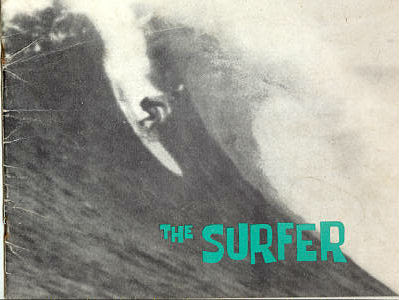
THE SURFER Magazine, Spring 1960 

Surfer's Annual and Reef Magazine 

Mike Doyle 

Curren's Template 

Paddling, Surfing & Lifeguard Competitions 

Greg Noll on the Mainland 

Ricky James' Thumb 

Da Bull at Redondo, Winter 1960 

Malibu 

July 7, 1960 

September 19, 1960 

October 3, 1960 

Mike Doyle and Big Wednesday 

Winter 1960-61 on the North Shore 

Waimea 

Mickey Dora on the North Shore 

Ricky Grigg 

Robin Grigg & Mike Doyle 


For the world of surfing, the previous year 1959 was a disaster in the sense that the movie Gidget resulted in the quick over-population of Southern California's best point break: Malibu -- and increased numbers of kooks in the lineup at other surfing beaches, as well. Looked at in the long run, Gidget and the other "beach movies" that followed caused surfing to become popular to non-surfers before the sport and the lifestyle were even clearly understood. The new breed of poser surfers found themselves wanting to be kahunas on the beach and live the lifestyle they'd only seen through Hollywood eyes.

The year 1960, real surfers got media relief from John Severson. While Bud Browne, Greg Noll, Bruce Brown, John Rohloff as well as John Severson were making surf films for surfers, the big significant media event for surfers in 1960 was the publication of the first surf magazine...


Early Surfing Publications


The first text and photos printed with the surfer in mind were books. Ron Drummond was the first one to publish a book on bodysurfing, in 1931, entitled The Art of Wave Riding. A few years or so later, in 1935, Tom Blake published his landmark book Hawaiian Surfboard, the first book on surfing. This later volume is still in print, under the title Hawaiian Surfriders, 1935.1

The first newsletter published for surfers was Ye Weekly Super Illustrated Spintail, the publication of the Palos Verdes Surf Club. A bulletin for club members, it was edited by Doc Ball, who provided his own photographs. Ye Weekly Super Illustrated Spintail had a press run between the years 1936-40.2

"Whipping up in mid-channel, the giant crackers surely reached the awesome height of 20' at times," wrote Ball in the August 8, 1937 edition. Writing about the big south swell to hit Flood Control, at Long Beach, and the club's surfari there, Ball continued: "Wild man (LeRoy) Grannis, when attempting to look where he was coming from, got caught in the hook and was snatched from under himself in a whirling mass of soup. Fire-Hose Feister, while doubling up with fits of laughter at the sight of Grannis, (also) got gobbled up in short order."3

Doc Ball pasted up about 200 of these typewritten editions between 1936 and 1940. One-to-three pages each, Ye Weekly Super Illustrated Spintail was notable for its surf shots. Following World War II, Doc Ball went on to publish the first fully illustrated book on surfing, California Surfriders. This book contained many of the shots he had taken in the pre-war years and is a classic.4

"Next to surf riding," Ball encaptioned one picture of a bunch of the Palos Verdes club members pawing at an edition of Ye Weekly Super Illustrated Spintail, "they like pictures of same which, all told, is the reason for this book."5 The initial press run of California Surfriders was 510 in 1946, directly following the war.6

Fifteen years later, the first surf magazine came out in 1960, the product of surfer John Severson...


THE SURFER Magazine, Spring 1960


John Severson said he first thought of producing a surf magazine in 1949, when he was 15 years-old and a surfer since 13. The lack of potential buyers, in terms of numbers, caused him to initially decide against it.7

Severson's creative edge turned, instead, toward film, in 1957, while he was in the Army and stationed on O`ahu. That year, following the lead of first Bud Browne and then Greg Noll, Severson made a 16mm film called Surf. Fred Van Dyke took it on the road and showed it on the budding high school auditorium circuit in California. After finishing his stint in the Army, the following year, Severson made his second film, Surf Safari, and took it on the road, himself.8

"One thing was immediately apparent," he wrote, echoing Doc Ball's observation of years before. "Surfers would devour any image of wave or surfer." The posters promoting his movies would vanish quickly from the telephone poles they were stapled to. Surf shops had waiting lists for the extra posters Severson started dropping off after his showings. These surf posters were 8 X 10 glossies that sold at the showings for a buck a piece.9

"In '59," wrote Matt Warshaw in an article on surfing magazines, published in The Surfer's Journal in 1996, "the magazine idea resurfaced. There were a few thousand potential readers now, maybe lots more." Severson came up with the idea of an "annual" to help promote his thrid film, Surf Fever. Calling the black and white booklet with a two-color cover The Surfer, Severson reasoned that if sales went well, he would make another one, the following year, to go along with that year's cinematic offering.10

"The first edition needed to be ready to distribute by Easter of '60," continued Warshaw, "when Severson would begin touring Surf Fever. He took a few new photographs for The Surfer, but mostly relied on blow-up prints from his film stock. He grouped certain photos together ('Toes on the Nose,' 'Rincon,' 'Waimea Bay -- the Heavies'), wrote captions, made spelling decisions ('kuk' instead of 'kook') and sold 12 advertisements (two full-page at $400 each and 10 partial pages). He had-lettered the cover logotype and spent months playing with layout and design. He remembers crouching on the living room floor of his two-bedroom Dana Point apartment in December of '59, surrounded by the 36 pages of artboards that would eventually become the first issue of The Surfer; high on creative energy one moment, then nearly frozen by the publishing version of stage fright."11

"The 26-year-old had invested heavily on himself. Each page of The Surfer was given life by Severson's money, ego and aesthetic. He photographed and developed the cover shot of Jose Angel at Sunset, for example, then shamelessly tilted up the left-hand corner during the design process, effectively doubling the size of the wave. (The Pat Curren shot on page 16 of the first issue was runner-up for the cover.) He shot virtually all the other pictures and added twelve of his own drawings...

"The Surfer was clearly self-serving. It was also technically crude... the quality of images in general fell short of Doc Ball's standard in California Surfriders.

"But The Surfer was so friendly and generous, so perfectly in tune with its subject matter and so thoroughly stoked that the flaws nearly disappear... it remains unique."12

"The first one really was different from all the others," Severson noted, "and actually came out pretty much just how I'd hoped.

"It was simple. I liked all the white space and all the artwork. It was trying to be an art piece, really. But total surfing."13

The first issue of The Surfer -- later changed to simply Surfer -- contained many images that continue to be republished to present day. Like, the shot Bud Browne took of Mickey Muñoz doing the "quasimoto" and the one Severson shot of Kemp Aaberg at Rincon (his favorite) with Warren Miller's 1,000mm lens.14 Perhaps the photo that would gain the greatest notoriety was the one Severson put on the inside back cover. It shows a surfer paddling out alone at Hammond's Reef with offshore winds causing the right hander to feather brilliantly.

"I got that picture early in the process," Severson remembered. "What a shot! Here was a guy going out all by himself to these perfect waves, and I remember... I remember..." Severson drifted off in his recollection, genuinely moved. "Oh, wow. Yeah, I mean, that photo really was the one. So I put it aside and came back later when I had some time to really work on it."15

John Severson closed the first issue of The Surfer with this Hammonds shot, writing below it: "In this crowded world, the surfer can still seek and find the perfect day, the perfect wave, and be alone with the surf and his thoughts."16 That refrain has been adopted by succeeding generations of surf-stoked wave riders.

Leonard Lueras, in Surfing, The Ultimate Pleasure, wrote that "because it filled a yawning need as the first ideas forum published by and for surfers, The Surfer was well received."17

"When I created SURFER Magazine in 1960," wrote Severson in 1995, "I thought I was filling a photo need. But more likely, there was a huge information vacuum, and I was merely the first entrepreneur sucked into the tube..."18

Severson started the mag with $3,000, 36 pages and a pressrun of 10,000 copies sold for a dollar each. "In early spring," wrote Warshaw, "Severson and his brother drove to L.A., loaded the magazines into John's VW van, turned around and began hand-distributing to surf shops and bookstores. Severson took stock a few months later. Five thousand sold. Five thousand for the archives. No loss, but virtually no profit. A few months passed as Severson worked on his fourth film, Big Wednesday, and considered his next publishing move. He finally decided against a second photo annual in favor of a quarterly."19

"A decade later," noted Lueras, "Surfer was a slick monthly with a paid circulation of nearly 100,000. In 1970 The Los Angeles Times called Surfer magazine 'the only magazine of national consequence published in Orange County."20


Surfer's Annual and Reef Magazine


Hard on Severson's heels were two other publications that came out in 1960 but which were short-lived.

One was Greg Noll's Surfer's Annual, a 46 page photo collection that featured 16 year-old cartoonist Rick Griffin.21 Griffin would be hired by Severson the following year and go on to create the cartoon surf character "Murphy." Later, Griffin would be a leader in the development of psychedelic poster art. His best known material is probably the cover work he did for The Grateful Dead in the 1970s.

In August, September and October 1960, Reef magazine attempted to become surfing's first monthly. Edited by Pat Anderson and David Goldman, Reef magazines sold at the affordable rate of 35-cents.22


Mike Doyle


When Mike Doyle's first trip to the North Shore ended, he returned to Southern California in the Spring of 1960 to take up lifeguarding at Manhattan Beach. Before he did so, though, he surfed Swami's a bunch with Rusty Miller.23

"I'd surfed with Rusty at Swami's several times," wrote Doyle, "but the first time I ever saw him out of the water was at a party in Palos Verdes. He'd been wearing a tweed coat and slacks, and was smoking a pipe with his arms crossed, looking very much like a professor of history, which was what he wanted to become at the time. He had a freckly complexion, kind of a bent nose, and reddish-brown hair. I remember thinking, This guy's really got his act together, going to college, dressing like a professor. He made me feel like a goofball.

"Rusty lived with his parents on the bluff in Encinitas, just a half mile or so from Swami's. It was kind of strange going to Rusty's house. His father was extremely overweight, and every time I saw him he was sitting in a chair in the living room smoking cigarettes. Rusty's mother had a deep, raspy voice, and she chain-smoked, too. The ceiling in their house was stained brown from all the cigarette smoke, so it was easy to imagine what the insides of their lungs looked like."24


Curren's Template


"Rusty and I surfed at Cardiff Reef that morning," continued Doyle, "and I explained to him the problems I'd had with my surfboards in Hawaii that winter and how badly I needed one of Pat Curren's designs.

"Rusty said, 'You know, Curren just opened a surf shop here in Encinitas. You oughta stop by and see him.'

"I tried to explain how terrified I was of Curren.

"'I know what you mean,' Rusty said. 'He scares me, too. But I still think you oughta go see him.'

"That afternoon I stopped by Curren's shop on D Street. I parked around the corner and sat in my car for a few minutes, working up my courage. When I finally got out and walked around the corner, I saw a sign on the shop window: Be back sometime.

"I peeked in the window, and in the dim light I could see a row of Curren's big guns standing against the back wall, like dark tiki gods. I stood there trying to memorize their shapes, trying to capture that one magical line. But I knew it couldn't be done.

"I started walking away -- then stopped. Right there on the sidewalk, drawn in grease pencil, was a full-scale drawing of Curren's template. It was about 9' 6" -- just my size -- a masterpiece of art and design, right there where people could walk on it, spit on it, or make off with it. I stepped inside those magical lines, then looked down at my feet to see how the water flowed over and around me. It was a miracle!

"But how could I get it off the sidewalk and into my hands? I knew right away what I had to do. I ran up D Street, across the Coast Highway, then up the hill to the Mayfair market, where I bought ten feet of butcher paper and a felt pen. I ran back down the hill to Curren's shop, unrolled the butcher paper over the template, placed rocks at all four corners to keep the paper from blowing away, then got down on my hands and knees, and began tracing the lines.

"I had most of the template on paper when I realized somebody was watching me. I looked up and saw Curren standing on the street corner. His forehead was all twisted up in anger, and his eyes were scrunched down into mean little slits. I wasn't sure if he even recognized me. Should I try to explain myself? Or should I just run for it now, while I still had a chance?

"Curren stared at me for a long time, putting it all together: the North Shore, the Quonset hut, the kid with the lousy surfboards. Finally, as he fumbled for the keys to his shop, Curren said, 'You didn't have to steal it, Doyle. Though I have to admit that's kind of flattering. Just don't forget to tell people where it came from, all right?'

"As he disappeared through the doorway, I saw a smile on Curren's face."25


Paddling, Surfing & Lifeguard Competitions


The Summer of 1960 was when Mike Doyle earned his second nickname of "Ironman," by winning the first Ironman competition.26 More than any surfer of his time, he got into competition in a big way:

"In those days every little beach town up and down the coast had its own summer beach festival... Since I was training every day to stay in shape as a lifeguard, I used to enter all those contests as a fun way to check my level of conditioning. If there was a paddleboard contest anywhere in Southern California, I was in it. If there was a rowing contest, I'd enter that. And, of course, I was in the surf contest, too. In no time at all, I'd collected a whole garage full of trophies.

"Looking back on it now, I'd have to say I went to the extreme. I became a contest junky. But at that age, nineteen, I craved the recognition..."27

"Competing in paddling contests taught me that I had certain natural talents -- broad shoulders, long arms, and fairly large hands... Paddling races also taught me a lot about the psychology of competition. There were a few great big guys who were just animals at paddling, but they didn't know how to compete. I would plan each race ahead of time, then stick to the plan. If it was an eight-mile race, I'd stay with the pack the first couple of miles, then make my move on the third mile and power out until I'd buried them. I'd be almost exhausted, ready to die, but the guys behind thought I could still keep going, so they'd quit, at least in their minds. And when they gave up, I could slow down and conserve my energy for the rest of the race.

"I really loved competing in paddling races -- much more than I ever loved competing in surf contests. Paddling had a finish line, which made it real."28

Mike Doyle admitted that "some of those first surf contests were so bad, it was kind of funny. Usually the judges didn't even surf. The local president of the chamber of commerce would get his mother-in-law, who was a gym teacher, and his brother, who was a fan of big-time wrestling... And they were considered qualified to judge a surf contest, even though none of them had ever been on a surfboard before. The judges had no concept of wave selection, wave positioning, or style. So if some guy in the contest did something really silly, like stand on his head, the judges thought that was just fantastic and the guy would win the contest. It was ridiculous, and the surfers knew it.

"Even the surfing trophies were ridiculous. In those days it was hard for the contest organizers to find surfing trophies, so they used to take a basketball trophy with the basketball player jumping up to make a one-arm dunk. They'd cut the basketball off his hand, cut under his feet at the base, then lay him down on a small, hand-carved paddling board. It looked like a basketball player being carried out on a stretcher."29

"The truth is, I never felt that surfing as a competitive sport made much sense. Surfing is very difficult to judge because there's an act of god that influences how each wave will behave...

"But probably the worst thing about surf contests," continued Doyle, striking a blow, "is that they're contrary to the very essence of the sport, which is freedom. If you make up a bunch of arbitrary rules that are supposed to define good surfing, the creative freedom of surfing gets destroyed.

"I wasn't the only surfer of my era who felt this way. There were a lot of great surfers -- Kemp Aaberg, Lance Carson, Phil Edwards, and Mickey Dora -- who rarely entered contests. If a big contest was being held at Malibu, they'd much rather go down the road someplace and surf by themselves all day."30

"As a young man," Doyle admitted, "I was caught in the middle of all that. I wasn't against competition -- I loved competition... But in a surf contest, I never felt there was a fair way to decide who won.

"After I got a little older and began competing every winter in world-class surfing contests, the judging became somewhat better. But I still never felt the contests had any real validity. I competed because surf contests were my free ride. How I placed in contests one year would determine whether of not a sponsor would pay my way to Hawaii the next year. If I hadn't competed in the big surf contests and done well, I would never have been able to spend half the year traveling and surfing. So in a way, competing in surf contests became a job."31

This is probably true for many of the professional surfers who compete, today.


Greg Noll on the Mainland


At this point, in addition to his wintertime surfing of big waves on O`ahu's North Shore and filmmaking, Greg Noll was getting into production surfboard making. He tells a humorous story about Rick James and his cut-off thumb:


Ricky James' Thumb


"Ricky James was an excellent shaper who worked for me for several years before he started his own board shop," Noll began. "One day, in our old shop on Pacific Coast Highway, Ricky was sawing center strips for boards and talking to one of his buddies at the same time. I was about fifteen feet away and I told him, 'Ricky, goddammit, pay attention to what you're doing.' He says, 'I am, I am.' He's telling stories to this guy and the saw is whining yeoooow, yeoooow as it cuts off center strips.

"Suddenly I hear the saw stop and Ricky yells, 'Oh, God!' I rush over, and there's his thumb on the floor. He had sawed it off almost at the base. I grab a paper towel, scoop up the thumb and take Ricky to the hospital. All the time we're driving, I'm talking to him, trying to keep him from going into shock.

"'Do you think they can sew it back on?' he asks me.

"'Oh, yeah, they got modern-day medicine, no sweat, Rick. Just settle down, everything is going to be just fine. They'll sew it back on. You may have a little scar but everything is going to be O.K.'

"I'm driving and he's sitting on the passenger side and the thumb is between us, on the seat. While we're talking, Ricky keeps looking down at it as though the thumb is a third person in the car.

"As soon as we get to the hospital, they take Ricky into Emergency. I've got the thumb and Ricky is clasping the stub and the doctor walks in. Ricky says, 'I'm so glad you're here. Are you going to be able to sew my thumb back on, Doc?'

"The doctor had the worst bedside manner of any doctor I've ever met. He says, 'No, it wouldn't do any good. We could sew it back on, but it would just turn black and fall off in a few days. There's no use in even trying.'

"Now Ricky is really going into shock over the whole situation and he says, "Doc, please. I don't know what my girlfriend will think of me. I don't care if it works or anything. Just sew it back on so it looks good. I don't care if it works.'

"The doctor talked to him for a while. Of course, they didn't sew the thumb back on. I saw that a nurse had the thumb and was going to dispose of it. I said, 'Do you mind if I take that with me?' She thought it was kind of an odd request, but she gave it to me. I didn't tell Ricky.

"After they got Ricky bandaged up I took him home, gave him a couple of beers and left him there to relax. Then I went back to the shop and mixed up a nice, slow batch of resin in a Dixie cup. Dropped the thumb in it. Let it set up, then took off the Dixie cup. It was absolutely perfect. Looked like a paperweight with a thumb suspended in it."32

"Ricky was off work for a while, so we used the thumb as a sort of novelty item. In the inner shop, we stuck it in the showcase where we had fins, wax, skateboard accessories and... a thumb. People browsing in the shop would look in the showcase and say, 'Hey, take a look at this fake thumb.' Then they'd take a closer look and say, 'Jesus Christ, this isn't a fake. Look, you can see dirt under the fingernail.'

"The thumb got to be such a conversation piece that guys started coming in from all over the place just to see it. I came into the shop one Saturday and there must have been eight or ten guys shoulder-deep in the showcase, trying to get a glimpse of the thumb.

"Meanwhile, Ricky gets wind that his thumb is on display. I hear he's mad, so I put away the thumb for safekeeping. He comes in asking for his thumb. We had a giant argument about whose thumb it was. I said, 'I found it.' Ricky said, 'I don't care. You're not supposed to put a guy's thumb on display.'

"We used to freak out people, especially girls, with the thumb. We'd say to a girl, 'Hold out your hand. I want to show you something.' And we'd put the thumb in the Dixie cup in her hand, remove the Dixie cup and watch a hundred expressions go across her face. She wouldn't know whether to drop it or throw it or what.

"Ricky and I argued about The Thumb for nearly two years. I still have it. It's buried in a box somewhere."33


Da Bull at Redondo, Winter 1960


Sonny Vardeman, Lieutenant, Los Angeles County Department of Beaches and Harbors recalled Greg Noll surfing the Redondo breakwater earlier that year:

"One day during the winter of 1960, the surf broke about twenty feet at the Redondo breakwater. Greg and I and a few of our friends had been out riding a few big waves the previous day. In fact, one of our rides appeared in an early issue of SURFER magazine [which began in 1960The following day, the swell was huge. We couldn't get off the beach, so everybody backed out.

"Everybody, that is, but Greg. He went out inside the breakwater where the boats were moored, then paddled out and around the jetty to get to the break.

"On the way out around the jetty, a giant set came and almost caught Greg between it and the seawall. He just made it over the top of the wave. Had it broken, it would have slammed him into the seawall. The set was so big, it rolled over the seawall and tore a number of boats loose from their moorings. It had to be twenty feet. He finally made it to where the peak was breaking. After about forty-five minutes, another giant set came. He paddled for one of the bigger ones, caught it and rode it half a mile back to the beach as we all watched from shore. Greg had put himself in a very precarious position along the breakwater jetty. But he was very determined to ride the wave, come hell or high water. When he was that determined, he usually accomplished whatever it was he'd set out to do."34


Malibu


Malibu in the Summer of 1960 was a far cry from what it had been. With the onslaught of the beach movies, crowds came to Malibu and beaches, in general. The foam and fiberglass didn't help, either, making wave riding within anyone's grasp who wanted to try it.


July 7, 1960


Early in the summer. "Twilight. A fire burns brightly on the beach," wrote C.R. Stecyk, "and the crowd rapidly diminishes out in the water. Lance Carson gets a long five across the point, and the fireside crowd hoots in appreciation. Bob Cooper takes off on the next wave, and perfectly emulates Lance's ride causing the beach spectators to scream wildly. Lance responds with a howling ten. Cooper covers this and adds a kick stall on the inside section. Carson comes back with a kick stall to heels. The audience grows wilder with each rider's next move of one-upmanship. The pair of surfers never falters and never repeats any tricks as they continue to match one another under the light of a full moon. Finally, after two hours of flawless finesse surfing, Lance and Bob leave. No words are spoken as none are needed. Fun was the function."35


September 19, 1960


Phil Edwards, in 1960, is -- according to C.R. Stecyk -- the "reigning monarch of the surf media." When he visits Malibu, Lance Carson crawls on all fours and imitates a mad dog in Edwards' steps. Phil visits with Toni Donovan, "the object of his affection," and his old San Onofre surfing brah Mickey Dora."36


October 3, 1960


"Gordon Duane," wrote Stecyk, "an enterprising manufacturer from Huntington Beach via Compton, arrives with the cast and crew of his cinema epic Sacrifice For Surf. While Gordie films, the point provocateurs scrutinize the uniquely elaborate, multiple curved, wood inlay sticks which members of this roving band possess. The incredible craftsmanship of these boards is apparent, yet Duane's boroque design sense baffles many. Gordie's manager is gruff and intense as he refuses to elaborate on his artistic intent or offer any purported functionality for diamond patterned and curvilinear inlays. Insiders speculate that Duane's aggressive standoffishness is the natural result of having recently suffered the loss of his on-the-sand factory/shop at the foot of the H.B. Pier in a disastrous fire. Gordie first heard of the fire when he called in to confirm that certain boards in the glassing room had gotten done and was told... 'Yeah, they're done OK, well done!' (Perhaps if they'd known that Gordie was also advised that the last known person to be seen leaving his shop before the fire erupted was none other than a prominent south coast surf industry figure that happened to smoke the very brand of cigarette that firemen said was the likely cause of the blaze, they would have better understood Gordie's unfaltering mistrust of his fellow man.) The film Sacrifice For Surf remains an underground legend, largely because of the sequences captured that day of Dewey Weber cavorting and careening across ten foot Malibu faces."37


Mike Doyle and Big Wednesday


"That fall," wrote Mike Doyle, "John Severson told me he wanted to make his first surf film in Hawaii [his fourth, Big Wednesday, which was shown in 1961], and wanted to use me as the featured surfer. He said he would pay for my trip to Hawaii that winter and cover all my expenses while we were working on the film. I couldn't believe it -- I could pocket all the money I'd saved working as a lifeguard that summer!

"In December, John and I already had our tickets to Hawaii when, at the last minute, he told me he wanted to take along an airline stewardess he's met just a few days before... to hard-core surfers, having a girlfriend in Hawaii was considered a big drawback because it cut into your surf time. But John was paying for my trip, so how could I object? Still, something about the glassy look in John's eyes when he talked about this girl made me uneasy."38

Here, Doyle, in the retelling of the story, has a little fun at Severson's expense: "When I met John's girlfriend, Louise, at the airport, I could see why he was all hot over her: she was a tall, pretty blonde, with a curvaceous figure.

"In Hawaii we rented the Quonset hut right on the beach at the Pipeline, where Buzzy and his bunch had stayed the year before. I retreated to one of the smaller back bedrooms and let the two lovebirds take over the front of the house. But that back bedroom became my prison cell. From the first night, and every night after, I lay in there listening to John and Louise making passionate love. I couldn't sleep. At dawn every morning I would peek out my window and see huge waves breaking on the beach. I was dying to get out there and surf, but I couldn't because John and Louise wouldn't stop long enough for me to slip through the front room and out the door. And of course we weren't getting any work done on our film."39

"After a few days of that," continued Doyle, "I knew I had to get out of there. When John and Louise cooled down enough to go buy some groceries, I slipped out with my surfboards and went over to Kawela Bay, where the guys I'd lived with the year before had rented a house again.

"What a joy it was to be with my surf buddies again! I forgot about Severson and the movie we were supposed to be working on. I just went surfing every day and enjoyed the life of a beach rat.

"Later that winter, Severson cooled down just a bit, and we finally got some work done on his film. He and Louise got married not long after that..."40


Winter 1960-61 on the North Shore


The usual cast of characters started assembling on the North Shore as the winter surf season got underway, the traditional season of the makali`i.


Waimea


"At one time," recalled Greg Noll of how the season began for him, "both Peter Cole and Jose Angel taught at the Punahou school in Honolulu. They had to drive past Waimea about six o'clock every morning on their way to work. We had a deal worked out where they would call me in California if it looked like a big day was coming up at the Bay. I kept all my stuff packed and left my big-wave board at Henry Preece's house. Since Hawaii was three hours ahead of California time, I could catch an early flight from the Mainland and be in Hawaii, in the water, by early afternoon. Alan Chang would pick me up at the airport.

"I only had hit Waimea on a few occasions the very day it was coming up. Usually I'd arrive in Hawaii and take several weeks to warm up. Catch some waves, break in easy. It's quite a transition from four-to-six foot California waves to twenty-foot-plus waves in Hawaii.

"One particular morning, Jose calls me and says, 'Jeez, Greg, it's coming! You'd better get over here!'

"I caught the earliest flight I could get. Alan Chang picked me up, took me to Henry's to get my board and we headed for Waimea."41

"It had been six months since I had been in the Islands," continued Noll. "This was the first day of the winter season. I paddled out just as a giant set rolled in. I saw Peter scratching for the first wave. He dropped down and looked like an ant as he smoked across the face of the wave. I thought, 'Christ! That wave looked bigger than normal.' It was.

"I kept paddling out, spun around and took off on the next wave. It was even bigger. I remember thinking to myself, 'Goddammit, I'm not going to let Peter get away with this.' It was straight up and down and I was late getting into the wave. The ass end of the board dropped out from under me and I free-fell from top to bottom. I ate it somethin' fierce.

"I think it meant more to me to psych out Peter than it did to make the wave. Peter was a hell of a waterman, but he had some shred of sanity. Jose would practically kill himself before he'd let anybody get the best of him. And Ricky was usually too smart to get sucked into these head games. Each one of these guys was interesting and complex in his own way, and I just loved to mess with their brains."42

"The first time I paddled out at Waimea that winter," wrote Mike Doyle, "the waves looked impossibly big and fast. I watched another surfer dropping in on a fifteen-foot wave, and I thought, God, that's impossible! It was so intimidating. The North Shore really is a whole different level of surfing.

"But after a week or two, I was back in the groove again. I was thinking fast, and after a while a fifteen-foot wave just didn't look that big anymore. Besides, I was riding the boards I'd made from Pat Curren's template. This year, not only did I have the experience, but my equipment was as good as anybody's."43

By then, Fred Van Dyke was a veteran of the Waimea scene and he had this to say about the winter of 1960-61: "Waimea was well broken in, but not dominated. Sammy Lee, Peter Cole, Rick Grigg, Pat Curren, Kimo Hollinger, Dick Brewer and Greg Noll were the stars. We were all still mostly wiping out at Waimea, but having fun, and the boards were getting better, especially Brewer's with his special eye for board lines. Foam definitely overtook balsa, but broke more easily."44

"I surfed Waimea one day that winter when it was at least twenty-five feet, maybe thirty," recalled Mike Doyle. "It was the biggest I'd ever seen it, and there were only about a dozen guys out. Every surfer has his bad days, when he just can't do anything right, and every time he takes off, he gets creamed. But I'll always remember this one day, because I could do no wrong. Other guys were going over the falls, and boards were crunching all around me. But I'd take off and angle right, hang high at the top of the wave, then drop down twenty feet and swing around into the curl. I felt so calm, I kept wondering if I was doing it right. It seemed so simple, like surfing a three-foot shore break back in California. But when I looked up at the waves, they were huge."45

"I had one bad day at Waimea that winter I'll never forget, though," admitted Doyle about the other side of the surf. "It was late morning, on a fifteen-to-eighteen-foot day -- big, but not monstrous -- with choppy surface conditions. There were also four-foot wedges coming in at an angle from the north and breaking. The surf was decomposing, and it was about time to go in, but I wanted to catch one more good tide. I was sitting right off the point, which can be a bit tricky. If you lose your board there, the waves will carry it right into the rocks. I paddled for what I looked like an average wave, but as I dropped in, it reared up to about eighteen feet. As the wave passed over the boil, it churned violently and, in classic Waimea fashion, the top of the wave pitched way out. Before I was completely in the wave I could see it was going to get nasty, so I sat back on my board, trying to stall out. But I was too late. The wave hit me in the back and threw me over the falls while I was still sitting on the rear of my board. I had no idea how to bail out of something like that, but as I was free-falling down the face of this eighteen-foot wave, I swung my right leg over the board and rolled off to the side. To my surprise, when I hit the water, instead of being pounded to the bottom, as on most bad wipeouts, I was pitched out like a beach ball. I bounced along in front of the white water, thrashing and spinning, unable to dive under or break away. Luckily, I was able to suck a little air through the foam. The white water drove me in about 150 yards, in a course parallel to the rocks, but only about ten feet away from them. I could very easily have been dragged along the top of the rocks, in which case I would have been ground to hamburger. When I was finally able to stop myself, I saw that I was right in front of the rocks. As I watched in horror, the waves crashing on the rocks tore my board into a hundred pieces. Slowly and carefully, I eased myself away from the rocks, and swam all the way to shore.

"It's odd how, out of thousands of waves and hundreds of wipeouts, one wipeout like that has stayed with me for years. Not because it turned out so badly, but because if things had gone just a little bit differently it might have been the end of my life."46

In Fred Van Dyke's overall assessment of the North Shore that winter, "... Phil Edwards, Mike Doyle and Mike Hynson are tearing the North Shore apart. It's the year of hot dogging. There's a de-emphasis on big waves in movies. Nose walking, head dips, 360's and carving down the face dominate.

"Phil is the hottest on the nose. Doyle is all grace and poise, like a Greek god. He can ride a long hot dog board on a big wave or small, and it looks easy. Hynson is the head dipper and carver of faces, using a newly-acquired wide stance. He looks strong.

"... Greg Noll does an ad with all the best riders sponsoring his boards. It's a full page layout, a regatta of surf stars...

"Buzzy Trent began stoking a guy named Dick Brewer into shaping a few boards. Brewer showed real promise. He opened the first surf shop in Haleiwa and sponsored the Haleiwa Open Surfing Competition sometime later.

"A fire marshall threatened to close Brewer's shop down because it was a fire hazard, until Brewer shaped a board for the marshall's son. He never heard from him after that. Sometime later Brewer gave then President Lyndon Johnson a surfboard when he visited the islands. That was Brewer."47


Micki Dora on the North Shore


"Mickey Dora showed up in Hawaii that winter," wrote Mike Doyle. "His reputation in the world of surfing was growing, but more as a personality than as a big-wave rider. He was great back in Malibu, where he was the king, but when he came to Hawaii he showed up with all the wrong equipment, like it didn't really matter to him, or like he was trying to make a mockery of big-wave riding. I don't think Dora ever got the thrill from big waves the way others of us did. I think it was the surfing lifestyle that intrigued him more than anything else. He didn't fit into mainstream society, with a steady job and a little house out in the suburbs; but at the beach, Dora always felt at home.

"Dora had been surviving by doing stunt work in Hollywood -- awful movies like Bikini Beach Blanket, with Frankie Avalon and Annette Funicello. But the movies didn't pay enough to live the kind of lifestyle he wanted. Nobody got paid to surf in those days, no matter how good he was. So Dora had to hustle. You might say Mickey Dora was the professional surfer of his era."48

"One day," continued Doyle writing about Dora, "when a bunch of us were in Honolulu, Dora grabbed me and said, 'Come on, Doyle, let's go to dinner.'

"I figured we'd run down to some hot dog stand, gag down a few tubesteaks, then get back to the beach. But Dora had something else in mind. He took me to the Royal Hawaiian, one of the grand old hotels on the islands -- very beautiful and very expensive. As we walked into the lobby, with huge candelabras hanging from the ceiling, I started thinking to myself, This place is way out of my league. It wasn't anything at all like the Busy Bee Cafe, where I usually ate in Honolulu and where two dollars would buy you all you could eat.

"But Dora was right at home. He'd been groomed very early to feel at ease in that kind of place. He said, 'Excuse me for a second, Doyle, I've gotta go see if somebody's here.' He walked over to the registration desk and asked if Mr. So-and-So had registered yet. While the woman at the desk checked the registration book, Dora peeked over the desk and scanned the names in the book.

"We took a table laid out with white linen and crystal and real silverware. Dora just glanced at the menu, then ordered a full dinner, with hors d'oeuvres, fine wine, dessert, and a liqueur.

"After dinner the waiter brought the check on a leather tablet; it came to just over $200. Dora glanced at the check quickly, then looked up at the waiter and said, 'I'll sign for it.'

"I had to gag myself to keep from laughing. But to my surprise, Dora signed the check, the waiter folded the leather tablet and said, 'Thank you very much, sir.'

"I still didn't quite get it yet, but I knew enough to keep my mouth shut.

"On the way out of the lobby, I looked over at the registration desk, and then the whole thing became clear.

"I didn't say anything to Dora, and he never mentioned it to me again."49


Ricky Grigg


"One night," wrote Mike Doyle beginning a story of another famous surfer of that time, "we had a big party at our house at Kawela Bay. We invited everyone we knew on the North Shore and told them we'd have the food, but bring your own beer. There were hardly any girls living on the North Shore then, so our party was mostly a bunch of guys trying to prove they could drink more beer than the next guy.

"One of the guys who came to our party was a merchant marine named Henley, from Oceanside. He didn't really surf, but he hung around with the surf crowd when he wasn't out at sea. He was about 220 pounds, heavily muscled, crude, and pushy. The guys from Oceanside at that time were known to be very heavy partiers, and Henley was as heavy as any of them.

"As soon as he walked in the door, Henley shoved his way through the crowd to the food, grabbed all of it he could, and started shoving it in his mouth. Nobody said anything, because the guy was really big, and besides, we didn't want to see our party turn into a brawl. When the food was all gone, Henley shoved his way into the kitchen, went to the refrigerator, and pulled out a beer."50

"Just then," continued Doyle, "Ricky Grigg walked in. Ricky was six inches shorter than Henley, sixty pounds lighter and, unlike Henley, gentle by nature. But Ricky wasn't afraid of anything. He said, in a friendly way, 'Hey, that's my beer.'

"'So what!'

"Ricky looked him in the eye, then said again, 'That's my beer.' And he snatched it out of Henley's hand.

"Henley grumbled something, then moved away. Ricky had backed that ape man down, and none of us could quite believe it."51

"Ricky Grigg was always doing things like that," Doyle went on, "which was why I was kind of in awe of him. He had won the Catalina-to-Manhattan Pier paddling race way back in 1955, he rode the hell out of the biggest Hawaiian waves, was a tremendous diver, and could hold his breath underwater for something like three minutes. But he was more than just a water jock. He seemed to have more focus in his life than most of us. He was going to school at Scripps Institution of Oceanography in La Jolla, he knew he wanted to be an oceanographer, and he went after it with energy and discipline. Although he was already one of the best big-wave riders in the world, surfing to him was still just a form of recreation. But everything he learned in school seemed to help his surfing, too. He had a real understanding of the ocean, which gave him confidence and a power of survival in the water that I don't think any of the rest of us had. He understood how the ocean bottom affects waves, how rip currents could be used to the surfer's advantage, how the weather patterns can be used to predict surfing conditions. He really understood hydrodynamic design and was able to perfect his surfing equipment to compliment his abilities. At a very young age, Ricky had become a master waterman."52


Robin Grigg & Mike Doyle


"Ricky had a sister, Robin, who was in Hawaii that winter," wrote Mike Doyle, "and I thought she was just as impressive as Ricky. She was blonde and lovely, athletic, had a pretty smile, and was a good surfer. She was about ten years older than I was, a nurse, and a lot more sophisticated than most of the people I knew.

"Robin took a personal interest in me. She used to ask me what I wanted to do with my life, other than surf. What kind of books did I read? What kind of music did I like? She drew me into her circle of friends, which included people who didn't always have salty eyebrows and sun-bleached hair. Most of them were well educated and , to my surprise, they seemed to like me and accept me, even though I was a water jock with some pretty rough edges."53

"At first our friendship was a brother-sister thing," continued Doyle, "-- or so I thought. Robin was probably always one step ahead of me. One evening Robin and I were down at the beach in Kawela Bay, having a good time goofing around together. There was a full moon that night, and we swam out to a raft in the bay... That was the beginning of an affair that lasted the rest of that winter. It was my first romance in Hawaii -- a thrilling experience in itself, but even more so for a twenty-year-old kid lucky enough to have a beautiful and mature woman to teach him the proper way to have an affair.

"Robin used her age and wisdom to influence me in a positive way. 'Suppose that within the next ten years you become the world's greatest surfer,' she said. 'What happens in the ten years after that? There's a whole new generation of little gremmies back there in California learning to surf. Ten years from now, they're going to be surfing better than you. Do you want to spend the rest of your life proving you can still keep up with them?'

"I think I was fortunate to have somebody like Robin help me see what my future might be like. She helped me understand how important it is for young athletes, no matter how good they are, to resist the tendency to let sports become their whole identity."54

_______________________________


1  See Drummond, Ron. The Art of Wave Riding, 1931, Cloister Press, Hollywood, California and Blake, Tom. Hawaiian Surfriders, 1935, ©1983, Mountain and Sea, Redondo Beach, California. Originally published in 1935 as Hawaiian Surfboard, published by Paradise of the Pacific Press, Honolulu, Hawai`i.

2  Warshaw, Matt. "Articles of Faith, 35 Years of Surf Magazines: An Insider's View," The Surfer's Journal, Volume 5, Number 1, Spring 1996, p. 86.

3  Ball, Doc. Ye Weekly Super Illustrated Spintail, Palos Verdes Surf Club bulletin, August 8, 1937. See also Warshaw, 1996, p. 86.

4  Ball, John Heath "Doc" (1907- ). Early California Surfriders, ©1995, Pacific Publishing, Ventura, California. Originally published as California Surfriders, published in 1946, by N.B. Whale. Later republished by Mounatin and Sea, Redondo Beach, CA, 1979.

5  Ball, 1946, 1979, 1995, p. 85.

6  Warshaw, 1996, p. 87.

7  Warshaw, 1996, p. 88.

8  Warshaw, 1996, p. 88.

9  Warshaw, 1996, p. 88. Severson quoted, source unknown.

10  Warshaw, 1996, pp. 88-89. See also Lueras, 1984, p. 130.

11  Warshaw, 1996, p. 89.

12  Warshaw, 1996, p. 89.

13  Warshaw, 1996, p. 89. John Severson quoted.

14  Severson, John. "Stone Age Editing," Surfer Magazine, Volume 36, Number 10, October 1995, p. 47. See reprinted photo and caption.

15  Warshaw, 1996, p. 89. John Severson quoted.

16  The Surfer, 1960, by John Severson.

17  Lueras, 1984, p. 130.

18  Severson, 1995, p. 47.

19  Warshaw, 1996, p. 89.

20  Lueras, 1984, p. 133.

21  Warshaw, 1996, p. 89.

22  Warshaw, 1996, pp. 89-90.

23  Doyle, 1993, p. 77 & 79.

24  Doyle, 1993, pp. 77-78.

25  Doyle, 1993, pp. 78-79.

26  Doyle, 1993, p. 82.

27  Doyle, 1993, p. 83.

28  Doyle, 1993, pp. 83-84.

29  Doyle, 1993, p. 84.

30  Doyle, 1993, pp. 84-85.

31  Doyle, 1993, p. 85.

32  Noll, 1989, p. 109.

33  Noll, 1989, pp. 109-110.

34  Noll, 1989, pp. 23-24. Sonny Vardeman.

35  The Surfer's Journal, Volume 1, Number 3, Fall 1992, C.R. Stecyk, p. 51. Stecyk dates are always up to question, but the season and year are usually right on.

36  The Surfer's Journal, Volume 1, Number 3, Fall 1992, C.R. Stecyk, p. 51.

37  Stecyk, The Surfer's Journal, Volume 1, Number 3, p. 59.

38  Doyle, 1993, pp. 88-89.

39  Doyle, 1993, p. 89.

40  Doyle, 1993, p. 89.

41  Noll, 1989, p. 105.

42  Noll, 1989, p. 105.

43  Doyle, 1993, pp. 89-90.

44  Van Dyke, 1989, p. 37.

45  Doyle, 1993, p. 90.

46  Doyle, 1993, pp. 90-91.

47  Van Dyke, Fred. Thirty Years Riding The World's Biggest Waves, ©1989, pp. 36-37. Fred marked it as the winter of 1959-60, but this had to have been 1960 and after, as there were no magazines to advertise in until SURFER was published later, in 1960 and Brewer didn't show up until the beginning '60s.

48  Doyle, 1993, pp. 91-92.

49  Doyle, 1993, pp. 92-93.

50  Doyle, 1993, p. 93.

51  Doyle, 1993, p. 93.

52  Doyle, 1993, p. 93-94.

53  Doyle, 1993, p. 94.

54  Doyle, 1993, pp. 94-95.

Friday, January 17, 2020

Bud Browne (1912-2008)


Aloha and Welcome to this LEGENDARY SURFERS chapter on surfing's first commercial surf filmmaker, Bud "Barracuda" Browne.

This chapter was originally written in 1994, fourteen years before Bud's passing. It was slightly edited in 2020.


Malcolm and Bud, San Clemente Community Center, 1994


Contents


Swimming, Lifeguarding, Diving, Surfing
Waikiki, 1938
The 1940s
“Hawaiian Surfing Movies” - 1953-55
“Trek to Makaha” - 1956
“The Big Surf” - 1957
“Surf Down Under” - 1956-58
“Cat On A Hot Foam Board” - 1959
“Surf Happy” - 1960
“Spinning Boards” - 1961
The 1960s
“Waves of Change” - 1970
“Going Surfin’” - 1973-77
“You’ll Dance in Tahiti” - 1967
Barracuda Favorites
“Surfing the 50’s” - 1994
“Film Ho!”


"... the real unsung hero, the man always in the background of surfing is Bud Browne. While the heroes are carving their names in the Surfing Hall of Fame, Bud is the photographer, bedecked with camera, wetsuit and fins, who sits hour after hour at the impact zone. He goes over the falls, shooting film of the surf heroes...”
-- Fred Van Dyke1


Introduction

In this day and age, most surfers probably think of the first surf movie as being the The Endless Summer (1963) by Bruce Brown. Yet, well over a decade before, Bud Browne -- no relation to Bruce -- was shooting surf footage and putting out surf films for surfers to get stoked. Although “Doc Ball, John Larronde and Don James all took surf movies in the old days” before him, Bud “Barracuda” Browne was the first one to do so commercially.2 In fact, Bud was the originator of the surf movie genre. The surf movie, aka surf film or surf flick, became a primary form of communication among surfers between 1953 and the beginning of the 1980s. Film and video of surfing continues to have a great impact on the sport, today.

Appreciation and Mahalo to Gordon McClelland for writing “Scenes from the Life and Times of Bud Browne,” which was printed in The Surfer’s Journal, Volume 4, Number 4, Winter 1995, and which provides the base source material for this chapter.


Swimming, Lifeguarding, Diving, Surfing


Born in 1912, Bud grew up in the water and swimming played a major role in his life.

“I was a Phys. Ed. major at USC beginning in 1931,” Bud told interviewer Gordon McClelland, “and was the swim team captain in 1934. I also swam for the L.A. Athletic Club from 1931 to 1948.”3
Swimming lead to lifeguarding which lead to surfing. It was not an unusual line of progression in the 1930s.

“I started lifeguarding in Venice Beach in 1938,” Bud told me. “I lived down there and started surfing that summer, using the lifeguard rescue board. When I began, I surfed with mostly Venice lifeguards and some guys who were members of the Palos Verdes Surfing Club, cuz I surfed there; guys like Adie Bayer and Tulie Clark.”4

The summer of 1938 lead to other summers full of lifeguarding, wave riding and diving, too.

“In the summers, before and after the war, I lifeguarded at the L.A. City and County beaches, around Venice and Hermosa. That led to my interest in diving and surfing. I’ve always enjoyed diving and would go out every chance I could. When the water was clear we would paddle out on a mat and free dive for lobster. In those days we’d get some big ones right here off the coast, mainly at Palos Verdes, Pt. Dume and Laguna.

“Whenever the surf was up, the water got murky and was no good for diving, so my diving partner, Jim Eubank, and I would ride waves on the mats.”5

Bud also surfed “right next to the Sunset Pier on our station’s Rogers rescue board... sand now extends 30-40 yards beyond the end of Sunset Pier.”6 But, prior to World War II, Bud was into diving much more than surfing.

“I went to the Red Cross Aquatic School on Catalina Island. They taught life saving techniques that are required of lifeguards. I dove around Catalina and also went to Todos Santos, Anacapa and Santa Cruz Island... diving for lobster and abalone. We used to give a lot of our catch away and sell some to make a few extra bucks.

“At first we just went in the cold water in bathing suits. Then, I got some rubber from a company called Rubber Craft, made a pattern and glued some suits together with rubber cement. We put on long woolen underwear, then pulled the dry suit over them. You had to be careful, because if you tore a hole in the rubber with a spiny lobster or crab claw, water leaked in on the wool and you started getting wet and cold.”7

At one point, Bud experimented with a device using a compressed air bottle with continuous air flow to a dive mask. “I saw the first 2 dry suits,” Bud remembered, “by Charlie Sturgel, and began making my own from then on.”8

When asked how he got into surfing specifically, Bud explained, “Back in 1932, I watched them surfing at Corona Del Mar next to that long, straight jetty and it looked like fun. While lifeguarding, I started riding waves on an old hollow Rogers paddleboard, mostly around Venice Beach. When the surf came up at Palos Verdes Cove, I put aside my diving gear, picked up a board and went surfing. There is a picture of me surfing on one of those hollow boards at the Cove in Doc Ball‘s California Surfriders book.”9

In the 1930s, “Doc Ball was the first surfing photographer, but he didn’t make a commercial film to show around like us other surf film makers did, later on.”10 The classic example of Doc Ball’s photography stands in the immortal California Surfriders, 1946, a photo journal of surfing as it exhisted in California between the mid-1930s to the end of World War II.11

Gordon McClelland, in his interview of Bud in The Surfer’s Journal, Winter 1995, entitled “Scenes from the Life and Times of Bud Browne,” asked Bud about the number of waveriders surfing back in the ‘30s.

“Not many compared with today,” Bud replied. “Most of the lifeguards surfed at Malibu and Venice Beach. Also Tulie and Bud Clark, Doc Ball, Hoppy Swarts and Mary Ann Hawkins all surfed at Palos Verdes. Down south at Corona Del Mar and San Onofre, you’d find people surfing year-round. It was nothing like it is now, but there were a fair number of surfers then.”12

Gordon asked Bud about Mary Ann Hawkins and wasn’t she an early woman surfer?

“Yes, and a very talented woman,” Bud replied. “She used to swim and surf well, and was the only woman I remember who was out regularly. We became good friends in the early 1930s and would see each other at the swimming meets, mostly ocean swims. She also worked in the motion picture business in Hollywood, doubling for Dorothy Lamour and other famous actresses. Later, as Mary Ann Sears, she had a swim school for tots at Waikiki. Several times I took underwater movies of her classes.”13


Waikiki, 1938


The year 1938 was an eventful one for Bud. That year, besides getting into surfing, he made his first trip to Hawaii.

“My first trip was on the maiden voyage of the steamship Matsonia to Honolulu in 1938. Duke Kahanamoku came out to greet the ship when it arrived, as he did on special occasions when VIPs were on board. Most of that trip was spent on Oahu, but I made a short visit to Kauai. Being short of cash, a friend and I went steerage on an inter-island boat and saw most of that island hitchhiking.

“Hawaii was an exciting experience for me. I’m quite sensitive to changes in sight, sound and smell, so Hawaii’s music, hula, flower leis and landscape had a profound effect on me. The tranquil, uncrowded conditions contributed to much of the charm. I didn’t actually surf on my first trip. I watched them surfing at Waikiki in 1938, then in 1940, I brought my hollow plywood board to Hawaii and surfed Waikiki.”14

At Waikiki, Bud met both Duke Kahanamoku and Tom Blake. “Yes, they were on the beach at Waikiki quite a bit,” Bud recalled. “We had mutual friends and Duke liked catamarans, so I’d film him sailing off the beach. There are several segments of footage showing one of these rides in the video Surfing the ‘50s, when a group of us went out on one of Woody Brown‘s catamarans.”15

Of Tom Blake, Bud recalled “that he was really into health foods. One time I walked into a small Waikiki restaurant and saw him eating raw oatmeal; dry, nothing on it. That seemed a little odd to me, but he was a nice person and was very popular at the beach.”16


The 1940s


During WWII, Bud was in charge of the swim program at Terminal Island Naval Base. “I was a Chief Specialist in Athletics -- first at San Pedro, then in the Southwest Pacific,” Bud recalled. “Our CASU and ACORN outfits supplied land-based Marine fliers with food, lodging, etc.” He didn’t get any surfing in, “but I did get some diving in, and I had time to hunt shells. I made necklaces out of the small ones and the guys eagerly bought them as novel presents to send home.”17

It was at this point that Bud gained his nickname of “Barracuda.”

“During the war, when I was stationed at Terminal Island, in the navy, someone called me that and it was picked-up later by -- I don’t really remember who -- It could have been someone like Mickey Munoz...”18

“… it just sort of stuck with me,” Bud reiterated. “… it was given to me because I spent a lot of time in the water swimming and have a tall slender build.”19

Before and during the war, Bud hadn’t done much with film. “No, that was before I became seriously interested in movie making,” he said. “I did shoot some 8mm film of underwater subjects and surfing then, but they weren’t really movies per se. It was just a hobby with me then. The results encouraged me to buy a 16mm Bell and Howell movie camera after the war. That’s when I really began to shoot film in a more serious format.”20

“I bought a movie camera in 1940,” he told me. “-- the two hobbies just came together naturally. I first started shooting moving pictures with an 8 millimeter Bell and Howell camera. It wasn’t until 1947 that I got a 16mm and continued taking surfing movies with that; mostly in Hawaii.”21

“Everything... being a lifeguard, a surfer, a diver, kind of lead up to the point where I went back to Honolulu in the late 1940s, joined the Waikiki Surf Club and began taking 16mm color movies.”22

“The Outrigger Club was expensive so most of us ended up joining the Waikiki Surf Club. I kept my hollow box board (built by L.A. City Lifeguard, Lug Carlucci) in the club’s storage area downstairs, right there at the beach. I favored Canoes and Queens at the time, although I can remember mat surfing a big day at Public’s and getting washed up on the inside reef.”23


“Hawaiian Surfing Movies” - 1953-55


By the beginning 1950s, Bud was going back and forth to Hawaii and Tahiti regularly, from the Mainland. “I had a teaching job with the L.A. Unified School District,” he explained, “with summers off. I looked forward to those summers!”24

Bud didn’t like teaching as much as he liked to be in the ocean. As time went on, his teaching position looked less and less attractive, “especially after I got a taste of the potential of doing something in the surfing world.”25

“In the early ‘50s, I attended the USC Cinema School for a while to learn more about photography and editing. Probably the editing was the most important information I got there.”26

Bud tells the following story of his very first showing, at Adams Junior High School, Santa Monica, 1953:

“In the Summer of 1953, I was at Waikiki talking with Dave Heiser, a teacher from Santa Monica, and he became interested in the surf film I was shooting. He invited me to show the footage at Adams Junior High School where he taught. I spliced my film together, called it Hawaiian Surfing Movie and charged 65¢ admission.”27

How’d he advertise?

“Just nailed some handmade posters to telephone poles near popular surf spots and the word got out. It worked pretty good too. It drew a fair-sized crowd of beach goers at the first showing.”28

Bud was asked if he remembered how it went.

“Oh yeah! That evening, after introducing the film on stage, I hurried up to the projection room to join the operator of an arc projector I had hired. I could see the screen from a small window, I had a microphone in hand and a tape player with music. It was a nervous time, trying to coordinate telling the projectionist when to switch from sound to silent speed and vice versa, playing music in some places and not in others, and narrating when needed. Sometime during the show I remember the take-up reel quit turning and much of a 45-minute reel of film piled up on the floor. Although this was a sort of nerve-wracking experience, I’ve always thought of the overall event as going pretty well.”29

“I had my first showing at Adams Junior High, in Santa Monica, in 1953,” Bud repeated to me and added: “I had one or two showings that year. I think I showed in La Jolla that same summer, but that was all. Hawaiian Surfing Movie was the first commercial surf film to be shown anywhere. It encouraged me so much -- to keep doing it. So, I had a new film every year for about 13 years.”30

“I quit the teaching job, and for the next twelve years, I released a movie each year. As surfing got more popular, I increased the number of places I would show them; like in La Jolla, Redondo Beach, Oceanside, Newport, Hermosa, Santa Cruz, San Francisco, all up and down the California coast at school auditoriums and recreation halls mostly. Surf shop owners like Jack O’Neill in the Bay area, would find places to rent, then I’d show up with the movie. Also promoters like Larry Stevenson in Santa Monica, Buzzy Bent in La Jolla and Ken McLentyre in New York would rent the movies to show at special surf-related events.”31

Other show sites included “School auditoriums, sometimes gymnasiums, cafetoriums,” explained Bud. “At that time, not many theatres were rented. We’d show them in community halls, like this one, here [San Clemente Community Center]. As it got more popular, over the years, I was encouraged to keep on doing it and show them at more places throughout California, Hawaii, Australia and New Zealand.”32

Hawaiian Surfing Movie (1953) was followed by Hawaiian Holiday (1954), more Hawaiian Surfing Movie (1955) and Trek to Makaha (1956).


“Trek to Makaha” - 1956


“I spent winters in Hawaii every year,” Bud continued. “Buzzy Trent had a Quonset hut at Makaha, and from 1957 I rented rooms and houses on the North Shore... Makaha, Sunset, Waimea and later Pipeline. In California, I’d go to the better spots, Malibu, Wind N’ Sea, Trestles, Steamer Lane, Rincon; just places where good surfers would be out when the surf was up.”33

In those days, the North Shore “was kind of remote,” remembers Bud. “I first remember people surfing at Sunset. Peter Van Dyke, Dick Barrymore, Wayne Land and some others were living in panel trucks on the point at Sunset Beach. They had some saw horses on the lawn and were shaping surfboards. Mike Diffenderfer and Pat Curren lived by the beach at Pipeline, and others pooled their money together and rented small houses.

“In those days many of the guys who surfed were more all around watermen. They lived near the ocean; swam, free dived, lifeguarded, bodysurfed, raced paddleboards... did a lot of water related stuff which included surfing. Also, most of them kept in good shape, so when the big surf came up on the North Shore or Makaha they would be physically prepared for surf sessions.

“It all started in 1952 when a group of guys went out in big surf at Makaha and Scoop Tsuzuki, a Honolulu newspaper photographer, took some still photos of them surfing large waves. Those photos went out all over the world, popularizing Makaha as a big wave surf spot.

“After 1955, big wave riders spent most of their time surfing on the North Shore, where the waves were consistent and there were more spots to surf. But... when it got too big and began closing out on the North Shore, the waves wrapped around Kaena Point and rolled right into Makaha, so everybody would head there under those conditions.”34

Bud’s early films, like the Hawaiian Surfing Movie series and Trek to Makaha, unfortunately, are no longer together in their original forms. Bud’s 1956 offering, Trek to Makaha “was mostly filmed at Makaha and featured George Downing, Buzzy Trent and Walter Hoffman riding the large winter swells,” described Bud. “It also had some of the early Makaha International Surf Championships that had begun a few years earlier. By 1956, the contest was attracting surfers from all over the world and large crowds of tourists from the Waikiki hotels.”35

Events at the Makaha International Surf Championships included “Paddleboard -- individual and relay races. Tandem riding and mat surfing were other featured events. I got first place twice in mat surfing at the contest, I think it was 1955 and 1956.”36

“When it’s smaller [at Makaha] you can shoot from the beach, so often local people and swimmers could be seen in the movies... like those taken at the Makaha Surf Championships. When it gets big, the only spot to shoot from is out on the point. Otherwise the surfers are too far away and become a small image in the frame.

“I’ve seen it fully 25 foot, but heard of it being bigger. They told me 30 foot sets came in during a January 1958 swell. Pete Peterson borrowed a movie camera to film the riders, but ran into a problem. On non-reflex cameras the viewfinder isn’t always lined up with what the telephoto lens sees. Pete had taken some excellent shots of the wake behind the surfers! Unfortunately, I missed out on photographing this epic event... I was in Australia at the time.”37


“The Big Surf” - 1957


On the North Shore, Bud Browne was the first to name Laniakea, “after having seen a sign on a house” with the same name. A crew of people consisting of Pat Curren, Buzzy Trent, Peter Van Dyke, Fred Van Dyke, George Downing and Wally Froiseth surfed Laniakea for the first time in memorable November 1955 surf. Fred Van Dyke recalled Bud that day and the cinematic aftermath: “Bud Browne... climbed to the top of a water tower... and set up his camera... no waves under 15 feet all day.

“We were exhausted when we drove back to Honolulu. Two days later Bud Browne got his films back and we screamed and yelled at wave after wave, 15-20 foot walls 200 yards long rolled by on film. In those days we could measure pretty accurately the size of waves by looking through a view finder, and using pieces of paper to measure our stance. Then you multiplied the stance by the number of times you could put it against the wave.”38

In 1956, Van Dyke noted that, “Bud Browne went back to California with his new film [probably The Big Surf], and it was an instant success -- with one drawback. Crowds came to the North Shore -- or what we considered crowds -- about 20 new guys in all...”39

Of all Bud Browne’s surf movies, The Big Surf probably made the biggest impact on surfers in the United States. Many 1950s and ‘60s surfers remember this movie. One such surfer was world champion Mike Doyle:

“The first surf movie I ever heard of was The Big Surf, by Bud Browne,” recalled Doyle. “We were all excited when it came to Culver City in 1957. I went with Herb Dewey in his ‘52 woody on opening night. I can remember driving around the corner and seeing the marquee that read, in giant red letters, The Big Surf.

“The theatre was one of those old-fashioned places with steep aisles, cheap baroque walls, and purple velvet curtains. By the time Herb and I got inside and found seats, the place was filled with a raucous crowd of surfers who had come all the way from Santa Barbara, to the north, and from Windansea, to the south. Every surfer (and wannabe surfer) in Southern California must have been there.

“We all knew before the movie started that it was going to be about surfing in Hawaii -- why else would it be called The Big Surf? Most of us had never seen film of Hawaiian surf before -- just still photos. We expected the waves to be big, but when the film finally started and we got our first look at Sunset, Waimea, and other surf spots on the North Shore of Oahu, we were astonished at the speed and power of the waves. They were beautiful and fascinating, but also intimidating.

“I can especially remember Conrad [Cunha], a heavyset Hawaiian, riding Ala Moana; he had an old pig board he could turn with amazing speed. Another surfer who really stood out was our own Dewey Weber, from the old 22nd Street Gang, wearing bright red trunks at Makaha and running back and forth on his board like a little wound-up puppet. Dewey was really building a reputation for himself in the surfing world as the first ripper and slasher. He had grown up surfing the same waves I had, so I felt encouraged when I saw that he could handle the best surf Hawaii had to offer.

“Mickey Dora was at the theatre that night, pouting, it seemed, because everybody was paying more attention to the movie than to him. He was wearing a white sheet, like an Arab costume, but that wasn’t good enough to compete with our first look at twenty-foot Sunset. Just as the movie was ending, we heard a series of loud concussions coming from the restrooms. Dora was throwing cherry bombs in the toilets.

“They didn’t show surf movies at that theater again for a long time.”40

I asked Bud about this element of rowdiness at surf movie showings that would become a trademark of the genre for decades following. He clarified that there had been rambunctiousness “almost from the start. Not in ‘53 or ‘54, but, I would say ‘56 or ‘57, around there, that I noticed it.”41

Bud acknowledged the impact of The Big Surf. “My movie The Big Surf that I showed there [first in Australia, in 1957] featured huge 15-25 foot waves, filmed at Makaha and on the North Shore of Hawaii. This was the first time many surfers had ever seen waves that big being ridden. And... it is true that surfers from all over California and Australia began showing up in Hawaii on a regular basis after this film was shown around. It’s hard to know these things for sure, but it does seem that way.”42

“One reason for the enduring appeal of surf movies -- even when they’re bad,” postulated John Grissum in his book Pure Stoke, written at the beginning of the 1980s, “-- is that surfing translates beautifully into film, particularly when shot in slow motion. Not only does a celluloid rendering of a wave and a rider invite a vicarious identification, but one is able to see clearly the subtleties of positioning and movement which are often missed when observed during their actual execution, particularly on fast-breaking waves. Apart from that, the movies are fun and escapist, providing an opportunity for a fairly crazed ritual gathering of a still largely misunderstood subculture, whose members share a specialized knowledge (and matching language) about which the rest of the world knows little and cares less. To be sure, behavior at surf movies occasionally gets out of hand...”43

Nat Young, in his History of Surfing noted the rowdy tendency exhibited in 1959, when a “highly publicised screening was held at Santa Monica High School, where just about everyone who rode a board converged to see a collection of movies by Bud Browne, Don James and Walt Hoffman. Someone set off a firecracker, the lights went out and everyone sat mesmerised by sequences of waves at Sunset and surfers like Buzzy Trent and Jim Fisher coming down and proning out on huge Makaha waves. Screenings of surf movies soon got a reputation for being rowdy, undisciplined events...”44

Bud didn’t deny the rowdy factor. “For about the first minute or two of the films, especially at the Santa Monica Auditorium, when the movie started, they would all start yelling so loud and flipping bottle caps, no one could hear the music or sound track for awhile.

“Once I was showing a film and one of the big reels wasn’t fastened into place. Suddenly it flew off the projector and went rolling down the floor. Then there was that time in the elementary school auditorium in Culver City when someone set off cherry bombs in the auditorium and men’s room. After that, surf films were banned there... And you had to make sure the sponsor had guards at all the exit doors to keep out freeloaders. Bad events like these were few and far between though... for the most part everyone including myself had a good time at the surf film showings.”45

The surf film became a “tribal celebration.”46 The reason, wrote John Grissum in his book Pure Stoke, was because “the audience is surfing that film, making every take-off, carving every bottom turn, and living for a few moments in the world of pure stoke... it is hard to conceive any [other type of social gathering, including music concerts] equaling, much less exceeding, the sheer intensity of passion displayed by audiences that flock to surf movies in either hemisphere...”47

With the rising popularity of surf films, others began to join Bud, beginning in 1957. “Greg Noll came in around ‘57,” Bud recalled. “1958, Bruce Brown and John Severson came in and then Grant Rohloff came in after that.”48

Beverly Noll remembered when she and Greg first started shooting. “When it was time, we’d get situated. I’d always go out on the point, next to Bud Browne. Bud would have his cameras there and I would have mine and we’d shoot film all day...”49


“Surf Down Under” - 1956-58


In 1958, Bud shot and showed Surf Down Under, a surf flick that has been credited as “the first truly international surf film.”50

“I went there to show surf movies and to shoot film for my next annual surf film,” Bud recalled. “It was an interesting trip. I’ll start from the beginning. In 1956 a group of U.S. lifeguards went to Australia for some international life saving competition in conjunction with the Olympics at Melbourne. There were some good surfers on the American team, including Greg Noll and Tom Zahn, and in their free time they surfed at the local beaches and amazed large crowds of cheering onlookers with a surfing style and surfboards never before seen in Australia. Upon leaving, the Americans left their boards or patterns as models for a new generation of Aussie boards, but for the present they had to make do with hollow boards of plywood because they could not yet get balsa from South America. That was the situation when in December, 1957, I sailed from Honolulu aboard a liner with Bill Coleman, an excellent bodysurfer from Hawaii. In my stateroom, I put together two 90 minute films I titled Surfing in Hawaii and The Big Surf. With the help of surf entrepreneur Bob Evans, I showed them in the surf lifesaving clubs north and south of Sydney. My days were spent searching for and filming any surf I could find. Not only are Australia’s summers their poorest surf season, but that particular summer was below normal. But the lifeboat races intrigued me, and I wanted to get some shots inside the boat while they caught waves. I arranged for a boat crew to take me out after work in the late afternoon, the day before I was to fly back to Hawaii. I mounted my camera on the bow pointing back at the crew. When a wave approached I’d start the camera and then try to hide in the boat out of the camera’s view. It all went well, but later when I opened the camera -- you guessed it -- I had forgotten to load it! A photographer’s nightmare. I was lucky to contact another boat crew who took me out early the next morning forsome good shots, and I made it to the plane okay.”51

Australian Nat Young had this perspective, addressing the growing surf movement along Australia’s coast: “Bud Browne, the American surf-film maker, heard about what was happening in Australia and filmed the start of the explosion down under. One of the surfers he met was Bob Evans; he and Evans developed a rapport and Bob agreed to show Bud’s surf movies in Australia. The movies gave Australians a window on the surfing world overseas and showed them what had been happening just a few months ago in California and Hawaii; soon local riders were making every attempt to emulate the action they saw in the movies...

“The film Bud Browne shot in Sydney was included in his new movie of ‘59 and it was inevitable that some of the more adventurous American surfers would see it and be turned on to Australia as a new frontier where a pure surfer could stay one jump ahead of the masses. Bob Cooper was virtually the first American surfer to do this. He came in late 1960...”52

The film Bud shot in Australia in 1956 and 1957 became the primary footage for Surf Down Under, shown in 1957, “but I was concerned about not having enough good surf footage,” Bud said. “Perhaps I could include other aspects of life in far off Australia that the U.S. surf audiences would appreciate, such as Australia’s indigenous animals, surf carnivals and some skits. Later, at the premiere showing at a Pacific Beach school auditorium, my worst fears were realized when noises started coming from the audience, including cat calls. I sweated out that showing and thought about how I could change it for the next evening’s show at the same place. I spent the next day ruthlessly cutting and editing film and music tape that eliminated much of the non-surfing. The second showing went better and I never again misjudged surf film audiences.”53


“Cat On A Hot Foam Board” - 1959


Surf stylist Phil Edwards once called Bud Browne “the Matthew Jack Brady of surf photography.” Edwards recalled the making of Bud’s 1959 production: “he had been shooting movie film all up and down the West Coast. And Browne -- like others -- was beginning to get hooked on this surfing-ability kick that would make the movies something different from what they had been up until that time.

“Browne planned an epic to be called Cat on a Hot Foam Board... which was to be the first surf movie whose theme bent around surfing ability.

“By epic, I mean I was actually to get paid for it. My fee: plane fare to Hawaii. (Later, when the movie was exhibited on the great high school tour -- a pubescent Minsky’s Circuit for the underground movies of that day -- I was to collect a little more money from it. Nothing wildly profitable; Browne was kind enough to give me some of the action in a couple of small towns where he showed the film.)

“Still, I was poised for a first starring role in a movie, with Dewey Weber, another surfer, which began to indicate that a life devoted to surfing was not exactly a misspent youth. Remember, youth spent in pool halls can only make a hustler of you. There is no way to hustle anyone on a surfboard. I add that little comment as the underlying moral of this book. You may quote me.

“Hot Foam Surfboard under my arm -- everything I owned in a small suitcase -- I headed for Hawaii. But not by plane.

“I pocketed the money Browne had given me and signed on as a crewman aboard an 83-foot sloop that was to be delivered to Hawaii...

“Seventeen days after we had left California, I met Bud Browne on the dock, surfboard still intact, ready for the movie.

“It turned out to be a good one...”54

“In the Fall of 1958,” Bud recalled, “I met with Hobie and some others at Hobie’s shop and talked about filmmaking and different surfers. From that meeting came the idea of Phil Edwards, L.J. Richards, Hevs McClelland and I spending a month in Hawaii doing a movie.

“I went over first, bought an old blue Buick for $50.00 and for $90.00 rented a house close to Sunset Beach. Hevs and L.J. arrived later and Phil came over on a sailboat. Dewey Weber was there too.
“Each morning we’d go out looking for good surf. Phil and L.J. surfed and I filmed. Hevs surfed some, but he had a natural comic talent and he appeared in humorous sequences in several of my films. That’s about it, it just happened.”55

“By 1959 and ‘60,” recalled Fred Van Dyke, “there are six guys making surf films... and crowds fill[ed] the surf movies...”56

Mike Doyle recalled the North Shore winter of 1959/60 when, “There was a filmmaker living at Kawela Bay, Bud Browne, who’d made the first surf movie I’d ever seen, The Big Surf. They called Bud ‘the Barracuda‘ because he was so thin and because he was a great swimmer. Bud was eccentric in some ways. Back in California he lived in a one-room apartment above a garage in Costa Mesa. He’d been a schoolteacher before he started making films. He only ate one meal a day, dinner, and most of that was sugar; canned pears and fudge were his favorites. Because he was so fond of sweets, he had a lot of bad teeth that had been repaired with gold bridgework.

“Every winter Bud would go to Hawaii to work on his surf films. He was very innovative, and they say he developed one of the first underwater cameras. He was also a very kind man. He appreciated my surfing ability and took me under his wing. I lived right next door to him at Kawela Bay, so when he took off every morning to go filming, I jumped right in his car. Bud and I spent a lot of time together, driving around the island looking for surf.

“When Bud Browne made a movie, instead of just showing a whole bunch of guys out surfing, he would pick a couple of surfers he thought were hot, and he’d build the whole movie around them. It made a nice story, with real characters that people could relate to. And instead of just showing all surf shots, Bud liked to record the day-to-day lives of surfers living on the North Shore -- the house, the cars, going to town for groceries, and so on. One time he took a group of us up to Waimea Falls, where he filmed us jumping from the cliffs to the water eighty feet below; [and at the Pali] we’d lean off the cliff and let the wind blow us back. And another time he filmed us sacrificing old cars and old surfboards to the surf gods, a ritual surfers still practice.”57


“Surf Happy” - 1960


Mike Doyle recalled a certain day in 1960. “I was driving home from work one day, when I pulled up to a corner stoplight and noticed a poster stapled to a telephone pole. The poster was advertising a new surf movie that was going to play at the Pier Avenue School in Hermosa Beach. There was a photo on the poster of a powerful, Hawaiian-looking wave. The surfer in the photo was leaning hard into the wave, crouched down with one hand on the rail and one hand raised in the air. There was something vaguely familiar about it. Then I realized the movie was Bud Browne’s latest, Surf Happy, and the surfer on the poster was me.

“Some people have forgotten how surf movies were distributed in those days. The regular film distribution channels weren’t open to surf movies -- there just weren’t enough surfers to make it worthwhile for the big film distributors. So filmmakers like Bud Browne, John Severson, and Bruce Brown had to create their own channels. Every little beach town up and down the coast had a civic auditorium, a high school gym, or YMCA that could be rented for one or two nights. The filmmaker would send out a crew a few days in advance of the showing to nail posters on telephone poles and bulletin boards. Then the news would spread by word of mouth. The filmmaker would roll into town with the film the day of the showing and help set up chairs in the auditorium. He would even sell the tickets at the door himself. Because a lot of the early films didn’t have sound, he would do his own live narration. If a good crowd turned out, he might have enough money to get a motel room for the night. If not, he would sleep in his car.”58

The surf flicks Bud had been making and the ones that Noll, Severson, Brown and Rohloff joined him in creating were quite unlike the Hollywood surf movies then beginning to appear. With the release of Gidget (1959) and a short list of “beach blanket” movies, surfing was introduced to the general public for the first time. As Mike Doyle put it, the Hollywood surf movies “were the first glimpse most people in the country had of the surf culture, and I think because the movies were so badly made, so phony and just plain dishonest, the image of surfing, at least in the mainland U.S., was forever stamped as being silly, adolescent, and superficial. There were authentic surf movies being made, too -- by Bud Browne, John Severson, and Bruce Brown -- but they were never distributed outside the relatively small beach communities of California, Florida, Texas, and New Jersey, and were rarely seen by anyone who wasn’t a surfer.”59


“Spinning Boards” - 1961


During the early 1960s, when the Hollywood movies were dominant, Bud continued to show his. Spinning Boards followed Surf Happy, in 1961.

“Before 1961 all of my films were personally narrated,” Bud said. “Usually I’d go from a script, but sometimes I would just freely talk about what was happening. During the showing, I would have a tape recorder with some prerecorded music that went along with the film.

“In ‘61, in Hawaii, Peter Cole and John Weiser helped me put together sound tracks with narration and music starting with Spinning Boards. Weiser owned KUMU radio station so we had access to sound facilities.

“At a Honolulu film studio, Cine Pic Hawaii, when Peter narrated, he would just start talking about what he saw as the film was running. It was live so to speak. When a mistake was made, the studio technician would have to rewind the film and music tape for another try. But when we knew his patience was at a breaking point, we’d just let it go, mispronunciation and all... but it had a spontaneous feeling, so it worked out okay.

“Having the sound track right on the film also made it possible for me to rent the films out for showings in other states and in other countries, without traveling there myself.”60


The 1960s


Cavalcade of Surf (1962), Gun Ho! (1963), and Locked In (1964) completed Bud’s most prolific period.

“One advantage,” said Bud of the mid-’60s international popularization of surfing, “was that there was more interest in surf films in countries like Australia, New Zealand, South Africa, France and England. The general public became more aware of surfing, but since basically only surfers came to see my films, I don’t think there was much impact on attendance really. A lot more people started making surf films in the ‘60s, so the overall attendance increased [because of that].”61

Bud was once asked about his cast of characters:

“Phil Edwards, Dewey Weber, Buzzy Trent and Peter Cole were in nearly every film, and let’s see... there was Mike Doyle, Mickey Muñoz... just about all of the best surfers of that time. David Nuuhiwa and Gerry Lopez appeared quite a bit in my films of the ‘70s.”62

After Locked In, in 1964, Bud ended-up not making another surf movie until 1970. I asked him about the “flat” period and what happened with the ill-fated collaboration with Bruce Brown who, by this time, had made a major contribution to surf film making and had even succeeded in getting a real surf film into national distribution. That movie was The Endless Summer (1966):

“As I remember... one year, I just didn’t go over to Hawaii. Another year, the surf was so bad, I didn’t have enough footage to make a film... I had a lot of good footage after another year of so, but then I talked to Bruce Brown and he was gonna edit it and narrate it and get a distributor for it.” It turned out to be more work than Bruce had bargained for. “So, I took it over and went in with McGillivray/Freeman on their film Waves of Change.”63


“Waves of Change” - 1970


At the beginning of the 1970s, “I began working with Greg MacGillivray and Jim Freeman who had joined together to form MacGillivray-Freeman Films,” Bud said. “They liked some of the film I was shooting and added it to their film to produce a number of surf movies.”64

Most notably, there was “Waves of Change, which was later updated, blown up to 35mm, and called The Sunshine Sea and Five Summer Stories. And sometime in there they released The Surf Movie which had a lot of different stuff from mine and other people’s surf films.”65

Although Waves of Change (1970) is a MacGillivray and Freeman production, Bud’s contribution was significant. He continued to deliver innovative water camera angles, using a water-proof camera housing of his own design. It was “a water-proofing like nobody else has done.” Bud told me what he did with the camera: “Put it in a rubber bag. All the others were plexiglass or a metal box... When you get hit by the surf, you’re more likely to lose a box or even have it hit you.” Bud “Stuck the bag between my legs and used my arms for swimming... I used that rubber sealing for all my water shots.”66

In another interview, Bud elaborated further:

“I made some waterproof bags for my cameras, using the same kind of rubber I had used to make the ‘dry’ diving suits. Most of the film was taken while I treaded water, near the impact zone. I’d swim out with my camera strapped to my body and when I sized up a wave, I’d quickly try to swim to the best photographic spot. I believe I was the first person to go out in the water with a movie camera at Pipeline. Sometimes it was pretty dangerous, but most of the time I just had to do a lot of swimming and diving. If the surf was outstanding, I’d be out there for 3 to 5 hours. Timing is important. If you don’t dive at the right time, you could get hit by a board or sucked over the falls. I only got hit once -- at Pipeline... I remember Jeff Crawford and I were both completely inside a tube and his board hit me on top of the head, but it didn’t hurt much. I’ve been pretty fortunate... many times they came within inches of me. You have to duck under at the last moment when they come directly overhead.”67

Waves of Change went through the same kind of evolution that The Endless Summer had gone through. It was so popular, Greg McGillivray and Jim Freeman blew up the 16mm to 35mm and went for a general release, renaming the film The Sunshine Sea (1971).

Bud also collaborated with McGillivray/Freeman on their classic Five Summer Stories, which was released in 1972, and Five Summer Stories Plus Four, released in 1976. Leonard Lueras, in his book Surfing, the Ultimate Pleasure, wrote that “Bud Browne’s water photography at Pipeline set the standard for every movie that followed.”68


“Going Surfin’” - 1973-77


“I kept shooting,” Bud said, “and came out with my own film called Going Surfin’,”69 in 1973.

“It came out in 1973,” Bud said, “with Hevs McClelland narrating. Then four years later, a new version called The New Going Surfin’ was released. Greg MacGillivray‘s work on the sound track was responsible for much of the film’s success.”70

“In one section I rigged up a small hand-held water-proof camera and let Gerry Lopez take it out at Pipeline. He filmed the inside of the tube looking out, then backwards into the tunnel and everything in between!”71

“Bud Browne’s Going Surfin’,” wrote Grissum, “is a durable example of the best of the genre, drawing upon his... [many] years of film-making. There were vintage shots of Buzzy Trent, Greg Noll, and other madmen tackling North Shore monsters; old footage of Phil Edwards waltzing on southern California peaks; up and coming hotties from Hawaii and the coast; and all of it interspersed with comedy skits, sight gags, horrendous wipeouts, sunsets, pretty girls in wet T-shirts, and a lot of rock ‘n’ roll with Beach Boys harmonies. Never mind that some portions don’t hang together well, that up-dated footage makes for a few jerky transitions. Browne’s cinematic trademark is a pervasive happy-go-lucky feeling, a go-for-it optimism, and a sense of humor -- and innocence -- that defines what one skit in Going Surfin’ called ‘The Stoked Life.’ Moreover, Going Surfin’ has been re-edited from time to time after hundreds of screenings to insure that, regardless of its cinematic shortcomings, it grabs you early and keeps you locked in and entertained for the duration.”72

“Superb editing and pacing,” wrote Lueras, “many truly funny moments.”73

“We added a bit for The New Gone Surfin’“ in 1977, Bud told me.74 Around 60 years old at the time, Bud also continued filming as a freelancer for ski photographers and windsurfers. Bud’s last assignment actively filming surf sequences was for Big Wednesday, in 1977 and the last time he shot 16mm film for commercial production was in 1980. He used a camcorder in his later years, as a hobby, shooting mostly shots of friends, family, and his travels.75

“Once I broke a camera going over the falls at Pipeline; the front glass was shattered and water got in the camera. In 1977, when I was shooting for the theatrical release Big Wednesday, I took a real bad wipeout at Sunset. It was about 18 feet and I was filming Reno Abellira when I went over the falls and the white water kept me under nearly all the way to the beach. Another time, I took a wipeout at Waimea and lost a camera. Mike Doyle and Rusty Miller were coming toward me and it looked like both were inside this big beautiful barrel. I kept filming them a little too long and the crest caught me. There were more close calls, but for the most part I’ve been pretty lucky.

“When taking water shots in big surf, whatever danger there was, I always felt the big surfriders were at far more risk than myself. They took such horrendous wipeouts, relying solely on their unaided swimming ability to get them out of trouble, whereas I had the use of swim fins which I regarded as an advantage out-weighing the burden of carrying a camera with me. An observation I made during my forays at Waimea was how far a 20 to 25 foot crashing wave -- the turbulent white water -- penetrated below the surface. I was surprised that it was no more than about 15 feet, as far as I could estimate. That it was no deeper worked to the advantage of imperiled surfers caught between waves of a large set.”76


“You’ll Dance in Tahiti” - 1967


Besides surf films, Bud has also filmed travelogues of Tahiti, mostly for his own personal viewing. An exception to that was You’ll Dance in Tahiti, which Bud showed in 1967.

“I first went to Tahiti in 1940 on the Matson Line ‘Mariposa’ Steamship. Although I only spent two days there, I became enamored with the place. Then when the airlines started flying there, I visited nine more times from 1960 to 1990.

“Tahiti with its vast beauty, exotic music, dancing and the carefree attitude of the people captivated me so that it became irresistible to put it on film, so that’s what I did. It was a labor of love, so to speak. It hasn’t made me any money, but that’s all right. Like all photographers, I guess, when I see something, my foremost thought is how good a picture will it make, or will it be valuable in future years. In Tahiti, especially, I like to photograph kids.”77


Barracuda Favorites


Bud Browne’s surfing years spanned the period 1938-57, “around that time,” he said. Bud’s surf films stretched from 1953 to 1977. Surfers that Bud caught on film reads like a who’s who of legendary big wave riders of the 1950s and ‘60s. Bud organized the recollections by surf spots. “There was Waimea with Peter Cole, Fred Van Dyke, Ricky Grigg, Kimo Hollinger... Pipeline: there was Gerry Lopez, Rory Russell, a whole bunch of others... Makaha: there was Buzzy Trent, George Downing, Greg Noll, and lots of others.”

I asked him about Buzzy Trent. “I lived with him for six winters in Hawaii at Makaha and the North Shore,” Bud replied. I asked him why Buzzy had gotten out of surfing. “Well, I guess age has something to do with it and he got other interests like hang gliding, diving for fish, does bicycle riding, now. I think when you get in your 40s and 50s you just don’t tackle big surf like you used to... It’s a young man’s sport, big waves.”78

Bud said that, later on, “When the surf was good, I’d want to shoot. Guys would borrow my board, come back with dings in it. Got tired of that after awhile. I wasn’t using it, so I sold it. Since then, I’ve been body surfing and mat surfing.” That’s not to mention the river rafting, hang gliding and bungie jumping he did before his 80s. He continued with his “labor of love,” travelogues on Tahiti, visiting that island chain off and on, even in his later years. At age 82, Bud was still swimming “at the Y about three times a week and ride my bike.”79

Did surfing’s premier commercial film maker have any favorite surfers he particularly enjoyed shooting? He answered by putting it more in context of locations rather than persons. “There are various surfers for different spots, for small or large surf. I’d rather not go into naming any favorite surfers because I liked those who would perform the best in their favorite places to surf. Like, in the old days, Buzzy Trent and George Downing at Makaha; Gerry Lopez and Rory Russell at Pipeline. But, they were more or less the old timers... I’d hate to name surfers and leave people out that need to be mentioned.”

Favorite music he particularly liked to use in his surf films? “It depended on the sequence you were using it with,” Bud said. “There was hot dog music for small surf and there was dynamic or classical music for big surf and there was lilting, fast music for comedy sequences... You might say the guitar was my favorite...”

Favorite camera of all time? “I would have to say a Bolex, mainly because it had a reflex lens. You could look through the lens and see what you get. With the Bell and Howell [his first 16mm camera], you had an outside view finder which didn’t always line up with the picture you were taking. It could be off a little bit. That was especially true with a telephoto lens... All the surf photographers that I knew of had a Bolex because of the reflex feature... I got the Bolex around 1960.”

Bud’s first projector was a silent one, with no particular speed. “It had a variable speed, depending on how you adjusted it. But, for showings, I think I had a Bell and Howell sound projector.” Even so, Bud’s favorite is the one he owned in his later years. “The one I have now, I like. It’s a Graflex. But, the disadvantage is that it’s heavy and it’s not really bright enough for big auditorium shows.

“Now, MacGillivray/Freeman bought some Bell and Howell projectors with a xenon lens which, compared to the arc projectors that were used for auditoriums before that, were much brighter and better suited...

“When I showed in big auditoriums in the old days, I used to hire an operator with an arc projector and used that. That Bell and Howell projector MacGillivray/Freeman had -- I would have liked to have -- was very expensive and, during the later years, I didn’t want to invest in one... But, when MacGillivray/Freeman distributed my films, they used the good projectors, with the expensive lens, so I didn’t bother to buy one.”80


“Surfing the 50’s” - 1994


By the early 1990s, Bud was still pushing the envelope, hang gliding, bungy jumping and bodyboarding in river rapids. “It was thrilling!” he recalled of his escapades in New Zealand. “Recently I got my old surf mat out of the attic to try some more of the same thing here in the States… Sometimes I bodysurf and I still swim several times a week to keep in shape.”81

In 1994, Bud edited and re-released the best material from the eight surf films he produced between 1953 and 1960. It took a year and a half, off and on, to put together. Surfing the 50’s is 70 minutes of all color film on video tape, narrated by Peter Cole and John Kelly, “two old time surf experts,” declared Bud. The video gives an historical background to surfing, touching on how the sport has been passed on from one generation to another; as Peter Cole put it, “keeping the good of the past alive.” Surfing the 50’s also features: a look at the San Onofre tradition; Australian water sports; tandem surfing; catamarans; surfing at Waimea for the first time (1957); huge Makaha surf; women surf pioneers; classic Phil Edwards, Dewey Weber, Duke Kahanamoku, Mickey Dora, George Downing, Buzzy Trent and many more great surfers of the 1950s.82

“One day early in 1993,” Bud wrote, “I realized I had all this pristine surf film on the shelf that no one had seen in more than thirty years, and that it would be of value as a historical record of an important time in the early years of surfing...”83

Bud said the video’s music track consists of “Music contributed through an ad in the Surfer magazine.” People sent him music from all over the world. “I must have gotten 35 or 40 audio cassettes. Out of those, I used 23 individual selections.”84 This “voluntary music came from surf-oriented groups and individuals who asked only to be a part of the video,”85 “plus other music I obtained.”86 “I am grateful for their contributions,” Bud said, “as the music played a very important role.”87

“The available footage I had to select from consisted of both original and often projected print film, which picked up scratches over the years. I thought viewers would prefer to see the best footage of the fifties rather than the limited film that survived with no imperfections.”88

Bud gave special thanks for help with Surfing the 50’s to Gordon McClelland, Jim Dunfrund, John Gardell, Surfer magazine and The Surfer’s Journal. Post production was done by Dennis Richardson of Close-Up Productions.89


“Film Ho!”


Due to the success of Surfing the 50’s, Bud subsequently released his 1963 classic Gun Ho!90

Asked what his advice would be to future surf film makers or videographers, Bud responded, “I was once asked that question about 40 years ago and I said, ‘Yes, stay out of it!’ because I didn’t want competition. But, since then, there have been -- I don’t know -- 60, 70, 80 surf photographers along the line.

“I would say, look into the cost of buying the equipment and the film, which has gone up considerably since I was buying film, and look into the market for it and see if it’s worthwhile for you to start it; worthwhile to get into the business rather than try something else; some other life’s work.”
Bud continued, “Now, no new surf films are being made that I know of. Bruce Brown‘s Endless Summer II was the last [most recent] one, but it was a big time Hollywood effort.

“So, all the old timers are now changing their films into videos and selling them. Then there’s guys like Herbie Fletcher who are making videos, but not making 16mm film, to show like the old film makers did.”91

“I never went into this thinking I was going to amass a fortune. Actually, most of my films just paid for my daily expenses and made enough extra to invest in the next movie. The money just seemed to be there for the next step.”92


In September 1994, I watched Bud set-up his Graflex, in the San Clemente Community Center’s Ole Hanson Room. His movements were quick and practiced -- testiments of his being in his element and to his spirit, undampened by his 82 years on the planet. Two years or so, a similar observation was made and published in The Surfer’s Journal:

“Imagine seeing genuine 16 millimeter surfing films for free. What a departure from the norm… Browne settled into his narrative patter. The lights were off, the film reels were creaking and when the drive socket slotted into the perfs, all was right with the world. Men, women, children and dogs were all riveted to the screen. If it wasn’t perfect, it was damn close… It was a lot like the first surf movies any of us ever saw; pure, utter magic in a black room.”93

Back in the blackened room of the San Clemente Community Center this night, Bud began showing some early 1950s footage of Dewey Weber and Linda Benson. The ever shout of “Down in Front!” reminded me of the tribal rite of true surf movie showings that Bud pioneered. Almost immediately, there were whoops and whistles, oooh and ahhs at the sights Bud delivered on screen. The Sun Rays sang “I Live for the Sun,” as Bud made subtle adjustments to the Graflex.

That night, legendary surf photographer Leroy Grannis, also honored, was to sum-up the feeling most all of us had, with his own personal testimony:

“In all my years of shooting surf and surfers,” Leroy said, “Bud was always at least 50 yards ahead of me.”94


ENDIT


End Note: There are some added words in Bud’s obit and recollections from friends, located here: http://www.legendarysurfers.com/2008/07/bud-browne-1912-2008.html


1  Van Dyke, Fred. Thirty Years Riding the World’s Biggest Waves, ©1989 by Joseph Grassadonia, Ocean Sports International Publishing Group, Inc., 204 Poo-Poo Place, Kailua, Hawai`i 96734, p. 38.
2  McClelland, Gordon. “Scenes from the Life and Times of Bud Browne,” The Surfer’s Journal, Volume 4, Number 4, Winter 1995, p. 33.
3  McClelland, Gordon. “Scenes from the Life and Times of Bud Browne,” The Surfer’s Journal, Volume 4, Number 4, Winter 1995, p. 33.
4  Gault-Williams, Malcolm. Interview with Bud Browne, October 1, 1994, San Clemente Community Center, during the Dewey Weber Surf Club “Oktober SURFest 1994.” Bud was being honored, along with LeRoy Grannis and Don James. See also Gault-Williams, “Doc Ball, Early Surf Photog.” Gary Lynch documented Sal Clark spelled his nickname “Tulie.”
5  McClelland, Gordon. “Scenes from the Life and Times of Bud Browne,” The Surfer’s Journal, Volume 4, Number 4, Winter 1995, p. 33.
6  McClelland, Gordon. “Scenes from the Life and Times of Bud Browne,” The Surfer’s Journal, Volume 4, Number 4, Winter 1995, pp. 33 & 37 photo captions.
7  McClelland, Gordon. “Scenes from the Life and Times of Bud Browne,” The Surfer’s Journal, Volume 4, Number 4, Winter 1995, p. 33.
8  McClelland, Gordon. “Scenes from the Life and Times of Bud Browne,” The Surfer’s Journal, Volume 4, Number 4, Winter 1995, p. 39 photo caption.
9  McClelland, Gordon. “Scenes from the Life and Times of Bud Browne,” The Surfer’s Journal, Volume 4, Number 4, Winter 1995, pp. 33-34.
10  Gault-Williams, October 1, 1994 interview.
11  See Gault-Williams, “Doc Ball, Early California Surf Photog.”
12  McClelland, 1995, p. 34. Tulie Clark’s name I’ve seen alternatively spelled “Tulie,” more like how it sounds phonetically. However, I believe “Tulie” is correct. Likewise, I’ve seen Hoppy Swarts’ name spelled “Swartz.” Indeed, that was the spelling in the original McClelland interview of Bud. I’ve corrected it to reflect what I believe is the correct spelling, based primarily on the spelling in Doc Ball’s Early California Surfriders 1946.
13  McClelland, Gordon. “Scenes from the Life and Times of Bud Browne,” The Surfer’s Journal, Volume 4, Number 4, Winter 1995, p. 34.
14  McClelland, Gordon. “Scenes from the Life and Times of Bud Browne,” The Surfer’s Journal, Volume 4, Number 4, Winter 1995, p. 34.
15  McClelland, Gordon. “Scenes from the Life and Times of Bud Browne,” The Surfer’s Journal, Volume 4, Number 4, Winter 1995, p. 34.
16  McClelland, Gordon. “Scenes from the Life and Times of Bud Browne,” The Surfer’s Journal, Volume 4, Number 4, Winter 1995, pp. 34 & 36.
17  McClelland, Gordon. “Scenes from the Life and Times of Bud Browne,” The Surfer’s Journal, Volume 4, Number 4, Winter 1995, p. 36.
18  Gault-Williams, October 14, 1994. Follow-up interview.
19  McClelland, Gordon. “Scenes from the Life and Times of Bud Browne,” The Surfer’s Journal, Volume 4, Number 4, Winter 1995, p. 33.
20  McClelland, Gordon. “Scenes from the Life and Times of Bud Browne,” The Surfer’s Journal, Volume 4, Number 4, Winter 1995, p. 36.
21  Gault-Williams, October 1, 1994 interview.
22  McClelland, Gordon. “Scenes from the Life and Times of Bud Browne,” The Surfer’s Journal, Volume 4, Number 4, Winter 1995, p. 36.
23  McClelland, Gordon. “Scenes from the Life and Times of Bud Browne,” The Surfer’s Journal, Volume 4, Number 4, Winter 1995, p. 32. Photo caption of “Hawai`i 1950-53.” The Lug Carlucci hollow board box was “shorter than a Rogers,” Bud said. See photo caption on p. 37.
24  McClelland, Gordon. “Scenes from the Life and Times of Bud Browne,” The Surfer’s Journal, Volume 4, Number 4, Winter 1995, p. 36.
25  McClelland, Gordon. “Scenes from the Life and Times of Bud Browne,” The Surfer’s Journal, Volume 4, Number 4, Winter 1995, p. 36.
26  McClelland, Gordon. “Scenes from the Life and Times of Bud Browne,” The Surfer’s Journal, Volume 4, Number 4, Winter 1995, p. 36.
27  McClelland, Gordon. “Scenes from the Life and Times of Bud Browne,” The Surfer’s Journal, Volume 4, Number 4, Winter 1995, p. 36.
28  McClelland, Gordon. “Scenes from the Life and Times of Bud Browne,” The Surfer’s Journal, Volume 4, Number 4, Winter 1995, p. 36.
29  McClelland, Gordon. “Scenes from the Life and Times of Bud Browne,” The Surfer’s Journal, Volume 4, Number 4, Winter 1995, p. 36.
30  Gault-Williams, October 1, 1994 interview.
31  McClelland, Gordon. “Scenes from the Life and Times of Bud Browne,” The Surfer’s Journal, Volume 4, Number 4, Winter 1995, pp. 36 & 38.
32  Gault-Williams, October 1, 1994 interview.
33  McClelland, Gordon. “Scenes from the Life and Times of Bud Browne,” The Surfer’s Journal, Volume 4, Number 4, Winter 1995, p. 38. Bud told me he spent 6 straight winters with Buzzy.
34  McClelland, Gordon. “Scenes from the Life and Times of Bud Browne,” The Surfer’s Journal, Volume 4, Number 4, Winter 1995, p. 38.
35  McClelland, Gordon. “Scenes from the Life and Times of Bud Browne,” The Surfer’s Journal, Volume 4, Number 4, Winter 1995, pp. 38. & 42.
36  McClelland, Gordon. “Scenes from the Life and Times of Bud Browne,” The Surfer’s Journal, Volume 4, Number 4, Winter 1995, p. 42.
37  McClelland, Gordon. “Scenes from the Life and Times of Bud Browne,” The Surfer’s Journal, Volume 4, Number 4, Winter 1995, p. 42.
38  Van Dyke, 1989, p. 27.
39  Van Dyke, 1989, p. 30.
40  Doyle, Mike. Morning Glass: The Adventures od Legendary Waterman Mike Doyle, ©1993 Mike Doyle and Steve Sorensen, Manzanita Press, PO Box 720, Three Rivers, CA 93271, pp. 41-42.
41  Gault-Williams, Malcolm. Follow-up telephone interview with Bud Browne, October 14, 1994.
42  McClelland, Gordon. “Scenes from the Life and Times of Bud Browne,” The Surfer’s Journal, Volume 4, Number 4, Winter 1995, p. 45.
43  Grissum, 1982, p. 102.
44  Young, Nat. The History of Surfing, ©1983, Palm Beach Press, 40 Ocean Road, Palm Beach, N.S.W. 2108, Australia, p. 85.
45  McClelland, Gordon. “Scenes from the Life and Times of Bud Browne,” The Surfer’s Journal, Volume 4, Number 4, Winter 1995, p. 45.
46   Grissum, 1982, p. 102.
47  Grissum, 1982, p. 102.
48  Gault-Williams, October 1, 1994 interview.
49  Noll, Greg. DA BULL: Life Over the Edge, ©1989 by Greg Noll and Andrea Gabbard. Published by North Atlantic Books, 2800 Woolsey Street, Berkeley, CA 94705, Beverly Noll’s recollections, p. 88.
50  Hulet, Scott and Gross, Paul. “Surf Movie Tonite!!” The Longboard Quarterly, Volume 2, Number 1, June/July 1994, p. 70.
51  McClelland, Gordon. “Scenes from the Life and Times of Bud Browne,” The Surfer’s Journal, Volume 4, Number 4, Winter 1995, p. 42.
52  Young, 1983, pp. 90-91.
53  McClelland, Gordon. “Scenes from the Life and Times of Bud Browne,” The Surfer’s Journal, Volume 4, Number 4, Winter 1995, p. 42 & 45.
54  Edwards, Phil with Ottum, Bob. You Should Have Been Here An Hour Ago: The Stoked Side of Surfing; or, How to Hang Ten Through Life and Stay Happy, ©1967. Published by Harper and Row, New York, NY, pp. 104-105.
55  McClelland, Gordon. “Scenes from the Life and Times of Bud Browne,” The Surfer’s Journal, Volume 4, Number 4, Winter 1995, p. 45.
56   Van Dyke, 1989, p. 36.
57  Doyle, 1993, pp. 75-76. Bud Browne’s note in brackets.
58  Doyle, 1993, p. 87.
59  Doyle, 1993, pp. 108-109.
60  McClelland, Gordon. “Scenes from the Life and Times of Bud Browne,” The Surfer’s Journal, Volume 4, Number 4, Winter 1995, p. 45.
61  McClelland, Gordon. “Scenes from the Life and Times of Bud Browne,” The Surfer’s Journal, Volume 4, Number 4, Winter 1995, pp. 45 & 48.
62  McClelland, Gordon. “Scenes from the Life and Times of Bud Browne,” The Surfer’s Journal, Volume 4, Number 4, Winter 1995, p. 48.
63  Gault-Williams, October 14, 1994. follow-up interview.
64  McClelland, Gordon. “Scenes from the Life and Times of Bud Browne,” The Surfer’s Journal, Volume 4, Number 4, Winter 1995, p. 48.
65  McClelland, Gordon. “Scenes from the Life and Times of Bud Browne,” The Surfer’s Journal, Volume 4, Number 4, Winter 1995, p. 48.
66  Gault-Williams, October 1, 1994 interview. See also Volume 1 of The Surfer’s Journal video series, ©1996, on the works of Bud, Greg Noll and John Severson. Bud is shown demonstrating the use of some of his special camera gear, including this one.
67  McClelland, Gordon. “Scenes from the Life and Times of Bud Browne,” The Surfer’s Journal, Volume 4, Number 4, Winter 1995, p. 48.
68  Lueras, Leonard. Surfing, the Ultimate Pleasure, ©1984 by Leonard Lueras, published by Workman Publishing, New York, p. 219.
69  Gault-Williams, October 1, 1994 interview.
70  McClelland, Gordon. “Scenes from the Life and Times of Bud Browne,” The Surfer’s Journal, Volume 4, Number 4, Winter 1995, p. 48.
71  McClelland, Gordon. “Scenes from the Life and Times of Bud Browne,” The Surfer’s Journal, Volume 4, Number 4, Winter 1995, p. 48.
72  Grissum, 1982, p. 102.
73  Lueras, 1984, p. 219.
74  Gault-Williams, October 1, 1994 interview.
75  Gault-Williams, October 1, 1994 interview.
76  McClelland, Gordon. “Scenes from the Life and Times of Bud Browne,” The Surfer’s Journal, Volume 4, Number 4, Winter 1995, pp. 48 & 50.
77  McClelland, Gordon. “Scenes from the Life and Times of Bud Browne,” The Surfer’s Journal, Volume 4, Number 4, Winter 1995, p. 50.
78  Gault-Williams, October 1, 1994 interview.
79  Gault-Williams, October 1, 1994 interview.
80  Gault-Williams, October 14, 1994 interview.
81  McClelland, Gordon. “Scenes from the Life and Times of Bud Browne,” The Surfer’s Journal, Volume 4, Number 4, Winter 1995, p.33.
82  Including: Woody Brown, George Downing, Tom Zahn, Joe Quigg, Rabbit Kekai, Buffalo Keaulana, Kimo Hollinger, Bruce Brown, Mike Doyle, Butch Van Artsdalen, L.J. Richards, Pete Peterson, Tom Blake, Matt Kivlin, Kit Horn, Dewey Weber, Johnny Fain, Jack O’Neill, Chubby Mitchell, Walter Hoffman, Hevs McClelland, Hobie Alter, Dale Velzy, Claude West, Snow McAllister, Willie Mayes, Bob Evans, Doc Ball, Jim Fisher, Ricky Grigg, Byron Coe, Henry Preece, Greg Noll, Paul Strauch, Conrad Cunha, Hoppy Swarts, Grubby Clark, Linda Benson, “Sandy,” Lorrin Harrison, Peter Van Dyke, Pat Curren, Flippy Hoffman, Jose Angel, Wally Froiseth, Paul Gebauer, Donald Takayama, and Henry Lum.
83  Browne, Bud. Surfing the 50’s, ©1994 by Bud Browne. VHS, 70 minutes, macrovision. Distributed by Hillcrest Press, Inc., 3412 W. MacArthur Blvd., Unit G, Santa Ana, CA 92704. Phone 800-248-8057. Cover notes.
84  Gault-Williams, October 1, 1994 interview.
85  Browne, 1994, cover notes.
86  Gault-Williams, October 1, 1994 interview.
87  Browne, 1994, credits. Selections include: Tim Sullivan and the Supertones: “Bosco,” “Wingnut,” “Supertone Stomp” -- Paul Johnson and the Packards: “Jubilee,” “Front Edge of Time,” “Hep Cat Theme Song,” “Escape to Reality,” “Kamikazi,” “Mr. Moto,” “Andele” -- The Halibuts: “Mr. Mysterioso,” “Centipede,” “The Wetspot,” “Gnarly,” “Shore Pound,” “Fly Swatter” -- The Freaking Tikis: “The Green Room” -- Matthew “Kealoha” Akiowa: solo guitar -- Bernard “Kealii” Ceballos: Hawaiian chants -- Chris Darrow: “Aloha Oe,” “Australia” -- Kemp Aaberg: flamenco guitar -- The Rhythm Rockers: “Nine Toes” -- Joe Severson: slack key guitar -- Tom Morey: drums.
88  Browne, 1994, cover notes.
89  Browne, 1994, credits.
90  Available thru Gordon McClelland at Hillcrest publishing, 800-248-8057.
91  Gault-Williams, October 14, 1994 interview.
92  McClelland, Gordon. “Scenes from the Life and Times of Bud Browne,” The Surfer’s Journal, Volume 4, Number 4, Winter 1995, p. 50.
93  The Surfer’s Journal. Date unknown, but somewhere between 1996 and 1997.
94  Gault-Williams, October 1, 1994 interview. Special Note: This profile has been reviewed for accuracy by Bud Browne, October 27, 1994.